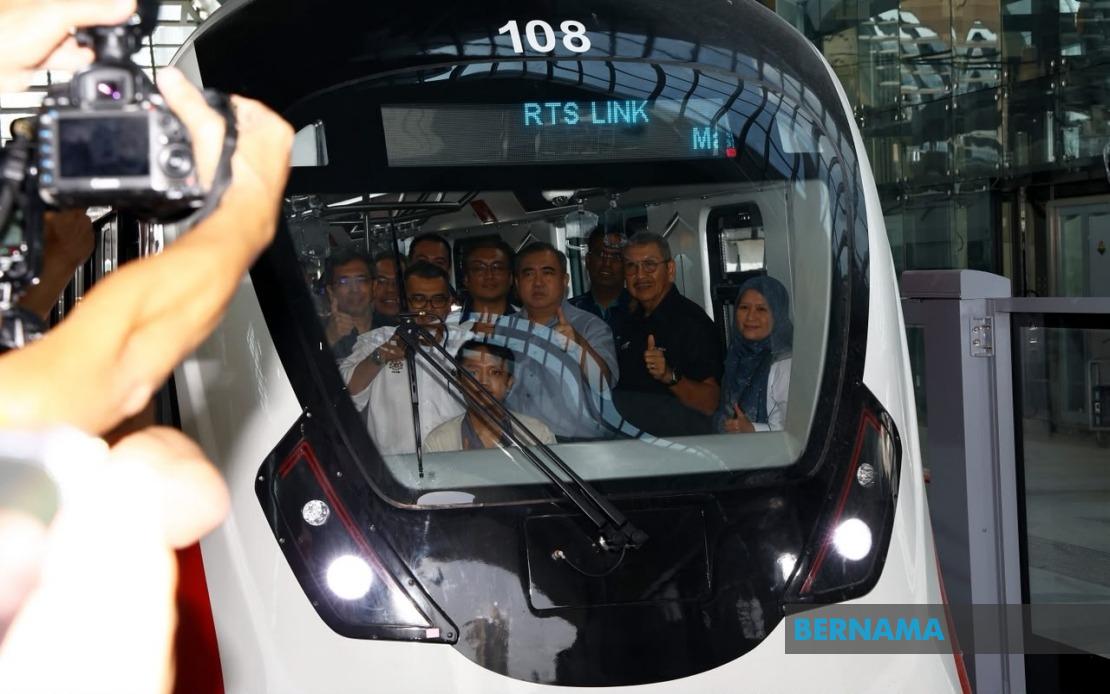
Malaysia's government has greenlit a RM60 million infrastructure project designed to seamlessly connect the Bukit Chagar RTS Link Station with the KTMB Komuter rail service, representing a significant step towards creating a truly integrated public transport ecosystem in the Johor Bahru region. Transport Minister Anthony Loke announced the approval during a site visit to the transit hub, emphasising the government's commitment to removing barriers that currently force passengers to navigate inefficient routes between the two services. The bridge, once completed within the anticipated 12-month timeframe, will establish a direct pedestrian link that eliminates the need for travellers to traverse the existing circuitous path through JB Sentral.
The strategic importance of this connectivity investment extends beyond simple convenience. As Southeast Asia's transport networks increasingly focus on cross-border efficiency, the Bukit Chagar RTS Link has emerged as a critical gateway connecting Malaysia with Singapore's transport infrastructure. By facilitating smoother passenger flows between Komuter and the RTS Link, the government aims to maximise ridership on what many analysts view as a transformative project for Johor Bahru's economic future. The bridge essentially removes a friction point that could otherwise discourage commuters from embracing integrated journey planning, particularly for those travelling from residential areas served by the Komuter network.
The RTS Link itself represents an ambitious undertaking, with the infrastructure designed to accommodate up to 10,000 passengers hourly in each direction once operations commence on January 1, 2025. This capacity projection underscores the anticipated demand for cross-border connectivity, reflecting both economic integration and the increasing mobility patterns of workers, students, and traders operating across the Malaysia-Singapore border. The bridge investment signals confidence that these projections are realistic and that enhancing accessibility to the Bukit Chagar terminus will be essential to realising the project's full potential.
Paralleling the bridge construction, the government has embarked on an ambitious Stage Bus Service Transformation initiative, designated SBST 2.0, which envisions deploying at least 200 additional buses throughout Johor Bahru. These vehicles will be specifically routed to serve residential zones and connect them directly to the Bukit Chagar station, addressing what transport planners identify as the critical last-mile challenge. Rather than passengers driving personal vehicles to the RTS terminus, this coordinated expansion of bus services aims to position the Bukit Chagar hub as a genuine multi-modal interchange where travellers can transfer seamlessly between buses, Komuter trains, and the rapid transit link. The timing of this bus deployment, deliberately synchronised with the RTS Link's January opening, reflects careful strategic planning to maximise passenger uptake from day one.
The financial architecture supporting these transport enhancements reveals the priority the government accords to the Bukit Chagar project. The Ministry of Economy has formally approved the RM60 million bridge allocation, with execution responsibility assigned to the Ministry of Transport. The bus service expansion agreement remains under finalisation, with the ultimate contractual award requiring approval from the Ministry of Finance. This sequential approval process, whilst potentially time-consuming, ensures rigorous budgetary oversight and competitive tendering principles govern the deployment of public resources.
From a broader Southeast Asian perspective, the Bukit Chagar developments carry implications extending well beyond Johor Bahru's municipal boundaries. Singapore's transport planners have invested substantially in the Woodlands North terminus, and Malaysia's coordinated efforts to ensure efficient passenger movement on its side of the border enhance the entire cross-border corridor's functionality. The RM60 million bridge investment thus represents Malaysia's institutional commitment to honouring the commercial and logistical expectations embedded in bilateral transport agreements. Malaysian commuters, businesses relying on cross-border labour mobility, and travellers utilising the corridor will all benefit from reducing transition friction at the interface point.
Construction progress on the physical infrastructure has advanced substantially, with Minister Loke confirming that the station building, the Customs, Immigration and Quarantine complex, and the RTS Link structure itself have reached completion. The project has now transitioned into its critical testing and commissioning phase, during which integrated systems will undergo rigorous validation. This phase encompasses comprehensive system integration testing, followed by extended fault-free trials and operational dry runs to ensure all mechanisms function reliably before public operations commence. This methodical approach, whilst potentially extending timelines, reflects international best practice for rapid transit systems handling substantial passenger volumes.
The Bukit Chagar RTS Link Station's transformation into a comprehensive multi-modal hub extends beyond its primary function as a RTS terminus. Integration with JB Sentral, e-hailing services, and conventional public transport creates a layered ecosystem accommodating diverse traveller preferences and journey requirements. Commuters arriving by personal vehicle can access JB Sentral's parking; those using rideshare services find convenient drop-off zones; and those arriving by bus or Komuter benefit from the direct bridge connection. This multi-layered approach recognises that modern urban transport users increasingly value optionality and flexibility.
For Malaysian policymakers, the bridge project demonstrates a sophisticated understanding of transport integration principles. Rather than viewing the RTS Link in isolation as a cross-border rail corridor, authorities are constructing the supporting infrastructure ecosystem necessary for the project to deliver anticipated patronage volumes and economic benefits. The RM60 million investment, whilst substantial, represents modest insurance against the much larger financial implications should the RTS Link underperform due to accessibility challenges. By removing the detour through JB Sentral, the bridge fundamentally alters passenger decision-calculus regarding journey routing, likely converting modest percentages of commuters currently favouring alternative routes into RTS Link users.
The January 1, 2025 operational commencement date now assumes greater significance as multiple preparatory initiatives approach completion simultaneously. The bridge construction, bus service expansion planning, and RTS Link testing all converge on this target, suggesting coordinated project management across multiple government agencies. Should these timelines hold, Johor Bahru commuters and cross-border travellers will experience a substantially transformed transport environment within months, with implications for property development patterns, commercial location decisions, and daily mobility choices throughout the region. The RM60 million bridge represents not merely a connection between two transit facilities, but rather a catalyst enabling the broader transport transformation Malaysia and Singapore have jointly envisioned.

