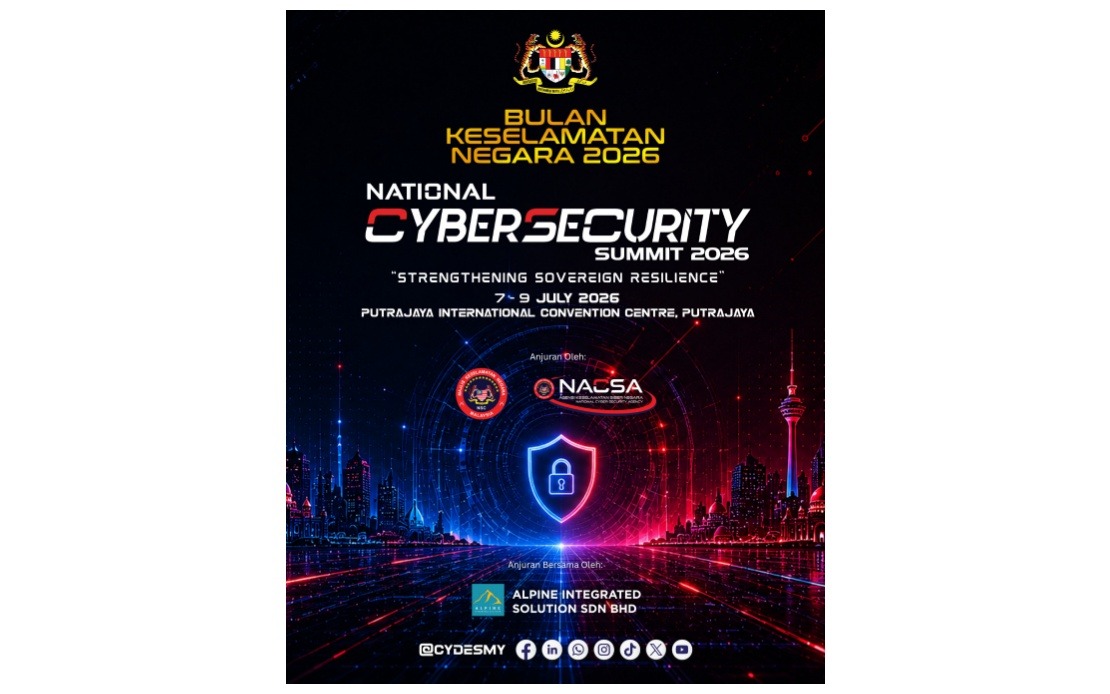
Malaysia is preparing to convene one of the region's most significant gatherings of cyber security stakeholders when the National Cyber Security Agency (NACSA) opens the National Cyber Security Summit 2026 at the Putrajaya International Convention Centre from July 7 to 9. Operating under the National Security Council within the Prime Minister's Department, NACSA has designed the three-day event to unite decision-makers from government, the private sector, enforcement bodies and academic institutions in a co-ordinated push to elevate the nation's defences against an increasingly sophisticated threat landscape. The convergence of these diverse constituencies reflects mounting recognition that cyber resilience cannot be achieved through isolated efforts but demands sustained dialogue and aligned strategies across traditional boundaries.
Timing has rendered this summit particularly consequential for Malaysia's cyber governance trajectory. The Cybercrimes Bill 2026 cleared the Dewan Rakyat on July 1, establishing fresh legislative scaffolding that addresses criminal exploitation of digital systems and networks. That passage creates an opportune moment for stakeholders to deliberate on implementation mechanics, compliance frameworks and the coordination mechanisms necessary to translate legislative intent into operational reality. The summit arrives as a natural convening point where enforcement officials, compliance officers, technology leaders and legal experts can calibrate their understanding of the new legislative environment and anticipate emerging compliance obligations.
Underpinning this legislative development is the Malaysian Cyber Security Strategy 2025-2030, a comprehensive national roadmap charting Malaysia's cyber security direction across the coming half-decade. This multi-year framework establishes the conceptual foundations and strategic priorities that the summit will interrogate and develop through substantive discussion. Rather than simply announcing policy from above, the summit methodology involves practitioners, technologists and leaders in an iterative process of examining how abstract strategic goals translate into concrete measures that enhance protection of critical infrastructure, government systems and private sector operations. Such bottom-up refinement of strategy typically produces more resilient and implementable outcomes than unilateral policy pronouncements.
Central to the summit is its overarching theme of "Strengthening Sovereign Resilience," a framing that emphasises national autonomy and self-reliance in cyber capabilities rather than dependency on external actors. This thematic emphasis carries particular resonance for Southeast Asian nations navigating complex geopolitical relationships and seeking to establish credible, indigenous expertise and infrastructure. The focus on sovereignty suggests Malaysia intends to develop homegrown cyber capacity rather than remaining passive consumers of security solutions designed and controlled by foreign entities. This positioning aligns with broader regional trends toward technological self-sufficiency and reduced vulnerability to external pressure.
The summit's programme encompasses 41 discrete sessions addressing multiple dimensions of cyber security practice and governance. Sessions will encompass cyber crime investigation and prosecution forums, gatherings of information and communications technology security officers, dedicated programming focused on women's participation in cyber careers, and the KRYPTECH initiative alongside technical workshops and closed strategic discussions. This breadth of programming acknowledges that cyber security encompasses law enforcement, technical engineering, policy development, talent cultivation and cross-sectoral collaboration. By creating space for such varied practitioners to engage simultaneously, the summit model facilitates both vertical learning within specific disciplines and horizontal knowledge exchange across sectors.
Participation extends well beyond Malaysian boundaries, underlining cyber security's fundamentally transnational character. The summit will host 96 speakers and panellists drawn from government agencies, technology enterprises, law enforcement, academic research communities and professional cyber security practitioners. The attendee profile includes representation from 122 companies—78 based domestically and 44 operating from seven international jurisdictions—alongside 250 domestic distinguished guests and 3,000 broader participants encompassing trade visitors and conference delegates. This international dimension reflects the reality that cyber threats respect no borders, and effective defences require understanding threat origination and response mechanisms across multiple jurisdictions.
Prime Minister Datuk Seri Anwar Ibrahim will preside over the launch of three significant initiatives representing cumulative policy development across multiple government agencies. The National Security Policy 2026-2030 provides the overarching framework within which cyber security policy must coexist with other national security priorities. The National Cryptography Policy and accompanying MyKriptografi Action Plan 2026-2030 address encryption standards and cryptographic governance—technical foundations upon which much cyber security architecture rests. The Artificial Intelligence Systems Cybersecurity Framework recognises that as Malaysian organisations increasingly deploy artificial intelligence across government and commercial applications, novel vulnerabilities and governance challenges emerge requiring proactive policy response. Launching these initiatives during the summit maximises visibility and creates immediate engagement opportunities with stakeholders already assembled to discuss implementation.
For Malaysia specifically, the summit reflects maturation of cyber security from a niche technical concern into a central pillar of national strategy commanding attention at the highest governance levels. The decision to organise this large-scale convening demonstrates institutional confidence in Malaysia's capacity to host major regional dialogue and signals to international partners that the country possesses sophisticated understanding of contemporary cyber challenges. For the broader Southeast Asian region, the summit may establish precedent and models that other nations subsequently adapt for their own cyber governance structures.
The forum explicitly recognises that cyber security represents a fundamentally collaborative challenge transcending traditional public-private distinctions and geopolitical divisions. Government agencies alone cannot secure national digital infrastructure; they require sustained information sharing, threat intelligence exchange and technical cooperation from commercial enterprises protecting their own systems. Conversely, private companies benefit from government resources, enforcement capabilities and strategic coordination that only state apparatus can provide. The summit's programme architecture acknowledges this interdependency and creates structured opportunities for these constituencies to negotiate mutually beneficial arrangements and identify shared priorities. Success in advancing Malaysia's cyber resilience agenda will ultimately depend less on summit discussions than on implementation partnerships forged among participants in the months following the event.

