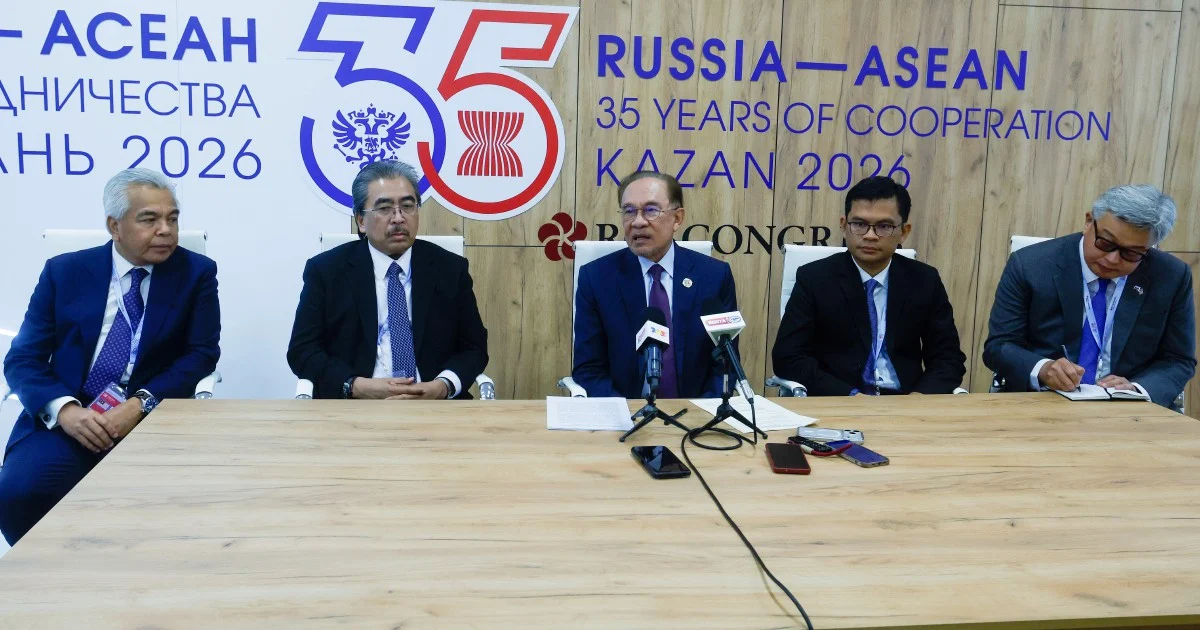
Prime Minister Datuk Seri Anwar Ibrahim has directed Malaysia's tourism authorities to expedite the implementation of visa-free travel arrangements for Russian visitors, signalling a strategic push to recapture market share in the tourism sector following pandemic-related disruptions. The announcement, made in Kazan, reflects the government's recognition that removing bureaucratic barriers for high-potential source markets represents a pragmatic approach to tourism recovery and economic diversification.
The timing of this directive carries particular significance for Malaysia's tourism industry, which has faced sustained pressure as global travel patterns have shifted in recent years. By positioning visa-free access as a key competitive advantage, the government seeks to differentiate Malaysia from regional rivals and address the considerable tourism revenue gap accumulated during international travel restrictions. Russian tourists, representing a historically valuable demographic segment with relatively high spending capacity and extended stay durations, are viewed as central to restoring visitor numbers and foreign exchange earnings.
The visa-free arrangement marks a strategic pivot in Malaysia's diplomatic engagement with Russia and reflects broader geopolitical recalibration across Southeast Asia. As traditional tourism corridors have become increasingly saturated and travel patterns have diversified, emerging markets and underutilised source regions have attracted growing attention from destination marketing organisations across the region. For Malaysia, cultivating closer ties with Russian tourism stakeholders aligns with the government's multi-pronged approach to economic recovery, which emphasises both conventional tourism pathways and innovative market-entry strategies.
Implementing visa-free travel requires coordination across multiple government agencies, including the immigration department, the Ministry of Tourism, Arts and Culture, and border management authorities. The Prime Minister's explicit call for expedited implementation suggests that bureaucratic processes, which often delay policy rollout, should be streamlined to enable rapid execution. This directive carries particular weight given that tourism policy typically involves lengthy consultation periods and inter-agency negotiations. The compressed timeline underscores the government's assessment that swift action is essential to capture emerging travel momentum before other destinations consolidate market advantages.
From an economic perspective, expanding visa-free access to Russian nationals addresses a structural impediment to growth in this tourism segment. Previously, Russian visitors required advance visa applications, visa fees, and processing delays—factors that collectively discouraged casual tourism and extended holiday planning. Removing these friction points is expected to facilitate spontaneous travel decisions and reduce the cost barrier to entry, thereby broadening the addressable market beyond high-income leisure travellers to include middle-income segments and business visitors. For accommodation providers, tour operators, and hospitality vendors across Malaysia, this represents potential volume growth beyond current baseline projections.
The tourism sector's strategic importance to Malaysia's economic recovery cannot be overstated, particularly as the country navigates global economic uncertainty and inflationary pressures. Tourism revenues contribute substantially to foreign exchange reserves, generate employment across service industries, and stimulate demand in allied sectors including transportation, food and beverage, and retail. By prioritising visa-free access, the government signals that tourism revitalisation is not a peripheral concern but a central pillar of macroeconomic stabilisation strategy during a period of measured recovery.
Regionally, Malaysia's initiative may influence travel policy discussions within ASEAN and among other destinations competing for Russian tourist spending. Neighbouring countries including Thailand, Vietnam, and Indonesia have implemented varying visa strategies to attract Russian visitors. Malaysia's move to expedite visa-free arrangements reflects competitive positioning within Southeast Asia's tourism market, where destinations continuously adjust policy frameworks to optimise visitor acquisition. The decision also acknowledges the evolving geopolitical context, in which traditional Western tourism markets have experienced greater volatility and diversification of source markets has become increasingly important for revenue stability.
Implementation challenges remain significant, however. Border authorities must establish protocols for visa-free entry screening that balance visitor facilitation with security and immigration compliance requirements. The government will need to ensure that simplified entry processes do not compromise data collection essential for security vetting and tourism statistics. Additionally, marketing and promotion activities must intensify to ensure that Russian travel agents, online travel platforms, and potential visitors are aware of the new arrangements and perceive Malaysia as a compelling destination relative to competing alternatives.
The Prime Minister's directive also underscores the government's willingness to deploy policy tools aggressively to address economic objectives. Rather than allowing visa-free travel to proceed through normal bureaucratic channels, the explicit order for expedited implementation reflects executive resolve to prioritise tourism sector recovery. This approach may serve as a template for addressing other policy priorities where inter-agency coordination or procedural delays have constrained progress. The emphasis on rapid execution signals that the government has assessed the tourism market carefully and determined that timely action will yield meaningful returns on investment.
Looking forward, the success of the visa-free arrangement will depend upon complementary investments in tourism infrastructure, destination marketing, and visitor experience quality. While removing visa requirements constitutes a necessary condition for market expansion, it is not sufficient. Russian visitors will require competitive accommodation pricing, quality service standards, cultural attractions, and safe travel environments to justify travel decisions and generate positive word-of-mouth recommendations. The government's willingness to accelerate visa-free implementation should therefore be accompanied by coordinated efforts across tourism stakeholders to enhance overall destination appeal and ensure that increased visitor volumes translate into sustainable economic benefits rather than short-term fluctuations.