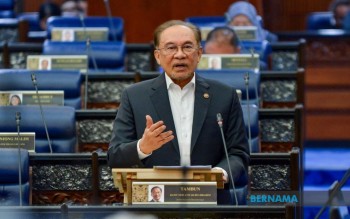
Prime Minister Datuk Seri Anwar Ibrahim has committed the government to examining the necessity and viability of building a strategic petroleum reserve, positioning the initiative as a cornerstone of Malaysia's long-term energy security strategy in an increasingly unstable global landscape. The decision emerged from the inaugural 2026 meeting of the National Energy Council, which Anwar chaired, signalling heightened government attention to safeguarding the nation's energy supplies against mounting geopolitical uncertainties and international supply chain fragilities that have tested resilient economies worldwide.
The strategic reserve concept reflects broader concerns about energy independence in Southeast Asia, where nations remain vulnerable to disruptions emanating from major oil-producing regions and contested shipping lanes. For Malaysia, a country with declining crude oil reserves and rising energy consumption, the establishment of such stockpiles could provide crucial buffers during periods of global instability, allowing policymakers flexibility in energy pricing and availability without immediate reliance on volatile international markets. The government's proactive stance demonstrates recognition that energy security transcends mere economic calculation—it underpins national resilience and geopolitical autonomy in an era marked by competition among major powers over resource access and supply chain control.
Concurrently, the energy transition agenda continues advancing according to Malaysia's National Energy Transition Roadmap, with renewable energy infrastructure expanding significantly. By December of last year, renewable energy capacity reached 31 per cent of total installed capacity, representing measurable progress toward reducing the nation's historical dependence on coal-fired generation. This diversification addresses both environmental imperatives and supply security concerns, as renewable sources mitigate exposure to global fossil fuel price volatility and geopolitical leverage wielded by traditional oil and gas exporters.
The Corporate Renewable Energy Supply Scheme now incorporates Battery Energy Storage System technology, addressing a fundamental challenge in renewable energy integration. Energy storage capabilities enable grid stability and consistent power supply despite intermittency characteristics of solar and wind generation, making the scheme substantially more viable for large-scale industrial and commercial adoption. Companies increasingly recognise storage systems as essential infrastructure for achieving renewable commitments and managing operational continuity during grid fluctuations.
Transportation sector decarbonisation is progressing through multiple complementary initiatives. The continued rollout of B15 biodiesel demonstrates commitment to sustainable alternative fuels that leverage Malaysia's existing automotive infrastructure without requiring immediate wholesale fleet replacement. The Petronas biofuel hub development in Pengerang, Johor, represents strategic value-addition within the nation's refining ecosystem, potentially positioning Malaysia as a biofuel production and export hub for Southeast Asia while creating employment and technological expertise.
Electric vehicle adoption is accelerating through public transport electrification. The operational deployment of 250 electric buses nationwide addresses urban air quality while reducing transportation sector emissions—the region's fastest-growing source of greenhouse gases. Simultaneously, 800 kilometres of electrified rail network expansion enhances metropolitan mobility and reduces passenger automobile dependency, particularly significant given congestion challenges in major urban centres like Kuala Lumpur and Selangor.
Hydrogen technology represents Malaysia's frontier energy transition commitment. The Autonomous Rapid Transit system hydrogen hub in Sarawak, scheduled for Phase 1 completion by year-end, positions the state as a pilot region for hydrogen-powered transport infrastructure. Sarawak's abundant hydroelectric resources provide clean hydrogen production capacity through electrolysis, creating potential competitive advantages for hydrogen-based mobility solutions compared to regions dependent on fossil fuel-derived hydrogen or imported supplies.
The multi-pronged energy strategy reflects sophisticated understanding that transition success requires simultaneous advancement across renewable generation, energy storage, alternative fuels, and emerging technologies rather than sequential development. This holistic approach acknowledges that energy systems are deeply interconnected; transport electrification depends on sufficient renewable generation capacity, industrial scale renewable adoption depends on storage solutions, and emerging technologies like hydrogen require supporting infrastructure development.
Geopolitical context amplifies the urgency of these initiatives. Global energy markets have demonstrated extreme volatility during recent years, with supply disruptions significantly impacting developing economies dependent on energy imports. Strategic petroleum reserves provide temporal flexibility, buying governments time to respond to crises without resorting to emergency rationing or destabilising price adjustments. Combined with accelerated renewable transition and fuel diversification, such reserves constitute layered resilience against multiple threat scenarios.
For Malaysian stakeholders across industries, this energy security framework carries substantial implications. Manufacturing sectors reliant on stable, affordable energy face improved long-term cost predictability as renewable capacity expansion reduces fossil fuel exposure. Utilities planning infrastructure investments can align development with government strategic direction, reducing regulatory uncertainty. Technology companies and engineering firms will discover emerging opportunities within renewable deployment, storage systems, biofuel production, and hydrogen infrastructure.
Regionally, Malaysia's transition trajectory influences Southeast Asian energy planning. As the Association of Southeast Asian Nations grapples with climate commitments while maintaining economic competitiveness, Malaysian experience with large-scale renewable integration and transport electrification provides instructive lessons. Successful implementation could accelerate similar initiatives across the region, reshaping energy markets and supply chains while demonstrating that emerging economies can achieve rapid transition without sacrificing development objectives.
The petroleum reserve initiative also signals that transition strategies need not entirely abandon traditional energy security frameworks; rather, governments can combine legacy approaches like strategic reserves with contemporary renewable and alternative fuel development. This pragmatic integration may prove more politically sustainable than purely ideological energy policy, enabling broader coalition support across different constituencies with varying transition timelines and concerns.

