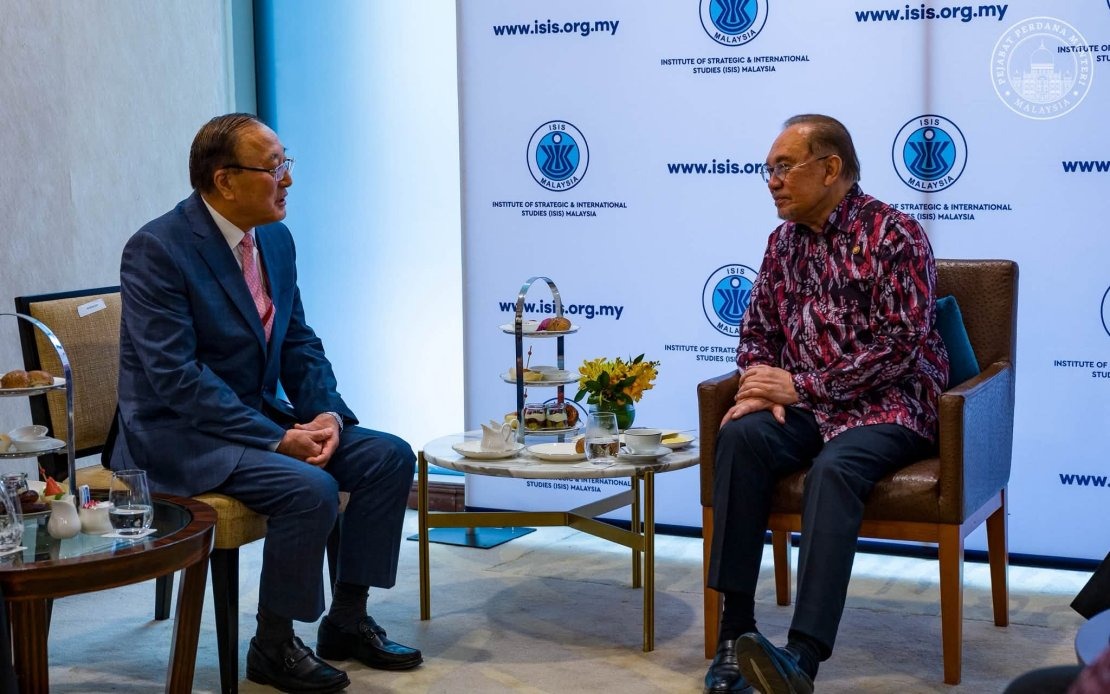
Prime Minister Datuk Seri Anwar Ibrahim has committed Malaysia to deepening its engagement with the Boao Forum for Asia (BFA) across a broad spectrum of policy areas, signalling Kuala Lumpur's determination to position itself as a central player in regional prosperity initiatives. The announcement came during a bilateral exchange with BFA secretary-general Zhang Jun, underscoring the strategic importance both entities place on sustained dialogue and collaborative frameworks in Southeast Asia.
The Prime Minister identified eight priority domains for enhanced cooperation: trade and investment frameworks, digital transformation pathways, artificial intelligence development, energy transition mechanisms, food security initiatives, education systems, and talent development programmes. This comprehensive agenda reflects a sophisticated understanding of the interconnected challenges facing the region, moving beyond traditional economic partnerships to encompass the technological and sustainability imperatives that will define competitiveness in the coming decade.
Anwar's emphasis on regional cooperation carries particular weight given Malaysia's position as a midsize economy navigating complex geopolitical crosscurrents. The BFA partnership provides a multilateral platform through which Malaysia can amplify its voice on issues ranging from infrastructure investment to technology governance, while simultaneously positioning domestic industries to benefit from cross-border opportunities. The breadth of sectors under discussion suggests Malaysia is not content with narrow bilateral trade agreements but seeks to integrate itself within broader Asian economic architectures.
The timing of this engagement reflects Malaysia's strategic calculus in an era of intensifying great power competition. By deepening ties with BFA—a forum founded in 2001 that brings together policymakers, business leaders, and academics from across Asia—Malaysia signals its commitment to inclusive regionalism that prioritises dialogue over confrontation. This stance has become increasingly important as countries throughout Southeast Asia attempt to maintain equidistance from competing powers while maximising economic opportunities.
Artificial intelligence and digital transformation merit particular attention within Malaysia's partnership framework with BFA. These sectors represent frontier areas where developing Asian economies can still establish competitive advantages before technological standards become entrenched. Malaysia's significant tech sector and growing fintech ecosystem position the country to both benefit from and contribute to regional AI governance discussions. The BFA platform offers opportunities to shape emerging standards before they become globally mandated, a consideration vital for smaller economies that might otherwise find themselves as rule-takers rather than rule-makers.
Energy transition cooperation carries implications that extend well beyond sectoral economics. As Malaysia grapples with the dual imperatives of economic growth and environmental responsibility, collaboration within BFA on renewable energy pathways, carbon pricing mechanisms, and sustainable financing can accelerate the country's green transition while supporting regional decarbonisation efforts. This is particularly significant given Malaysia's reliance on palm oil exports and hydrocarbon revenues, sectors facing intensifying international scrutiny. Through multilateral BFA frameworks, Malaysia can work with peers on transition strategies that protect both economies and environmental outcomes.
Food security represents another crucial domain, particularly given Southeast Asia's vulnerability to climate impacts and supply chain disruptions. Malaysia, as both a significant agricultural producer and food importer, has acute interest in regional mechanisms that ensure stable supplies and fair pricing. BFA cooperation on this front could facilitate knowledge-sharing on drought-resistant crop varieties, supply chain resilience, and market stabilisation mechanisms that benefit all participating nations.
The Prime Minister's invocation of geopolitical uncertainties and economic pressures underscores that Malaysia views these partnerships not as optional conveniences but as essential stabilising mechanisms. In volatile times, the predictability provided by established dialogue forums and cooperative frameworks becomes more valuable. For Malaysian businesses and policymakers, the BFA relationship offers consistent channels through which to navigate regional challenges and identify emerging opportunities before they become widely apparent.
Anwar's dual role as Prime Minister and Finance Minister adds weight to these commitments. His personal oversight of BFA engagement signals that Malaysia places this partnership within its highest strategic tier. The Finance Ministry's involvement particularly matters for investment and trade initiatives, where regulatory frameworks and financial infrastructure determine practical outcomes. This institutional backing transforms rhetorical commitments into concrete policy directives capable of driving bureaucratic implementation.
The emphasis on bringing tangible benefits to ordinary citizens indicates Malaysia's recognition that strategic partnerships must translate into improved living standards and employment opportunities. Enhanced regional trade reduces consumer prices, digital transformation creates new jobs, and energy transition offers healthier environments. By framing BFA cooperation through this lens, the government attempts to build domestic constituencies supporting external engagement.
For Southeast Asia more broadly, Malaysia's deepened BFA involvement contributes to regional institutionalisation at a time when multilateral cooperation faces pressure from competing bilateral relationships. By actively participating in and championing inclusive forums like BFA, Malaysia helps maintain the regional architecture that has enabled decades of peaceful development and shared prosperity. This carries implications not just for Malaysian interests but for the stability of the broader Asian order.

