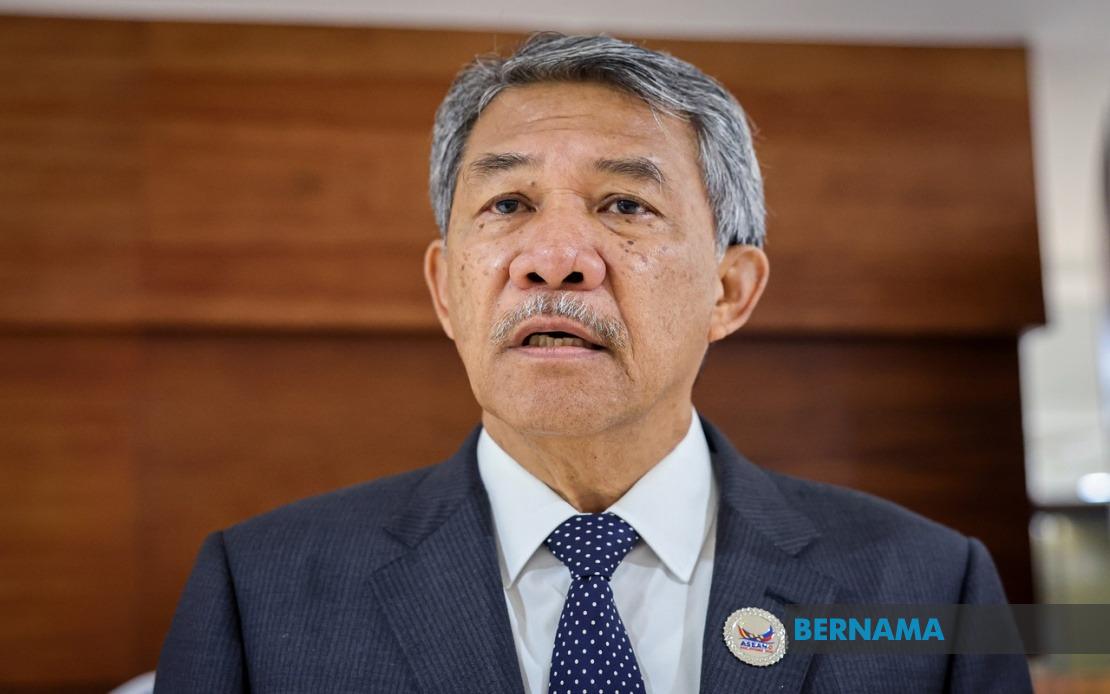
Malaysia has been tasked with steering the Association of Southeast Asian Nations' engagement with Türkiye following the bloc's formal acceptance of the Middle Eastern nation as a Dialogue Partner. The decision emerged during the 59th ASEAN Foreign Ministers' Meeting and Post-Ministerial Conference held in Manila, where regional delegates and senior officials convened to chart the organisation's strategic direction. Foreign Minister Datuk Seri Mohamad Hasan announced the dual appointments, underscoring ASEAN's commitment to deepening international partnerships while maintaining rigorous standards for new membership categories.
The elevation of Türkiye's status within ASEAN's framework represents a deliberate expansion of the bloc's diplomatic footprint beyond its traditional Asia-Pacific sphere. Dialogue Partnership designations occupy a tier below full membership but above casual engagement, enabling structured dialogue and cooperation on matters of mutual concern. Türkiye's acceptance follows a comprehensive evaluation process conducted across multiple governance levels within ASEAN, demonstrating the bloc's cautious approach to expanding its partnership architecture. The vetting procedures reflected longstanding protocols that ASEAN has implemented to ensure new partners align with the organisation's principles and operational norms.
Malaysia's designation as country coordinator carries particular significance given the nation's current presidency of ASEAN in 2025. The Malaysian government had actively championed Türkiye's candidacy during its chairmanship, positioning the country as a bridge between ASEAN and the wider Eastern Mediterranean region. This role requires Malaysia to facilitate diplomatic channels, coordinate policy initiatives, and represent ASEAN's interests in bilateral and multilateral discussions with Ankara. The appointment reflects confidence in Malaysia's diplomatic capacity and its geographic and cultural position as a respected voice within Southeast Asian deliberations.
Beyond the Türkiye development, ASEAN extended Dialogue Partner status considerations to other prospective partners. The bloc simultaneously approved the United Kingdom's admission as a new member of the ASEAN Regional Forum, demonstrating parallel efforts to strengthen institutional relationships with established Western powers. These parallel decisions signal ASEAN's intention to maintain balanced engagement across diverse geopolitical constituencies rather than tilting toward any single strategic orientation.
The meetings also addressed foundational issues concerning ASEAN's institutional resilience and strategic positioning. Discussions centred on ASEAN Community Vision 2045, the organisation's long-term development framework designed to guide regional integration and development priorities through the coming decades. ASEAN Secretary-General Dr Kao Kim Hourn provided updated assessments of progress toward Vision 2045 objectives, enabling member states to calibrate their contributions and identify implementation challenges requiring collective attention. These periodic reviews ensure that the strategic vision remains relevant amid shifting regional circumstances.
A recurring theme throughout the ministerial sessions involved protecting what ASEAN terms its "centrality"—the principle that ASEAN should remain the primary driving force shaping regional architecture and diplomatic protocols rather than becoming subordinated to external powers' strategic competition. Mohamad articulated concerns about potential erosion of ASEAN centrality in an increasingly multipolar geopolitical environment where major powers vie for influence in Southeast Asia. He emphasised that member states must actively defend this institutional autonomy through coordinated positions and consistent adherence to ASEAN's founding principles of non-interference and consensus-based decision-making.
This emphasis on centrality reflects deeper anxieties within ASEAN about great power competition destabilising the region's delicate diplomatic balance. China, the United States, and other major powers maintain competing strategic interests across Southeast Asia, creating pressure on ASEAN states to take sides in broader geopolitical contests. By strengthening ASEAN's institutional coherence and expanding its own diplomatic partnerships, member states attempt to preserve negotiating space and prevent external powers from dominating regional outcomes. Malaysia's role in coordinating Türkiye relations contributes modestly to this broader objective by diversifying ASEAN's international partnerships beyond traditional Western and Asian powers.
The geopolitical and geo-economic uncertainties referenced in discussions encompass multiple dimensions of contemporary international relations. Trade tensions between major powers, technology competition, and shifting supply chain arrangements create volatility affecting ASEAN economies directly. Regional members depend heavily on international commerce and foreign investment, making them vulnerable to disruptions in global economic flows. ASEAN's collective diplomacy aims to create conditions where member states can pursue economic interests without being forced into exclusive arrangements with particular power blocs.
Türkiye's emergence as an ASEAN Dialogue Partner reflects evolving Southeast Asian diplomatic strategy that looks beyond traditional bilateral relationships toward regional multilateralism. Ankara brings significant capabilities in defence, energy, and technological domains alongside geographic positioning that bridges Europe, Asia, and the Middle East. Enhanced engagement with Türkiye potentially creates channels for technology transfer, trade expansion, and security cooperation benefiting ASEAN members. However, the relationship remains nascent, and concrete cooperation frameworks have yet to crystallise.
Malaysia's coordinator role carries practical implications for Southeast Asian engagement with Türkiye across multiple policy domains. The position requires developing communication protocols, proposing cooperation initiatives, and representing ASEAN positions in technical discussions. Malaysian diplomats must balance advancing Malaysian national interests with serving as honest brokers reflecting broader ASEAN consensus. This delicate equilibrium tests diplomatic skills while requiring coordination with fellow ASEAN members holding divergent perspectives on Türkiye and broader regional strategy.
The decisions announced in Manila occurred within a wider context of ASEAN attempting to consolidate institutional mechanisms and deepen partnership architectures. As the bloc navigates intensifying great power competition and economic uncertainties, member states increasingly recognise that collective action amplifies their individual influence on regional and international affairs. Malaysia's appointment as Türkiye coordinator exemplifies this logic—by formalising ASEAN-wide engagement with important external partners through designated coordinators, the bloc creates structures that prevent individual members from being picked off or manipulated separately.
Looking forward, the success of ASEAN's expanded dialogue partnerships depends on translating political acceptance into substantive cooperation. Türkiye must demonstrate commitment to ASEAN's norms and principles while member states develop mechanisms for regular engagement across diplomatic, economic, and security dimensions. Malaysia's stewardship during the coordinatorship period will significantly influence whether the relationship flourishes into a meaningful partnership or remains symbolic acknowledgement of diplomatic courtesy.

