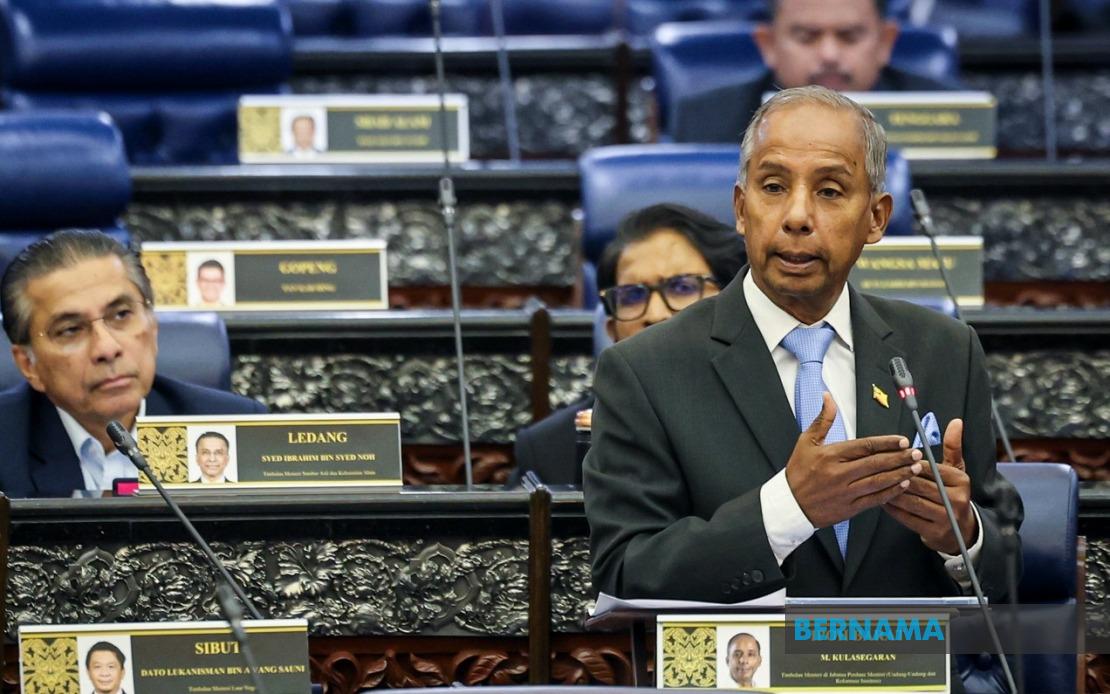
The Malaysian government has launched a comprehensive review of Section 97 of the Child Act 2001, with the explicit goal of establishing transparent and defined detention periods for individuals who committed crimes while under 18 years old. M. Kulasegaran, Deputy Minister in the Prime Minister's Department (Law and Institutional Reform), disclosed during parliamentary Question Time that this initiative reflects a broader commitment to harmonising legislative frameworks with international human rights standards and domestic rehabilitation objectives.
The review process emerged directly from legislative changes introduced in 2023, when Parliament abolished mandatory capital punishment and life imprisonment for child offenders. This shift represented a watershed moment in Malaysia's approach to juvenile justice, signalling a philosophical pivot toward considering developmental factors and rehabilitation potential rather than purely retributive outcomes. The government established a specialised committee to operationalise this transition, tasked with translating legal principles into workable procedural guidelines that courts and correctional authorities can implement consistently across jurisdictions.
Currently, Section 97 of Act 611 mandates that individuals convicted of capital offences committed before reaching adulthood cannot receive death sentences. Instead, courts must order their detention at the pleasure of the Yang di-Pertua Negeri or the King, depending on territorial jurisdiction. This discretionary framework, while intended to protect minors, has created unintended consequences: individuals remain in indefinite detention without predetermined release pathways or sentence benchmarks. The lack of specificity has left dozens of former child offenders in legal limbo, trapped in a system that offers neither certainty nor measurable rehabilitation milestones.
The human dimension of this legislative vacuum became starkly apparent during Kulasegaran's recent correctional facility inspections in Semporna and Sandakan. He encountered an inmate detained for nearly 25 years, an individual who entered prison at merely 17 years old. This person, now in his early 40s, has spent nearly three decades behind bars without knowing fundamental aspects of contemporary life—he remains unfamiliar with smartphones, internet technology, or the ordinary rhythms of civilian existence. Such cases illustrate the profound social cost of indefinite detention frameworks: the individual experiences cumulative institutionalisation while society loses the opportunity to integrate a potentially reformed citizen.
Statistical reality underscores the urgency of reform. Forty individuals currently languish in Malaysian correctional facilities under Section 97 provisions, each representing a unique story of delayed justice and uncertain futures. While this number may seem modest, the aggregate human consequence is substantial. These individuals have already served extended sentences—some exceeding two decades—yet face no transparent mechanism for assessing rehabilitation progress or determining release eligibility. The uncertainty itself becomes a form of psychological penalty beyond the physical confinement.
The proposed amendments align Malaysia with its international obligations, particularly commitments enshrined in the Convention on the Rights of the Child. Malaysia ratified this foundational treaty, pledging to consider the best interests of children in all governmental actions and to employ detention only as a last resort for the shortest appropriate period. The current indefinite detention framework arguably contradicts these commitments, as children who become young adults cannot demonstrate rehabilitation progress against meaningful benchmarks. International juvenile justice advocates consistently emphasise that fixed, reviewable detention periods encourage rehabilitation investments from both institutions and detainees themselves.
Kulasegaran emphasised that proposed amendments must navigate competing imperatives: delivering justice to victims of serious crimes, maintaining public safety, and enabling genuine rehabilitation. This triangulation reflects Southeast Asian realities, where public concern about violent crime remains elevated while simultaneously growing awareness of rehabilitation science gains traction among policymakers. The challenge lies in constructing frameworks that acknowledge victim concerns without abandoning developmental science understanding that adolescent brains continue maturing into the mid-20s, and that environments supporting behavioural change can reduce recidivism substantially.
The special committee tasked with drafting amendments has already convened multiple sessions, suggesting momentum toward concrete proposals. The Deputy Minister's parliamentary statement indicates the government intends moving beyond review toward legislative action within a defined timeframe. This reflects political priority: reforming juvenile justice has emerged as a MADANI administration commitment, embedded within broader human rights policy initiatives. The government explicitly positioned the amendments as consistent with Malaysia's human rights obligations while maintaining public safety—a framing designed to build cross-party consensus for legislative changes.
Implementing fixed detention periods requires complementary reforms across multiple institutional domains. Correctional authorities must develop transparent assessment protocols measuring rehabilitation progress. Judicial training becomes essential to ensure consistent application of new sentencing parameters across diverse court systems. Inter-agency coordination between correctional services, the Attorney-General's Chambers, and relevant state authorities will prove critical, particularly regarding discretionary elements involving the Yang di-Pertua Negeri. Without comprehensive implementation frameworks, legislative amendments risk becoming symbolic rather than transformative.
The broader Southeast Asian context heightens Malaysia's reform significance. Regional juvenile justice systems vary considerably in their treatment of child offenders and approaches to rehabilitation versus punishment. Malaysia's evolution toward clearer, more rehabilitative frameworks potentially influences peer nations grappling with similar questions. Singapore, Thailand, and Indonesia face comparable challenges regarding child offenders and indefinite detention, making Malaysian legislative developments relevant across borders. Transparent detention period frameworks could establish regional benchmarks encouraging convergence toward international standards.
For affected individuals and their families, amendment passage represents tangible hope for closure and reintegration pathways. The inmate detained since adolescence could finally access release eligibility assessments and timeline certainty. Family members separated for decades might anticipate eventual reunification. Society gains potential contributors no longer warehoused indefinitely at substantial fiscal cost. These human elements—often overshadowed in policy discussions—fundamentally motivate reform advocates and explain parliamentary attention to Section 97 revisions.
The review process also signals Malaysian willingness to acknowledge legislative imperfections and implement evidence-based corrections. Indefinite detention provisions, while seemingly protective, have produced counterintuitive outcomes: extended institutionalisation rather than rehabilitation, psychological deterioration rather than behavioural improvement, and perpetual uncertainty rather than justice resolution. Recognising these failures and implementing remedies demonstrates institutional maturity and commitment to justice quality beyond purely punitive dimensions.

