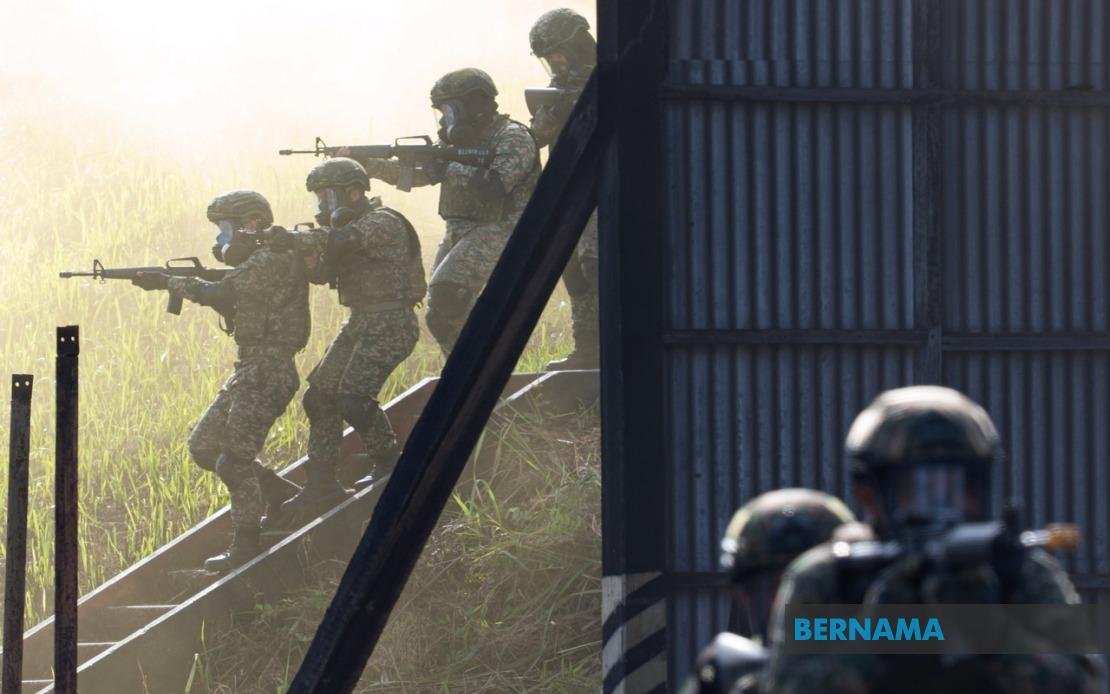
Prime Minister Datuk Seri Anwar Ibrahim has pledged that the government will seek a higher defence allocation in Budget 2027, signalling Putrajaya's determination to strengthen the Malaysian Armed Forces and bolster personnel conditions at a time when regional security dynamics remain fluid. Speaking in Melaka, Anwar—who also holds the Finance portfolio—framed the investment as essential to safeguarding national peace, which he described as Malaysia's most valuable asset. His remarks underscore growing recognition within government that defence capability cannot be neglected or postponed, particularly given unpredictable geopolitical developments across Southeast Asia.
Anwar's reasoning reflects a strategic mindset that prioritises proactive military preparedness over reactive responses to security threats. "Defence readiness must be maintained at all times because conflicts do not occur when expected," he said. "We cannot wait for another country to declare war before we begin preparing." This framing carries particular resonance for a country situated in a region where maritime disputes, territorial concerns, and military modernisation programmes among neighbours remain ongoing considerations. The Prime Minister's emphasis on anticipatory defence posturing rather than crisis-driven buildups suggests a shift towards longer-term strategic planning within Malaysia's defence establishment.
The proposed spending increase will encompass several dimensions of military modernisation and personnel support. Beyond hardware procurement, the allocation will address personnel welfare through improved accommodation, construction of a new military hospital, and maintenance of essential facilities including water supply systems at bases. These investments reflect understanding that military effectiveness depends not only on advanced weaponry but also on the wellbeing and morale of personnel who operate that equipment. The holistic approach to defence spending—balancing capital equipment with human resource development—distinguishes this commitment from narrower procurement-focused defence budgets.
Anwar highlighted the government's track record in defence investment, noting that the MADANI administration has increased Defence Ministry allocations by more than 35 per cent over the past three years. While this represents a substantial boost in absolute terms, he acknowledged that public awareness of this increase remains limited. This gap between actual spending increases and public perception suggests that Malaysia's defence ministry faces a communications challenge alongside budgetary considerations. Better articulation of defence investments and their strategic rationale could help build public support for continued spending increases and explain trade-offs with other budget priorities.
Crucially, Anwar inserted a governance dimension into the defence spending discussion by demanding that military weapons and equipment procurement follow systematic and transparent procedures. He explicitly cautioned against profiteering and excessive commissions paid to external agents—an implicit acknowledgment that defence procurement has historically been vulnerable to corruption and inefficiency in Malaysia and across the region. This emphasis on clean, accountable procurement reflects both domestic anti-corruption priorities and international pressure on developing nations to improve defence spending governance. The statement suggests the government recognises that spending more on defence only yields national security benefits if procurement processes are genuinely competitive and free from rent-seeking behaviour.
The economic backdrop supporting these defence commitments appears increasingly favourable. Anwar attributed the government's ability to contemplate higher defence allocations to improving economic performance, supported by a strengthening ringgit, increased foreign direct investment inflows, and inflation management. These macroeconomic improvements provide fiscal space for defence spending without triggering the kind of budget pressures that might force difficult trade-offs with healthcare, education, or infrastructure programmes. However, the sustainability of these economic conditions remains subject to global commodity prices, foreign investment flows, and regional economic developments—factors beyond Malaysia's direct control.
The timing of this announcement, coming roughly two months before Budget 2027's scheduled presentation to Parliament on October 9, allows political and defence stakeholders time to build consensus around higher allocations before formal parliamentary deliberation. The presence of senior officials including Deputy Defence Minister Adly Zahari, Chief Secretary Tan Sri Shamsul Azri Abu Bakar, and Army Chief General Tan Sri Azhan Md Othman at Anwar's Melaka address reinforced the commitment's institutional backing. This alignment across civilian and military leadership strengthens the likelihood that the promised defence spending increase will materialise in the actual budget document.
Beyond the headline defence commitment, Anwar announced immediate welfare allocations for military personnel, including RM147,000 for the Armed Forces Family Welfare Association and RM1 million for maintaining mosques and prayer halls at four military camps in Melaka. These targeted allocations demonstrate attention to the spiritual and familial dimensions of military service, particularly important in a Muslim-majority nation where religious provision forms part of comprehensive personnel support. The focus on camp infrastructure in Melaka also reflects geographical attention to military installations across different regions rather than concentrating benefits in a single location.
For Malaysia's defence industry and military partners, this commitment signals continued purchasing intent over the medium term. Companies supplying defence equipment and services to the Malaysian Armed Forces can expect sustained procurement activity if the 2027 budget increases materialise as promised. However, Anwar's insistence on transparency may raise competitive pressures and tighten qualification standards for defence contractors, potentially disadvantaging suppliers reliant on preferential access or informal relationships. Regional defence exporters—particularly those from neighbouring countries or traditional partners—should anticipate a more rigorous competitive environment for Malaysian defence contracts.
The broader strategic implications extend beyond Malaysia's borders. Malaysia's defence modernisation contributes to overall regional military balance, with potential effects on how neighbouring countries calibrate their own defence strategies. Countries in the region watching Malaysia's spending trajectory will factor increased Malaysian capability into their own planning processes. Additionally, Malaysia's commitment to transparent defence procurement establishes a governance benchmark that other Southeast Asian nations may be encouraged or pressured to emulate, potentially raising standards across the region for how defence investments are managed.
Looking toward the October 9 budget presentation, the defence allocation increase remains officially proposed rather than confirmed. Parliamentary debate and budget deliberations could modify the government's intentions, though the Prime Minister's prominent public commitment and cross-institutional support make significant reductions politically unlikely. Malaysian observers and regional analysts will scrutinise the actual defence line items in Budget 2027 to assess whether the pledged increase meets or exceeds inflation-adjusted expectations, and whether the transparency principles Anwar articulated translate into concrete procurement reforms.

