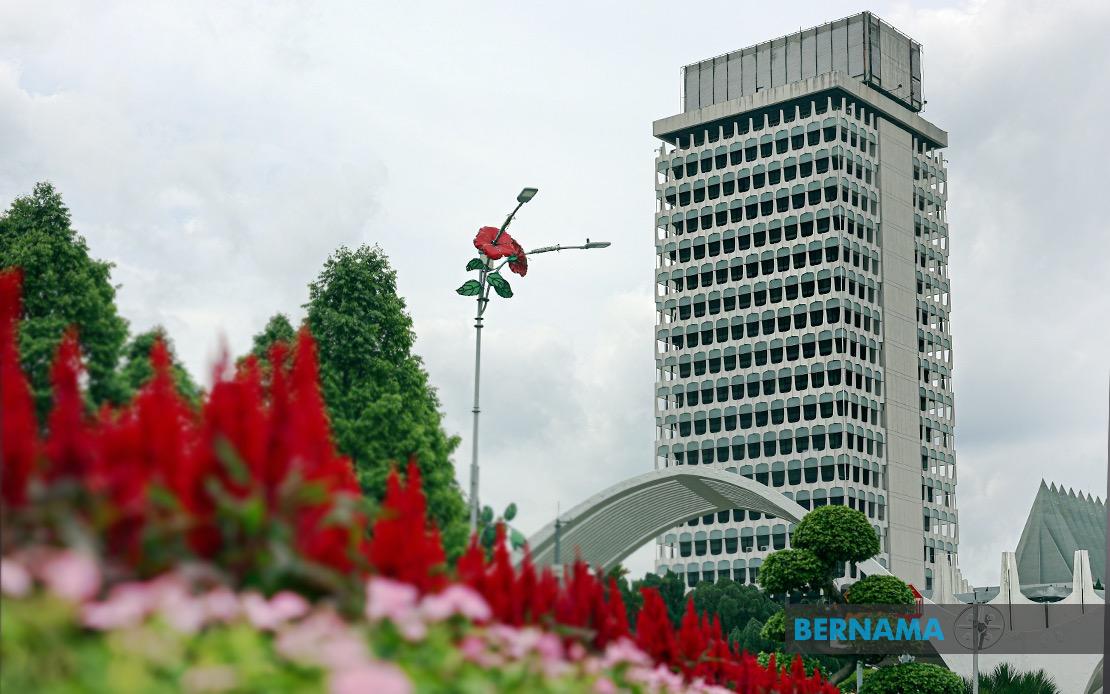
Parliament will probe two major strategic concerns facing Malaysia when the Dewan Rakyat convenes for questioning of ministers on July 14. At the heart of the session lies scrutiny over the anticipated benefits from deepening cross-border economic ties with Thailand, alongside growing anxiety about regional shipping disruptions that could ripple through the nation's supply chains and fiscal position.
Datuk Adnan Abu Hassan from Kuala Pilah, representing the Barisan Nasional coalition, will press the Prime Minister for specifics on what economic returns Malaysia stands to realise from the Malaysia-Thailand Border Economic Zone initiative. His line of questioning extends beyond headline figures to probe the mechanisms that would funnel prosperity to smaller enterprises and residents living in frontier communities—populations often marginalised in major infrastructure projects. This emphasis on inclusive growth reflects mounting political pressure to demonstrate that regional development schemes deliver tangible returns for ordinary Malaysians rather than concentrating wealth among large corporations and urban centres.
The Malaysia-Thailand BEZ represents one of the region's most ambitious attempts at bilateral economic integration, potentially opening new trade corridors and investment opportunities along their shared 640-kilometre frontier. However, the critical question remains whether such arrangements can be structured to genuinely uplift small merchants and farming communities in Perlis, Kedah, and northern Terengganu, or whether they risk becoming dominated by large conglomerates with superior capital and logistical reach. Parliamentary scrutiny of this nature signals that backbenchers across the coalition are unconvinced that current implementation safeguards exist for smaller stakeholders.
Equally pressing is the geopolitical dimension being raised by Datuk Rosol Wahid from Hulu Terengganu of the Perikatan Nasional opposition bloc. His question to the Prime Minister will seek a comprehensive government assessment of how the protracted Strait of Hormuz crisis threatens Malaysia's political and economic stability. The waterway, through which roughly one-third of global seaborne trade in liquefied natural gas and crude oil passes, sits at the nexus of Persian Gulf tensions. Any sustained disruption—whether through military confrontation, drone attacks on shipping, or escalation involving regional powers—poses direct consequences for Malaysia's energy security and manufacturing competitiveness.
For a nation where petrochemical refining, shipping logistics, and export-oriented manufacturing form pillars of economic activity, instability in the Strait of Hormuz translates into rising fuel costs, elevated insurance premiums for vessels, and supply-chain bottlenecks that ripple across sectors from automotive assembly to semiconductor fabrication. The questioning signals that lawmakers from both government and opposition benches recognise the vulnerability and want transparency on contingency planning. Ministers will face pressure to articulate what mitigation strategies—whether diversifying energy sources, negotiating alternative shipping routes, or building strategic reserves—the administration has deployed to buffer the economy from external shocks.
Beyond these major geopolitical and economic themes, parliament will also address a public safety concern with parliamentary implications. Datuk Yusuf Abd Wahab from Tanjong Manis, representing the GPS coalition partner, will question the Transport Minister on efforts to stamp out illegal street racing across Malaysian highways. The inquiry follows a high-profile incident in Simpang Renggam, Johor, on June 1, signalling that constituencies affected by dangerous road culture are demanding visible government action. Street racing, while often dismissed as a youth behaviour problem, touches on law enforcement capacity and road safety infrastructure—issues with electoral resonance in suburban and semi-rural constituencies.
On the legislative agenda, parliament will advance two substantial bills through their first reading stage. The Statistics Bill 2026, brought by the Economy Minister, modernises the framework governing official data collection and dissemination—a crucial foundation for evidence-based policymaking in an increasingly data-driven economy. The National Trust Fund Bill 2026, tabled by the Finance Minister, establishes new institutional mechanisms for managing public assets and sovereign wealth, reflecting evolving best practices in national financial governance.
A constitutionally significant development centres on the separation of the Attorney General and Public Prosecutor roles. Datuk Seri Azalina Othman Said, the Minister in the Prime Minister's Department overseeing Law and Institutional Reform, will present findings from a special parliamentary select committee that has spent considerable effort refining the original constitutional amendment proposal. The committee's seven refinements—distilled across seven meetings—aim to fortify institutional independence and enhance accountability within the prosecutorial machinery. This reform addresses long-standing concerns among legal professionals and civil society that fusing these two offices within a single individual concentrates prosecutorial power without adequate checks and balances.
The structural separation seeks to insulate the Public Prosecutor from executive interference by creating a distinct institutional identity with separate administrative structures and budgets. For a nation navigating post-reform governance improvements, such constitutional recalibration carries significance beyond the legal sphere, symbolising broader commitment to institutional maturation and the rule of law. The committee's emphasis on integrity and independence reflects international standards and addresses perceptions that prosecutorial decisions have, at various points in Malaysia's modern history, been influenced by political considerations rather than purely legal merit.
The current parliamentary sitting, running across 16 days from late June through the following Thursday, provides a compressed window for legislative business spanning multiple complex domains. Stacking the Malaysia-Thailand BEZ, Hormuz crisis, street racing, statistical governance, constitutional reform, and sovereign wealth instruments into a single sitting demonstrates how parliament must simultaneously juggle immediate public concerns, long-term institutional strengthening, and strategic economic positioning. The density of substantive issues underscores the multifaceted pressures confronting contemporary governance in Malaysia.
For regional watchers, the parliamentary focus on the Strait of Hormuz reveals how Southeast Asian nations, despite geographic distance from the Persian Gulf, remain acutely exposed to Middle Eastern geopolitical volatility. The interrogation of government readiness signals that Malaysian legislators understand their constituents' prosperity hinges partly on factors beyond national borders—a reality that shapes defence policy, energy strategy, and diplomatic positioning within ASEAN frameworks. Meanwhile, the deep dive into border zone economics reflects the region's broader turn toward sub-regional integration, with Malaysia and Thailand increasingly viewing their frontier less as a dividing line than as a collaborative space for mutual development.

