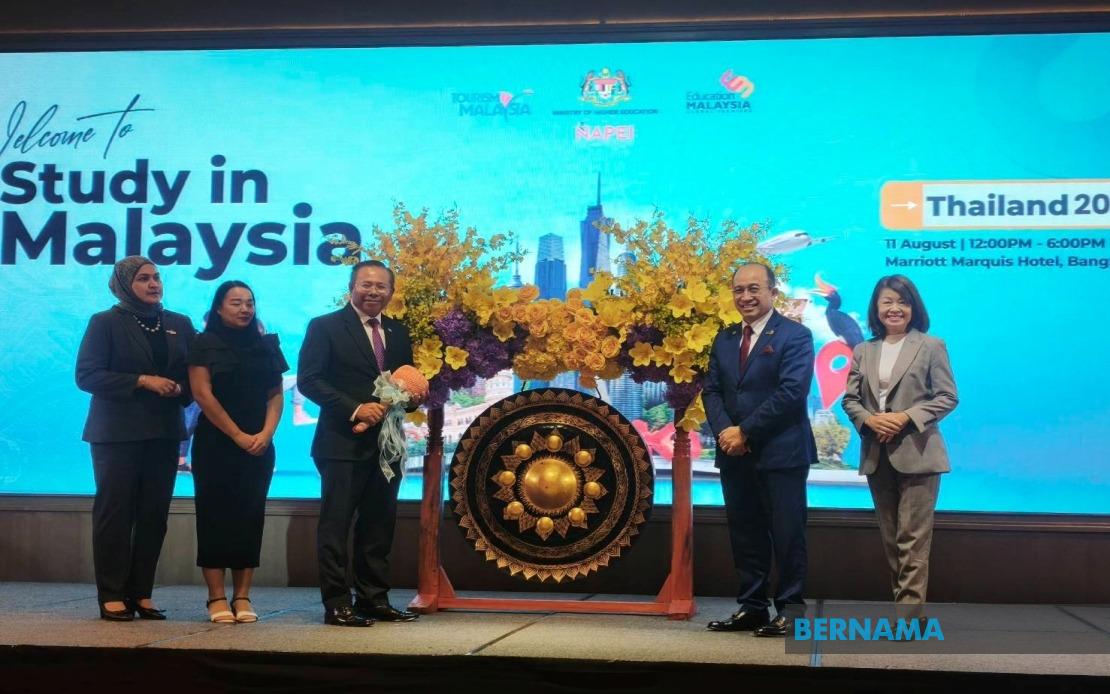
Malaysia's higher education sector is intensifying efforts to capture a larger share of the Thai student market, with Education Malaysia Global Services setting a target to increase Thai enrollments by more than one-fifth in the coming years. The campaign reflects a strategic recognition that Thailand represents a significant demographic opportunity for Malaysian universities seeking to boost international student numbers and enhance their institutional diversity.
Currently, Malaysia hosts 634 Thai students pursuing tertiary qualifications, according to EMGS data from 2025. The undergraduate segment dominates this cohort, accounting for just over 60 percent of Thai enrollments, while postgraduate students comprise approximately 40 percent. This distribution suggests Malaysia's appeal spans both freshly qualified secondary school graduates seeking bachelor's degrees and experienced professionals pursuing advanced qualifications.
The growth trajectory is already evident in recent enrollment patterns. Thai student numbers climbed from 300 in 2024 to 360 in 2025, representing a 20 percent year-on-year increase. However, Malaysian education authorities believe this momentum can be substantially accelerated through more coordinated promotional activities and institutional partnerships. The 20 percent target for the coming period would push Thai enrollments toward roughly 430 to 445 students, significantly expanding Malaysia's standing as a destination for Thai tertiary education.
Novie Tajuddin, chief executive of EMGS, emphasizes that Malaysia possesses multiple inherent advantages that naturally appeal to Thai students. Geographic proximity eliminates the lengthy travel times associated with distant study destinations and facilitates easier family visits and cultural connection. Tuition fees at Malaysian institutions remain considerably lower than comparable programs in developed nations, a critical factor for middle-class Thai families calculating education expenses. The overall quality of Malaysian higher education, particularly at private institutions and selected public universities, has gained regional recognition and increasingly competes favorably with other Southeast Asian alternatives.
To amplify awareness of these advantages, EMGS is mobilizing the Thai International Education Consultants Association, Thailand's sole professional body representing education agents, which maintains 78 active member organizations. This network reaches potential students through established advisory channels, ensuring promotional messages penetrate Thai communities effectively. The collaboration with TIECA represents a significant infrastructure play, tapping into existing trust relationships between Thai students and education consultants who guide their tertiary choices.
The Study in Malaysia Education Fair, organized jointly by EMGS, Tourism Malaysia and the National Association of Private Educational Institutions, demonstrates the multi-agency coordination underpinning this recruitment drive. The fair conducted roadshows across three Thai cities—Chiang Mai, Bangkok and Hat Yai—during August 2025, reaching prospective students across different regions and socioeconomic segments. This geographic diversity ensures that the campaign extends beyond Bangkok's metropolitan affluent zones into provincial Thailand, where growing middle classes increasingly prioritize international education.
A particularly compelling incentive is Malaysia's Graduate Pass scheme, which permits international students who complete their studies to remain in Malaysia for one year to gain work experience in approved sectors. For Thai graduates, this provision offers a practical pathway to employment in Southeast Asia's most developed economy outside Thailand itself, with potential career advancement and income-earning opportunities before returning home or pursuing onward migration. The ability to work post-graduation transforms tertiary study in Malaysia from a purely educational investment into a launchpad for professional development, substantially enhancing the proposition's appeal.
Malaysia's Ambassador to Thailand, Datuk Wan Zaidi Wan Abdullah, is championing an additional strategic initiative: dedicated scholarship programs exclusively for Thai students. Such programs would substantially reduce financial barriers, particularly for high-achieving candidates who might otherwise pursue tertiary education in Thailand, Vietnam or other regional alternatives. Dedicated scholarships signal institutional commitment to Thai recruitment and could effectively shift cost-benefit calculations that currently favor domestic Thai universities among price-sensitive families.
The push toward increased Thai enrollment forms part of Malaysia's broader ambitions to position itself as a regional hub for talent and knowledge. EMGS, operating under the Ministry of Higher Education, coordinates international student facilitation, visa processing and promotional campaigns that collectively shape Malaysia's international education brand. Thailand, representing both a substantial population base and geographical proximity, represents a strategically logical market for expansion relative to more distant recruitment territories.
Coordination between Malaysian educational institutions and Thailand's diplomatic presence reflects recognition that student recruitment operates across multiple institutional and governmental levels. EMGS maintains active engagement with the Thai Embassy in Malaysia, strengthening bilateral education cooperation frameworks and ensuring consistent messaging between promotional and diplomatic channels. This institutional coherence reinforces campaign credibility and facilitates smoother operational processes for prospective Thai students navigating Malaysia's admission requirements.
The timing of this intensified recruitment effort coincides with growing regional competition for international students. Vietnam, Indonesia and the Philippines increasingly develop their higher education sectors, while established destinations like Singapore and Australia maintain strong Thai student bases. Malaysia's strategy of leveraging geographic advantages, affordability and post-study opportunities positions it competitively within this landscape, offering a distinct value proposition that differs from premium-positioned competitors while maintaining quality assurances that distinguish it from less-developed alternatives.
For Malaysian universities, successful recruitment of Thai students yields multiple benefits beyond immediate enrollment increases. Diverse international cohorts enhance campus multiculturalism, enriching educational environments for all students and preparing graduates for globalized workforces. Thai students contribute to campus economies through tuition fees and living expenses, generating revenue that supports institutional operations and infrastructure development. Successful Thai graduates become ambassadors for Malaysian education quality, influencing subsequent cohorts' decisions and building long-term reputation effects that extend recruitment benefits across multiple years.
The campaign's success will ultimately depend on sustained institutional commitment, consistent promotional messaging across Thai markets and tangible improvements in Thai student experiences within Malaysian universities. If current trajectories continue and targeted initiatives prove effective, Malaysia could substantially expand its Thai student population while positioning itself as the preferred regional tertiary destination for Thai students seeking affordable, accessible and quality-assured higher education opportunities.

