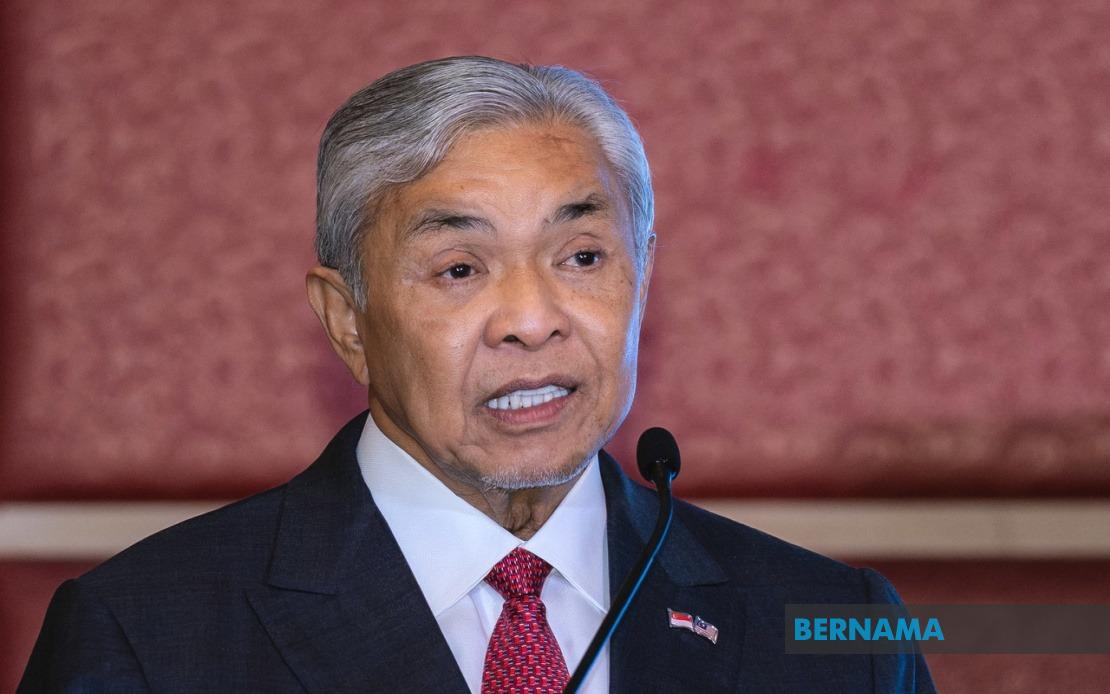
Malaysia's Technical and Vocational Education and Training sector is being repositioned as a pathway to guaranteed employment, with Deputy Prime Minister Datuk Seri Dr Ahmad Zahid Hamidi asserting that strategic industry collaboration has delivered a 100 per cent graduate employability rate. Speaking after an address to the TVET@KKDW contingent preparing for WorldSkills Shanghai 2026, Ahmad Zahid outlined how the government's coordinated approach between educational institutions and employers has fundamentally reshaped outcomes for vocational graduates, moving beyond traditional concerns about skills mismatches and wage inadequacy.
The core of this strategy rests on proactive engagement between TVET providers and companies during the curriculum design phase, rather than waiting for graduates to enter a competitive labour market. By consulting with industry players beforehand, institutions can align their offerings with real workplace demands, ensuring that students learn skills employers actually need. This preventive approach addresses a persistent problem in vocational education: the disconnect between what is taught and what employers require, which has historically left some graduates unemployable despite completing their courses. Ahmad Zahid, who also chairs the National TVET Council and serves as Rural and Regional Development Minister, emphasised that this alignment eliminates the downstream complications that have plagued previous cohorts, including wage disputes and redundant skill sets.
The assertion of 100 per cent employability is supported by a system where job offers are extended to students before they graduate, effectively securing employment pathways while studies are underway. This mechanism transforms the student experience fundamentally: rather than completing coursework in uncertainty about job prospects, TVET learners can graduate with confirmed positions waiting. For Malaysia's economy, this represents efficient human capital development, reducing the lag between education and productive employment that typically burdens young workers and creates fiscal drag through prolonged unemployment benefits or underemployment in unrelated sectors.
The government is also expanding offerings through High TVET courses, a tier designed specifically to meet advanced industry standards and emerging sectors. This diversification recognises that vocational pathways extend beyond traditional trades into technology-intensive fields, reflecting broader economic shifts toward digitisation and knowledge-based manufacturing. By introducing courses pitched at higher skill levels, Malaysia is attempting to capture middle-skill employment opportunities that might otherwise be filled by overseas workers or lost to neighbouring countries with more developed vocational ecosystems.
The timing of these reforms coincides with Malaysia's preparation for WorldSkills Shanghai 2026, where the nation will field nine competitors from MARA TVET, Universiti Kuala Lumpur (UniKL), and GIATMARA across nine skill categories spanning Fashion Technology, Cyber Security, and Electronics. This international competition serves dual purposes: it benchmarks Malaysian vocational excellence against global standards whilst showcasing the quality of the domestic TVET system to prospective employers and policymakers. Ahmad Zahid's expression of confidence in the contingent's potential reflects broader ambitions to position Malaysia as a serious player in skilled trades and technical professions on the regional and global stages.
The emphasis on mental resilience and emotional fortitude in Ahmad Zahid's address to competitors indicates recognition that vocational excellence extends beyond technical knowledge. International competitions demand psychological preparation alongside skill development, and the framing suggests that the government views TVET participation in WorldSkills as character-building for Malaysian youth, demonstrating capacity to compete with peers from developed economies. With two months remaining before the September 22-27 competition in Shanghai, the contingent faces compressed timelines for final refinements, underscoring the intensity of preparation required for high-stakes international events.
For Malaysian readers, these developments carry several implications. The guaranteed employment promise addresses persistent anxiety among families considering vocational rather than university pathways, a concern that has historically skewed educational choices toward academic institutions regardless of individual aptitudes or labour market needs. By anchoring TVET to employment certainty, the government aims to destigmatise vocational choices and broaden the talent pool available to employers across manufacturing, services, and emerging technology sectors. This could ease chronic skills shortages that have constrained productivity and competitiveness in segments of the Malaysian economy.
The industry collaboration model also signals a shift in how workforce development is conceived: no longer as something education providers accomplish in isolation, but as a shared responsibility between schools, employers, and government. This tripartite approach mirrors successful vocational systems in countries like Germany and Switzerland, where apprenticeships and technical education thrive through institutionalised partnerships. Malaysia's adoption of similar principles, though expressed through different institutional frameworks, suggests learning from international best practices adapted to local contexts.
Regionally, Malaysia's emphasis on TVET excellence positions it competitively within Southeast Asia, where some countries have invested heavily in vocational infrastructure whilst others remain underdeveloped. By securing employment outcomes and demonstrating international competitiveness through WorldSkills participation, Malaysia strengthens its appeal as a regional hub for technical talent development and potentially attracts students from neighbouring countries seeking quality vocational education with employment prospects.
However, the sustainability of 100 per cent employment claims depends on several factors beyond immediate policy announcements. Labour market volatility, sectoral downturns, and economic slowdowns could disrupt employer hiring plans regardless of curriculum alignment. Additionally, the promise rests on continuous recalibration of courses as industries evolve; a static curriculum aligned with today's needs may quickly become obsolete. The government's success in maintaining this achievement will require ongoing investment in institutional capacity, regular employer engagement cycles, and flexibility to rapidly introduce new courses as technology and economic structures shift.
The WorldSkills competition also serves as a testing ground for these reforms. If Malaysian competitors perform strongly at Shanghai 2026, it will validate the quality of TVET training and provide empirical evidence that industry collaboration produces internationally competitive skills. Conversely, any disappointment would suggest gaps between domestic standards and global benchmarks that require addressing. Either outcome will inform policy adjustments and resource allocation decisions for the TVET sector in coming years, making the competition significant beyond its immediate sporting dimensions.
Ultimately, Ahmad Zahid's assurances reflect a government convinced that vocational education can be systematically reshaped to serve both individual graduates and broader economic needs. By focusing on employability as the primary success metric and building institutional mechanisms to achieve it, Malaysia is attempting to resolve a long-standing tension: how to provide skilled workers for employer needs whilst offering dignified, secure employment pathways for young Malaysians. Whether this ambitious vision translates into sustained practice across all TVET institutions and cohorts remains to be seen, but the policy direction signals serious commitment to making vocational education a credible and desirable educational pathway.

