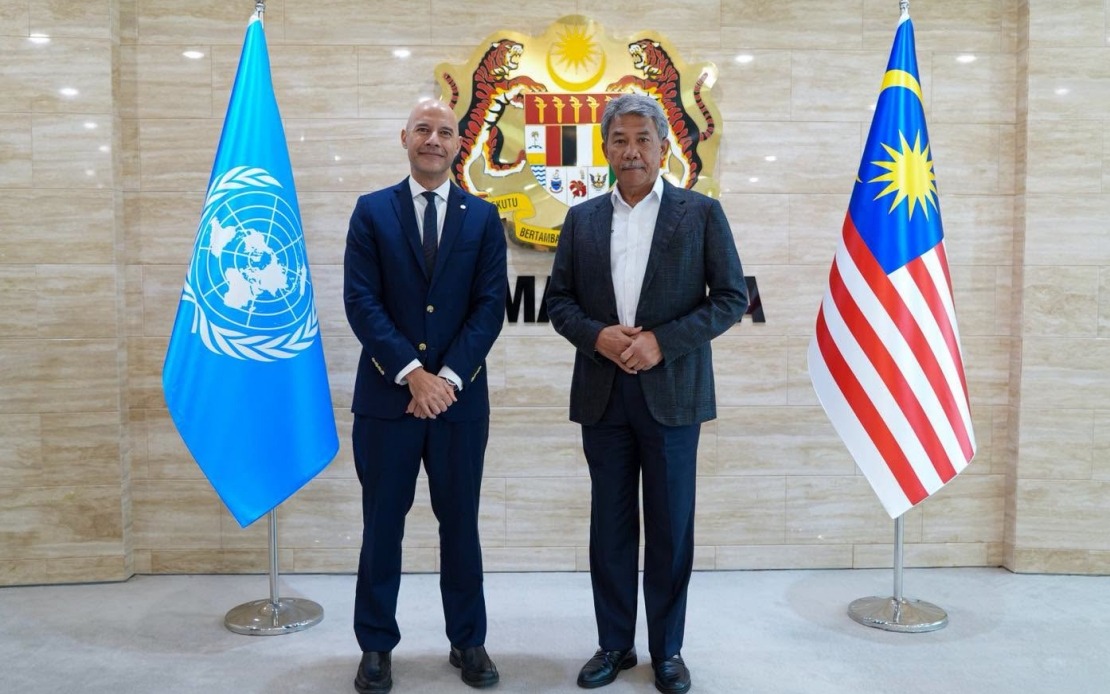
Foreign Minister Datuk Seri Mohamad Hasan received United Nations Resident Coordinator (UNRC) for Malaysia Nikolas Myint at Wisma Putra on Wednesday in a courtesy meeting that underscored Malaysia's ongoing engagement with the global organisation. The visit marked an opportunity for both officials to discuss the expanding relationship between Kuala Lumpur and UN agencies operating within the country, signalling a renewed emphasis on bilateral cooperation at a senior governmental level.
Myint, who took up his position following appointment by UN Secretary-General on May 31, 2026, oversees UN operations across a three-nation portfolio encompassing Malaysia, Singapore and Brunei. The posting reflects the United Nations' recognition of Malaysia's strategic importance in Southeast Asia and its role as a key partner in addressing regional and international development priorities. As the newly installed coordinator, Myint's early engagement with Malaysia's Foreign Minister demonstrates the organisation's intention to deepen institutional relationships and align UN programmes with national development objectives.
According to remarks shared on social media, Mohamad highlighted Malaysia's appreciation for the UN's multifaceted role in tackling pressing global challenges that increasingly affect developing nations. The Foreign Minister's statement underscored how international cooperation through multilateral bodies remains essential for addressing transnational issues that transcend borders, from climate change to public health and sustainable development. This positioning reflects Malaysia's long-standing commitment to multilateralism and its belief that regional stability and prosperity depend on effective global governance frameworks.
The meeting centred on identifying concrete areas where Malaysia and UN agencies can collaborate more effectively to advance shared objectives. Mohamad reiterated that Malaysia would maintain close working relationships with both the UNRC and various UN agencies established in the country, emphasising that such partnerships should generate mutual benefits. This language signals Malaysia's pragmatic approach to international cooperation, wherein engagement serves both the nation's development aspirations and broader global well-being.
Malaysia's relationship with the UN encompasses multiple dimensions beyond traditional diplomacy. The country hosts UN offices responsible for humanitarian coordination, sustainable development programmes, and regional advocacy initiatives. By strengthening ties with the resident coordinator's office, Malaysia seeks to ensure that UN resources and expertise are optimally deployed to address domestic challenges while contributing to regional stability. The agenda likely included discussions on the UN's support for Malaysia's climate commitments, pandemic preparedness, and poverty reduction initiatives.
The timing of this meeting carries significance within Malaysia's broader foreign policy framework. As a middle-income nation with considerable diplomatic influence in Southeast Asia, Malaysia views its UN engagement as integral to advancing regional prosperity and security. The resident coordinator serves as a crucial liaison between national government ministries and UN headquarters, facilitating programme implementation and ensuring alignment with global standards and best practices. This formal engagement signals Malaysia's intention to leverage UN expertise in critical development areas.
For Malaysian readers, understanding these institutional interactions matters because UN programmes often directly affect policy implementation in healthcare, education, and environmental protection. When the Foreign Ministry emphasises cooperation with UN agencies, it typically presages new initiatives addressing education quality, skills development, and sustainable resource management. Similarly, UN support often validates and amplifies Malaysia's commitments made on international platforms, providing technical and financial resources that supplement national budgets.
Myint's appointment to coordinate across three distinct Southeast Asian economies presents unique challenges and opportunities. Malaysia, as the most populous and economically developed nation in his portfolio, will likely receive substantial attention for implementing global development agenda priorities. The resident coordinator must balance the interests of three countries with different development priorities while maintaining UN operational efficiency. Malaysia's early engagement through its Foreign Minister demonstrates national commitment to making this tripartite arrangement work effectively.
Looking forward, the relationship between Malaysia's government and the UN's resident coordinator's office will likely expand to include higher-frequency technical consultations between sectoral ministries and UN programme teams. Environment and climate change initiatives, digital transformation support, and pandemic preparedness will probably dominate the cooperation agenda. Malaysia's own commitment to carbon neutrality by 2050 and net-zero emissions by 2100 aligns closely with UN sustainability objectives, creating natural areas for partnership development.
The courtesy call also reflects broader diplomatic protocol whereby foreign governments ensure constructive relationships with international organisations operating on their territory. By receiving the coordinator formally, Malaysia signals both welcoming the UN's presence and establishing clear parameters for engagement. This foundational meeting typically precedes detailed technical discussions involving various Malaysian government agencies with specific programme responsibilities, from the Health Ministry to the Environmental Quality and Water Resources Ministry.

