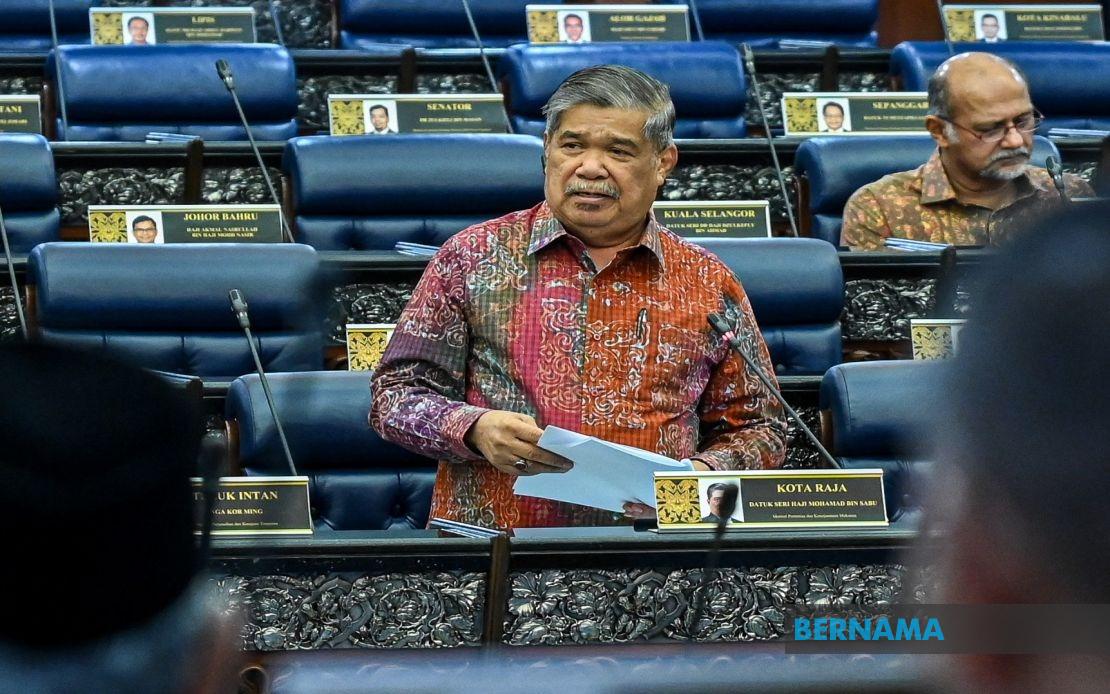
The government is rolling out an extensive defence strategy against the looming El Niño phenomenon, prioritising both immediate support for struggling farmers and longer-term resilience-building across Malaysia's agricultural heartland. Speaking during parliamentary questions this week, Agriculture and Food Security Minister Datuk Seri Mohamad Sabu detailed a multi-layered approach designed to insulate the nation's food supply from the climatic disruption expected to intensify pressure on water availability and crop yields throughout Southeast Asia.
At the core of the strategy lies enhanced water resource management, a critical concern for a region where monsoon-dependent farming has dominated for centuries. The ministry is implementing continuous real-time monitoring of water levels across dam systems and catchment areas, allowing officials to make swift allocation decisions as dry conditions tighten. Complementing this surveillance infrastructure is an investment in precision agriculture technology, particularly smart irrigation systems and drip irrigation networks that deliver water directly to plant root zones, dramatically reducing wastage compared to traditional flooding methods. These interventions acknowledge a hard reality: as El Niño typically suppresses rainfall across the region, every litre of available water must work harder to sustain productive land.
The agricultural research establishment has been mobilised to develop new paddy varieties engineered for drought tolerance. Malaysia's Agricultural Research and Development Institute (MARDI) is accelerating its breeding programmes to produce rice strains capable of maintaining acceptable yields even when water becomes scarce. This long-term crop improvement sits alongside more immediate weather-manipulation efforts, with cloud seeding operations scheduled during meteorologically favourable windows to coax additional rainfall from passing weather systems. While cloud seeding remains scientifically debated, it represents an acknowledgment that Malaysia cannot rely on nature alone to deliver the moisture the agricultural sector demands.
Financial support for farmers already facing hardship has begun flowing, though the scale of need appears substantial. During the first phase of a disaster assistance programme, RM45.24 million reached 8,224 rice farmers from 2024 onwards. More comprehensive figures reveal that until June 30 this year, RM38.53 million has been distributed across 55,058 rice farmers cultivating 16,933 hectares in the drought-affected zones of Peninsular Malaysia's north and east. These regions, including major rice-producing states, face particular vulnerability as they historically depend on seasonal water patterns now under threat from El Niño's characteristic pressure pattern changes.
Beyond crisis management, the government is pursuing production expansion to reduce import dependence, a strategic imperative for a nation that typically imports a significant portion of its rice consumption. Large-scale paddy development projects are underway in Sarawak, Pahang, and other locations, aiming to boost domestic output and cushion the economy against price fluctuations in international grain markets. Simultaneously, the ministry is promoting controlled environment agriculture—greenhouse and vertical farming systems that minimise weather exposure—as a hedge against climate variability affecting both crops and livestock operations. These capital-intensive initiatives require years to yield results but represent an acknowledgment that traditional agricultural patterns may no longer suffice.
Parallel concerns have emerged in the horticulture sector, where oversupply has triggered price collapses that threaten producer incomes despite strong domestic demand. The durian crisis, where export logistics bottlenecks have coincided with record harvests, illustrates how supply-chain inefficiency can devastate farmer revenues as quickly as drought. The ministry is consequently negotiating with Chinese authorities to streamline customs procedures and logistics for fresh and frozen fruit shipments, recognising that market expansion—particularly into smaller Chinese cities with large untapped demand—offers economic relief independent of weather conditions.
These initiatives underscore a broader recognition among Malaysian policymakers that food security requires orchestrated action across multiple fronts simultaneously. Water management, crop science, farmer financial support, export market development, and agricultural diversification must all advance in concert. The government maintains a rice reserve stockpile covering approximately six months of consumption, providing a buffer while production adjusts and import channels remain open. Such reserves, however, prove most effective when combined with domestic production increases and import continuity rather than relied upon exclusively.
The El Niño threat carries particular significance for Malaysia and Southeast Asia because the region's agricultural development occurred under assumptions of reliable monsoon precipitation and stable hydrological cycles. Climate variability at the intensity suggested by El Niño projections challenges these foundations. Neighbouring countries face similar pressures, creating potential competition for imported foodstuffs and driving regional prices upward. Malaysia's position as a developed economy with import capacity offers advantages over less wealthy nations, but this advantage fades if global food price inflation accelerates substantially.
For Malaysian agriculture, the coming months will test whether this coordinated response sufficiently mitigates El Niño impacts. Water conservation technologies and new crop varieties require time to deploy across millions of hectares of farmland. Farmer adaptation to unfamiliar practices demands education and initial investment often beyond individual means. International market negotiations must translate into sustained demand growth rather than one-off procurement agreements. The government's confidence in its preparedness, evident in minister Mohamad's parliamentary statements, will face validation against actual rainfall deficits and crop performance metrics in the affected zones throughout the dry season ahead.

