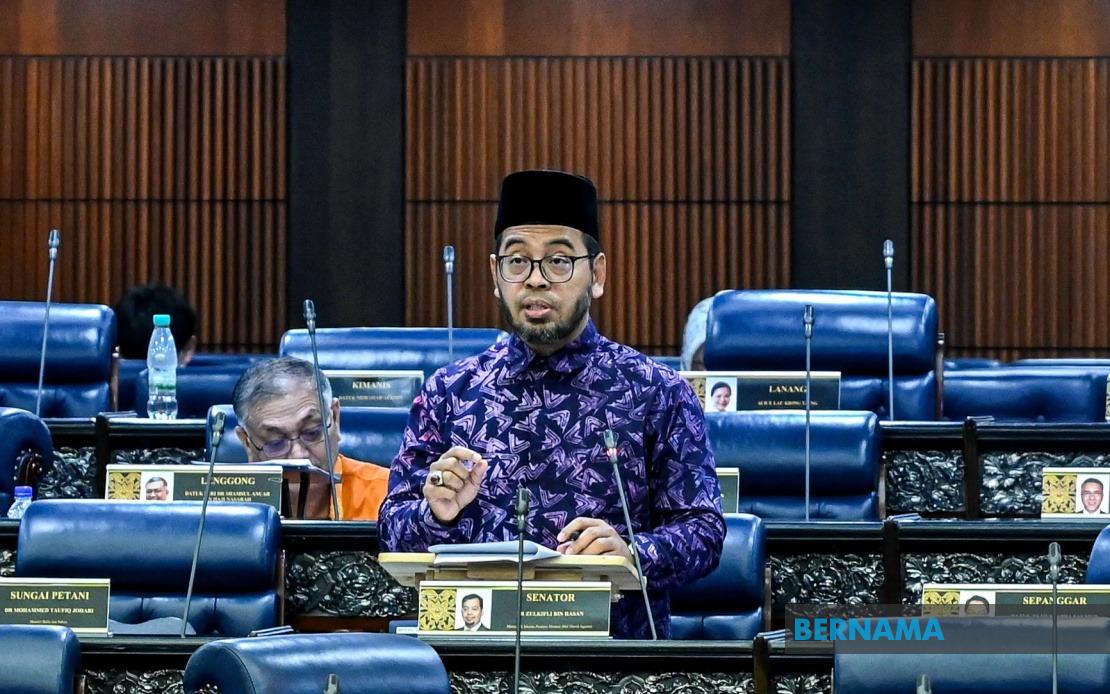
The Malaysian government is tightening its grip on the dissemination of religious teachings deemed inconsistent with orthodox Islamic doctrine, deploying a coordinated strategy across multiple government bodies to monitor and suppress their spread through digital channels. Minister in the Prime Minister's Department (Religious Affairs) Dr Zulkifli Hasan outlined this integrated approach in parliament, emphasizing that authorities are working together to address what they view as a growing challenge posed by heterodox Islamic movements operating beyond traditional institutional frameworks.
The shift in enforcement priorities reflects a significant evolution in how unorthodox teachings operate in Malaysia. What once transpired through secretive in-person gatherings has migrated almost entirely to digital platforms and encrypted messaging applications, where promoters disguise their activities as self-improvement seminars, community welfare programmes, natural health practices, and informal religious education. This transformation presents enforcement agencies with unprecedented challenges, as the borderless nature of the internet and the difficulty of monitoring private digital conversations complicate surveillance and intervention efforts.
Dr Zulkifli detailed the tactics deployed by groups spreading what authorities classify as deviant doctrines. These organizations frequently employ motivational narratives framed around spiritual enlightenment, leverage psychological conditioning techniques, circulate conspiracy theories, and utilize the credibility of influential personalities to attract followers who may lack deep grounding in Islamic theology. The sophistication of these methods suggests that simple prohibition or arrest alone is insufficient to address the underlying appeal these movements hold for their adherents.
The government's enforcement machinery has generated measurable results in recent months. In May this year, authorities apprehended 288 individuals identified as followers of Ahmadiyya Qadiani in Sabah, while a separate operation in Petaling Jaya resulted in the detention of 226 foreign nationals connected to a Syiah religious centre. These operations involved coordinated action among the Department of Islamic Development Malaysia, state-level Islamic authorities, the Royal Malaysian Police, the Malaysian Communications and Multimedia Commission, the National Security Council, municipal governments, immigration officials, and the National Registration Department.
However, the emphasis on detention and enforcement alone masks a deeper governmental concern about the ideological orientation of these communities. Malaysian authorities maintain that these movements diverge from Ahli Sunnah Wal Jamaah theology, the Sunni orthodox framework that forms the basis of Islamic practice in Malaysia's federal constitution and institutional Islam. This doctrinal distinction carries significant weight in Malaysia's constitutional and legal frameworks, where religious authority is concentrated in the hands of state Islamic authorities aligned with Sunni orthodoxy.
Beyond punitive measures, the government has initiated what it terms intervention and rehabilitation programmes designed to reorient individuals who have adopted unorthodox beliefs. These initiatives include targeted counselling sessions for affected individuals and group leaders, court-ordered placements in faith rehabilitation facilities overseen by Syariah courts, and structured programmes aimed at deepening participants' understanding of Islamic theology under the supervision of officially recognized Islamic scholars and institutions.
The establishment of the National Steering Committee to Address Threats to Faith represents a broader strategic pivot toward preventive measures targeting younger demographics. Recognizing that young Malaysians may prove vulnerable to heterodox teachings through their digital connectivity and relative distance from traditional Islamic institutional structures, the government has assembled a multi-ministerial task force drawing expertise from education authorities, higher learning institutions, home affairs officials, and JAKIM. This committee signifies official acknowledgment that addressing religious heterodoxy requires coordination across educational, security, and social sectors, not merely religious authorities acting in isolation.
The government's counteroffensive includes several youth-focused programmes. The Institut Pemantapan dan Perkaderan Akidah Malaysia operates specialized faith-building initiatives, while the My Insaniah Programme and Rakan Masjid Programme operate in tandem with the Ministry of Youth and Sports to engage younger Malaysians. Simultaneously, authorities have enhanced the KAFA 2.0 curriculum, which focuses on Quranic study and fundamental Islamic obligations, with the explicit goal of building religious identity and psychological resilience against alternative interpretations of Islam among school-age children.
The Malaysian approach sits within broader Southeast Asian patterns where governments maintain tight control over religious authority and institutional Islam. Unlike some Muslim-majority democracies where multiple theological schools coexist with greater autonomy, Malaysia's system vests significant power in state-recognized Islamic bodies, creating legal and administrative mechanisms to suppress competing religious authorities. This framework intersects with Malaysia's plural society, where minority religious communities exist alongside the Muslim majority, creating both incentives and pressures for the state to maintain control over Islamic institutional authority.
Yet the transition of unorthodox teachings to digital platforms and cross-border networks presents enforcement challenges that centralized state authority struggles to address completely. The borderless nature of the internet means that teachings originating outside Malaysia can reach Malaysian audiences with minimal friction, while encrypted communications make mass surveillance impractical despite technological advances. This creates an enforcement paradox where the state possesses formal authority and institutional capacity, but lacks the practical ability to monitor all private religious discourse occurring within Malaysian society.
The long-term effectiveness of Malaysia's dual strategy of enforcement and ideological counter-programming remains uncertain. Enforcement actions generate short-term disruption but may drive heterodox movements further underground or to more secure digital platforms, while youth-oriented prevention programmes require sustained commitment and compete with the organic appeal that alternative theological movements may hold for individuals seeking religious authenticity or community connection outside state-controlled institutions.
For Malaysian policymakers, the challenge extends beyond simple law enforcement into questions about religious pluralism and the appropriate boundaries of state authority over personal faith. While the government presents its actions as protecting Islamic orthodoxy, critics question whether such extensive monitoring and intervention in private religious practice aligns with constitutional protections for individual liberty and freedom of conscience, even within the framework of Malaysia's Islamic constitutional order.

