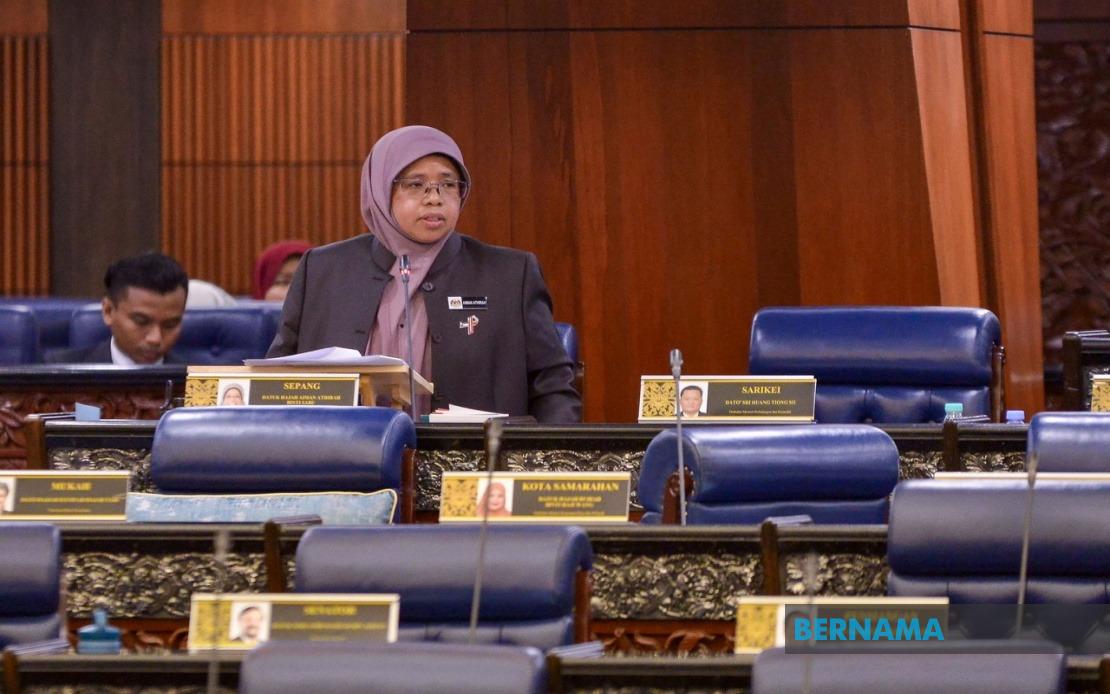
The Malaysian government is overhauling its approach to residential development by anchoring policy decisions in statistical evidence rather than market speculation, Deputy Housing and Local Government Minister Datuk Aiman Athirah Sabu announced in parliament on July 14. The shift toward data-driven planning represents a significant institutional recalibration, drawing on comprehensive datasets from the Department of Statistics Malaysia (DOSM), the National Property Information Centre (NAPIC), the Malaysian Urban Observatory (MUO), and property application records across multiple agencies. This integrated information system aims to eliminate the chronic misalignment between where homes are built and where people actually need them, a problem that has contributed to both affordability crises and inventory gluts in different regions.
The government's strategy responds to mounting public concern about housing accessibility and runaway property prices. By analyzing state and district-level data on household income, population movement, and existing stock, planners can now determine the appropriate type, scale, and location of new residential projects in synchronization with genuine market demand and what households can realistically afford. This represents a departure from previous approaches that sometimes prioritized developer interests or regional prestige over practical demographic need. The evidence-based framework is designed to curb speculative overbuilding in hot markets while ensuring adequate supply reaches underserved areas where demand exists but construction has lagged.
Coordinating this multi-agency effort is the National Affordable Housing Council, chaired by the Prime Minister, which sits at the apex of federal and state housing policy. The council's mandate extends beyond strategic planning to encompassing implementation monitoring and resolution of systemic bottlenecks that fragment affordable housing policy across Malaysia's 13 states and federal territories. This governance structure acknowledges that housing is not purely a federal concern; state governments control significant land and planning authority, and coordination failures between levels often sabotage national initiatives. By positioning the Prime Minister's office as the convening authority, the government signals political priority and institutional muscle to align competing interests.
A pressing challenge the government has confronted is the proliferation of delayed, stalled, and abandoned housing projects that leave thousands of buyers in legal and financial limbo. To address this dysfunction, the government established a Special Task Force focused on Delayed, Sick and Abandoned Private Housing Projects in December 2022. The results disclosed in parliament suggest meaningful progress. As of May 2026, the task force has overseen the revival of 1,615 such projects comprising 190,422 housing units with a combined gross development value of RM150.8 billion. For Malaysian home seekers and investors, this figure carries symbolic weight; it suggests the government is willing to intervene in market failures where private developers cannot or will not complete commitments, preventing the erosion of consumer confidence in the sector.
The scale of the revival effort is substantial relative to Malaysia's annual housing output. With nearly 200,000 units recovered from stasis, the revived projects represent a meaningful injection into supply across multiple price points and geographic markets. However, the task force's work also highlights a systemic fragility; the fact that more than 1,600 projects required government intervention points to underlying weaknesses in developer vetting, project financing, or market demand forecasting that permitted such extensive project abandonment. Moving forward, strengthening pre-construction controls and early warning systems will be essential to prevent similar accumulation of distressed projects.
A cornerstone of the new approach is the forthcoming National Housing Policy 2026-2035, which the ministry is finalizing. This policy document will embed a more adaptive, geographically calibrated approach to defining "affordable" housing. Rather than applying blanket price thresholds nationally, the policy will use state and district-level median household income data from the 2024 Household Income and Basic Amenities Survey to establish context-appropriate affordability benchmarks. This localized standard recognizes that a house priced at RM300,000 may be affordable in a rural state but unattainable in the Klang Valley, and policy should reflect that reality. By tying affordability definitions to actual earning capacity in each market, the government can ensure that new housing supply genuinely serves the populations it targets.
Building this localized affordability mapping is the Ministry of Housing and Local Government (KPKT) itself, which is conducting a systematic exercise in data collection and analysis. The mapping project leverages the DOSM's 2024 household income survey, arguably the most authoritative recent snapshot of Malaysian income distribution available. This institutional capacity-building exercise simultaneously advances policy quality and strengthens statistical infrastructure for future housing decisions. The willingness to invest in granular data collection signals that the government is moving beyond anecdotal or politically convenient definitions of housing need toward evidence that can withstand scrutiny and adapt as demographics shift.
Affordability extends beyond the purchase price itself, a reality that first-time homebuyers know intimately. Deputy Minister Aiman Athirah acknowledged that renovation and maintenance costs impose substantial additional burdens on new owners, often totaling tens of thousands of ringgit in the critical first years of ownership. To address this constraint, the government has expanded the Housing Credit Guarantee Scheme (SJKP), which now guarantees up to 120 percent of a property's value. The additional 20 percent coverage is explicitly designated for renovation and related expenses, effectively treating post-purchase improvements as an integral component of total housing affordability rather than an afterthought. This design reflects understanding that an affordable house that requires expensive remedial work is not truly affordable to first-time buyers with limited savings.
The government is also broadening access to financing by factoring overall affordability holistically. Rather than focusing narrowly on the initial purchase mortgage, policy now encompasses the full suite of costs and payment mechanisms that determine whether a household can realistically attain homeownership. This integrated approach recognizes that financing constraints often represent a more binding constraint on homeownership than price alone; a household might have sufficient income to service a mortgage but lack the down payment or encounter credit barriers. By bundling renovation guarantees and credit insurance into a coherent financing framework, the government attempts to lower structural barriers that have historically locked lower-income Malaysians out of owner-occupied housing.
For Southeast Asian observers, Malaysia's recalibration of housing policy offers both cautionary and instructive lessons. Housing affordability has become a defining political issue across the region as rapid urbanization, foreign capital inflows, and supply constraints have disconnected residential costs from earning capacity in major urban centers. Malaysia's choice to institutionalize data-driven planning and coordinate policy across federal and state tiers represents a middle way between hands-off market approaches that have generated affordability crises elsewhere and heavy-handed state control that stifles supply. The emphasis on evidence and coordination suggests that policy design matters as much as resource allocation; poorly coordinated interventions or policies misaligned with actual household needs can waste resources without achieving their objectives.
The revitalization of 1,615 distressed projects also illustrates the costs of allowing market failures to accumulate. Developer insolvency, incomplete financing, weak oversight, or miscalculated market demand had frozen hundreds of thousands of housing units in incomplete limbo, effectively removing them from the usable stock despite their theoretical existence. The special task force's work in unblocking these projects represents a significant institutional achievement but one that highlights how preventive policy is more efficient than remedial intervention. The government's continued emphasis on data-driven planning and stricter project oversight aims to prevent such accumulation in future development cycles.
Looking ahead, the true test of the government's housing strategy will be its implementation fidelity and adaptation capacity. Data-driven planning only produces value if agencies actually use evidence to guide decisions and adjust course when outcomes diverge from projections. The National Affordable Housing Council's role in monitoring implementation and resolving inter-governmental coordination problems will be critical. Additionally, as Malaysia's demographics and economic structure shift, the affordability benchmarks and supply targets will require regular recalibration. The policy framework appears technically sound and administratively ambitious, but sustained political commitment and adequate funding for task force operations and data infrastructure maintenance will determine whether this represents a durable shift in housing governance or a cyclical policy emphasis that fades when political attention moves elsewhere.

