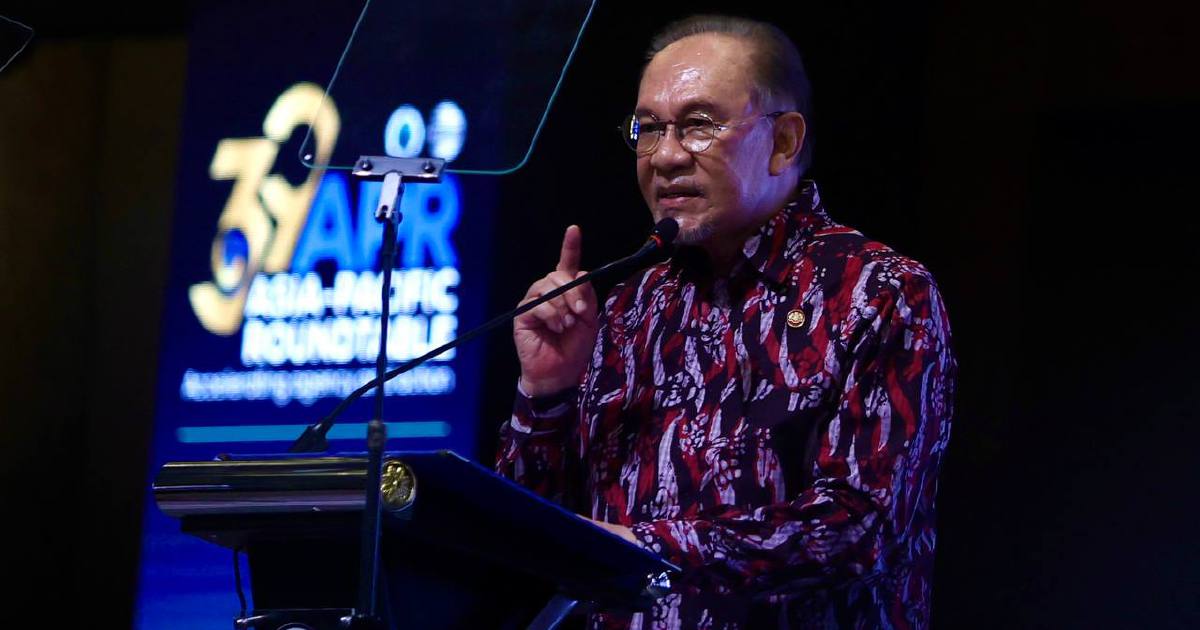
Prime Minister Datuk Seri Anwar Ibrahim has reaffirmed Malaysia's unwavering commitment to pursuing an independent and non-aligned foreign policy, positioning the nation as a sovereign actor capable of charting its own course in an increasingly complex geopolitical landscape. The statement underscores Kuala Lumpur's determination to avoid entanglement in the strategic competition between major powers while actively advancing national interests on the global stage.
Malaysia's non-aligned stance represents a fundamental principle that has guided the nation's diplomatic approach since independence. Unlike many regional neighbours who have gravitated towards closer partnerships with specific superpowers, Malaysia has historically maintained deliberate distance from bloc politics. This strategic positioning has enabled the country to engage with diverse partners—from the United States and China to India and the European Union—without sacrificing autonomy or becoming subordinate to any single power's agenda.
The emphasis on proactivity distinguishes Malaysia's approach from traditional non-alignment, which can sometimes suggest passive observation of global affairs. Under Anwar's leadership, the government has sought to position Malaysia as an initiator rather than merely a responder in international diplomacy. This includes active participation in regional forums, constructive engagement on transnational challenges, and advocacy for perspectives that reflect developing-nation concerns in multilateral organisations.
For Malaysian readers, this commitment carries significant implications for economic engagement and security arrangements. An independent foreign policy provides the flexibility to negotiate bilateral and multilateral agreements on terms that serve national development priorities, whether in trade, investment, technology transfer, or security cooperation. This approach has historically allowed Malaysia to attract investment from multiple sources and avoid restrictive alliance structures that might limit economic options.
Regionally, Malaysia's stance has positioned it as a potential bridge-builder and mediator in disputes among major powers and between Southeast Asian nations. The country hosts crucial shipping lanes and maintains active diplomacy across the Association of Southeast Asian Nations, where non-alignment serves as a unifying principle. This role as an honest broker depends crucially on Malaysia maintaining perceived independence from hegemonic interests.
The geopolitical context of Anwar's statement reflects mounting international pressures on developing nations to declare alignment with specific powers. The United States has intensified diplomatic efforts to strengthen partnerships in the Indo-Pacific region as it addresses perceived Chinese strategic expansion. Simultaneously, China has deepened economic ties and security cooperation with regional partners. Malaysia, with its strategic location and economic importance, faces constant pressure from both quarters to deepen exclusive relationships.
Maintaining non-alignment in this environment requires sophisticated diplomatic skill. Malaysia must calibrate relationships carefully to avoid appearing dismissive of any major power while preventing dependency on any single state. Recent years have demonstrated the government's balancing act—welcoming defence cooperation with the United States while maintaining robust trade relationships with China and expanding strategic partnerships with India. This multi-vectored approach maximises leverage without creating the impression of betrayal to any partner.
The domestic context is equally important for understanding this policy commitment. Malaysian society encompasses diverse communities with varying international orientations, and a genuinely independent foreign policy reflects this pluralism. The government's emphasis on non-alignment resonates with significant portions of the electorate that view Western interventionism with scepticism while simultaneously harbouring concerns about strategic dependence on any Asian superpower. An independent stance serves as a unifying position across different political constituencies.
Economically, independence in foreign policy enables Malaysia to pursue trade and investment objectives unfettered by alliance restrictions. Exclusionary trade blocs or security arrangements that would require choosing between major partners could damage Malaysia's competitive positioning in global markets. The ability to engage freely with all significant economies—whether Western, Chinese, Indian, or Middle Eastern—remains essential for a country whose prosperity depends on international commerce and capital flows.
The commitment also reflects Malaysia's role within ASEAN, an organisation built explicitly on non-alignment and consensus decision-making. ASEAN's centrality in regional architecture depends on its member states maintaining independent voices rather than serving as proxies for external powers. Malaysia's reaffirmation of this principle strengthens the broader regional consensus around the ASEAN Way, which emphasises sovereignty and non-interference despite internal disagreements.
Looking forward, this policy faces ongoing tests. Maritime security challenges in regional waters, transnational terrorism, climate change, and pandemic preparedness increasingly blur the lines between domestic and international concerns, creating pressures to align more closely with capable partners. Malaysia must navigate these challenges while preserving the independence that has served as a foundation for both its regional standing and domestic legitimacy.
The government's continued emphasis on this principle suggests recognition that Malaysia's strength derives not from alignment with major powers but from the ability to engage with all of them as a valued but autonomous partner. In an era of intensifying great-power competition, this approach offers Malaysia distinctive value as a nation that cannot be taken for granted and that maintains strategic flexibility to advance its interests.

