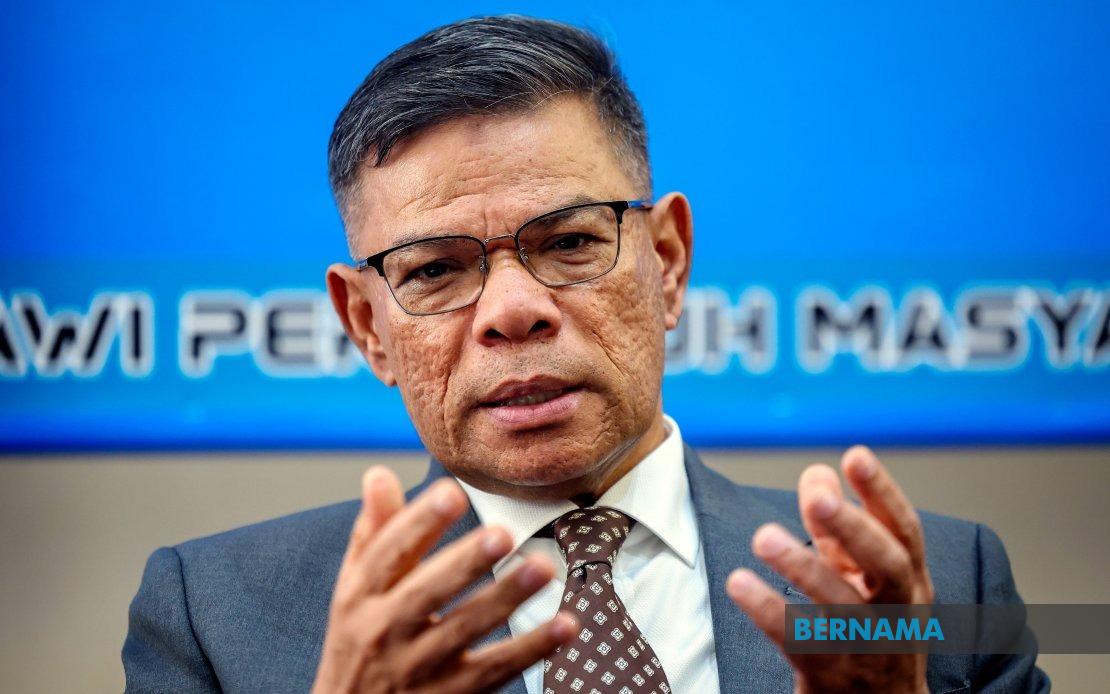
The two principal land crossing points linking Malaysia and Singapore operated without significant congestion on Thursday morning as the 16th Johor state election proceeded, according to an update from Home Minister Datuk Seri Saifuddin Nasution Ismail. Both the Sultan Iskandar Building and Sultan Abu Bakar Complex, which serve as the primary gateways for vehicular traffic between the two nations, maintained steady traffic conditions throughout the early hours of polling day, the minister announced via social media.
Saifuddin Nasution credited the Malaysian Border Control and Protection Agency, known locally as AKPS, with coordinating the efficient movement of travellers and goods across both checkpoints. The minister shared footage documenting conditions at each entry point, demonstrating the orderly queue management and vehicle flow being maintained as tens of thousands of Malaysian voters resident in Singapore attempted to return home to cast their ballots. This cross-border movement represented a significant logistical undertaking given the compressed timeframe and concentrated volume of people seeking passage.
The AKPS had implemented comprehensive operational enhancements ahead of polling day in anticipation of elevated traffic demand. The agency established dedicated express lanes exclusively for election-day travellers, positioned additional hybrid processing counters to accelerate document verification, and activated contra-flow lane arrangements to optimise directional capacity at peak times. These temporary infrastructure modifications commenced at midnight and were scheduled to remain operational throughout the election period, with extended hours running from 12:01 am until 6 pm to accommodate both incoming and outgoing traveller flows.
The scale of the Johor state election underscored the importance of seamless border operations for the democratic process. Across the state, election officials activated 1,076 polling centres equipped with 4,889 voting stations, all beginning operations simultaneously at 8 am. The election commission anticipated strong voter participation, setting a target of approximately 70 per cent turnout from the 2.6 million registered electors. This projection suggested that cross-border travel would remain elevated throughout the day as Singapore-based voters prioritised participation in their home state's political selection.
For Malaysian voters residing or working in Singapore, the cross-border commute represents a substantial commitment on election day. The two land entry points, positioned at Johor Bahru and Pasir Gudang respectively, function as critical infrastructure for maintaining economic and social connectivity between the two neighbouring nations. Bottlenecks or delays at these checkpoints during the election period could have discouraged participation among diaspora voters, making the operational efficiency achieved by AKPS particularly consequential for democratic representation.
The election featured 172 candidates competing for 56 state assembly positions across Johor, making it a substantial political exercise involving multiple constituencies and competing political parties. The results were anticipated to emerge by 10 pm, providing final clarity on the composition of the new state government. For regional observers, the Johor election carries significance beyond state-level politics, as it influences broader dynamics within Malaysia's federal political landscape and coalition arrangements at the national level.
The coordination between Malaysian and Singaporean authorities on cross-border operations during major events reflects long-standing bilateral cooperation frameworks. Both nations maintain regular consultations on traffic management, security protocols, and facilitation measures that balance efficient movement with rigorous border control standards. The seamless election-day operations suggested that these institutional relationships continue functioning effectively despite periodic political tensions or diplomatic disagreements between the two governments.
From a Malaysian perspective, the smooth border operations demonstrated the capacity of government agencies to execute complex logistical planning when provided adequate notice and resources. The AKPS's activation of maximum operational capacity, including extended hours and supplementary infrastructure, represented a deliberate investment in facilitating democratic participation rather than imposing barriers to cross-border movement. This approach contrasts with periods when border security concerns dominate policy discussions, illustrating the flexibility possible within security frameworks when political circumstances warrant prioritising voter access.
The election-day border performance also carries implications for Malaysia's relationship with its diaspora population. Voters residing or working abroad often face significant practical obstacles to participation in home country elections. By ensuring that cross-border infrastructure functioned smoothly, Malaysian authorities signalled commitment to maintaining electoral inclusion for overseas residents. This consideration becomes increasingly important as Malaysia's skilled workforce increasingly pursues employment and business opportunities in neighbouring Singapore and throughout Southeast Asia.
The successful management of elevated traffic volumes during the Johor election provides a template for future electoral periods or significant national events requiring cross-border coordination. Both nations have accumulated experience managing traffic surges during school holidays, religious festivals, and economic peaks, yet election-specific demands present unique challenges given the compressed timeframe and concentrated destination traffic. The procedures deployed for the Johor election—express lanes, hybrid counters, and extended operational hours—represent innovations potentially applicable to other situations generating elevated bilateral traffic demand.
For broader Southeast Asian regional considerations, the Singapore-Malaysia border represents one of the world's highest-traffic land crossings, with hundreds of thousands of daily commuters and commercial vehicles typically utilising the two main entry points. Any disruption affects not only bilateral relations but regional supply chain integrity and cross-border commerce. The election-day operations therefore carried significance beyond the immediate political context, demonstrating that Malaysia's border infrastructure could accommodate substantial demand variations without compromising throughput or security standards.

