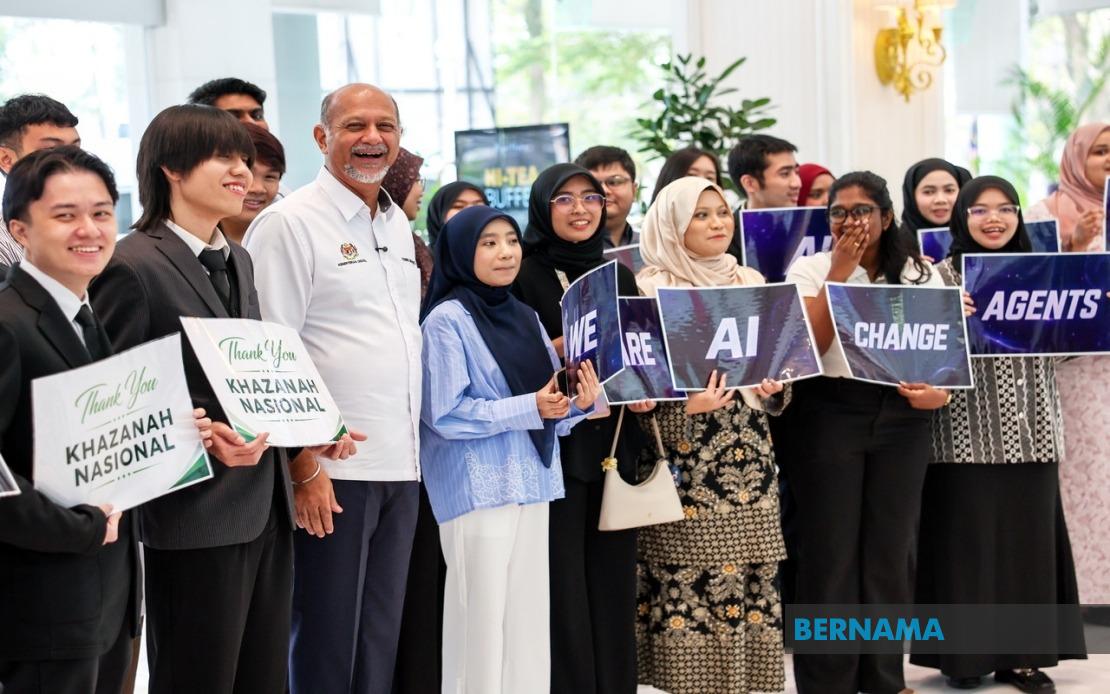
The Malaysian government is fundamentally reshaping how it responds to technological disruption, replacing a historically reactive regulatory posture with forward-looking policy frameworks designed to position the nation ahead of emerging challenges. Digital Minister Gobind Singh Deo articulated this strategic pivot while opening the AI-Ready Malaysia Summit 2026 in Petaling Jaya on Wednesday, framing the shift as essential to maintaining competitiveness in an era of accelerating technological change.
The traditional government approach to technology governance—waiting for problems to manifest before crafting legislative responses—has become untenable in the context of artificial intelligence's rapid development and deployment, Gobind explained. Under the old model, policy formulation typically followed problem identification by considerable time, creating dangerous lag periods where regulatory gaps could be exploited or harms go unaddressed. This reactive methodology, effective for slower-moving technological environments, leaves governments perpetually chasing technological developments rather than guiding them.
Central to Malaysia's reoriented approach is the establishment of AI Malaysia, a dedicated institutional body tasked with driving the nation's ambition to achieve AI nation status by 2030. Rather than serving merely as an advisory body, AI Malaysia functions as a strategic anchor point for anticipatory governance, enabling the government to identify probable challenges across economic sectors and develop response mechanisms in advance of crises or widespread adoption complications. This institutional mechanism embodies the conceptual transition from firefighting governance to preventive policy design.
Gobind elaborated that the proactive framework encompasses parallel work on legislative and policy development, with Bills and regulations being formulated now to serve as preparedness infrastructure. These instruments will enable rapid implementation once challenges materialise, eliminating the administrative delays that characterise traditional legislative processes. The government thus positions itself not as reactive legislator but as prepared administrator, capable of deploying pre-designed solutions quickly when issues emerge.
The focus of AI Malaysia extends specifically across six critical economic sectors identified as particularly vulnerable to AI-related disruptions or as critical sites for AI opportunity capture. Agriculture, transport, and healthcare represent anchor sectors in this six-sector framework, reflecting Malaysia's economic structure and social priorities. By concentrating anticipatory work on these defined areas, the government can develop sector-specific expertise and policy responses tailored to particular challenges rather than attempting broad-brush regulation applicable across diverse contexts.
Beyond institutional and legislative preparation, Gobind emphasised that effective technology adoption requires attention to the knowledge and accessibility foundations underlying adoption behaviour. Public understanding of artificial intelligence remains rudimentary across much of Malaysia's population, creating barriers to meaningful technology uptake and leaving society vulnerable to misuse or suboptimal deployment. The government recognises that awareness represents a prerequisite for adoption, requiring investment in public education and communication about AI's capabilities, limitations, and practical applications.
Accessibility constitutes the second pillar of Malaysia's adoption strategy. Technology infrastructure, whether AI systems, computational resources, or supporting digital platforms, remains concentrated among economically privileged segments and well-resourced institutions. If Malaysia's AI aspirations are to benefit the broader population and contribute to inclusive economic development, government intervention must address cost barriers and distribution challenges. Ensuring that AI tools are not prohibitively expensive and can be obtained through accessible channels becomes a prerequisite for genuine national capability building rather than isolated elite advancement.
Gobind's framework identifies a genuine policy dilemma: awareness without accessibility creates frustrated expectations, while accessibility without awareness generates underutilisation of expensive infrastructure. The government's integrated approach recognises that awareness-building and access-expansion must advance in tandem. Citizens must understand AI's potential benefits before investing in access, yet access barriers prevent practical understanding and application experimentation. This sequencing challenge requires coordinated effort across education, infrastructure, and procurement domains.
For Malaysian technology enthusiasts and policymakers, this announcement signals a more sophisticated approach to technology governance than has characterised previous administrations, though implementation challenges remain substantial. The transition from reactive to proactive governance requires institutional capacity, technical expertise, and sustained budgetary commitment—resources not always reliably available in developing economies confronting multiple competing priorities. The establishment of AI Malaysia represents genuine institutional innovation, but its effectiveness depends entirely on resource allocation and bureaucratic capacity to execute coordinated, multi-sector strategy.
For Southeast Asia more broadly, Malaysia's articulated ambition to achieve AI nation status by 2030 positions the country as a potential regional technology hub, potentially rivalling Singapore as a centre of AI research, development, and deployment. The shift towards proactive governance rather than regulation-following positions Malaysia to shape regional technology standards and practices rather than merely adopting external frameworks. This ambition carries implications for the region's technology trajectory and Malaysia's role within emerging Asian technology architecture.
The practical implications for Malaysian businesses and institutions are equally significant. Companies operating across the six targeted sectors should anticipate forthcoming regulatory environments and policy frameworks likely to be implemented over coming years. Early adoption of AI governance standards and transparent, documented AI system deployment positions organisations favourably within this emerging policy landscape. Those waiting for regulations to emerge will face costly compliance retrofitting, while proactive adopters aligned with anticipated government frameworks can position themselves as leaders within their sectors.
Gobind's emphasis on ensuring technology ecosystem accessibility deserves particular scrutiny given Malaysia's significant wealth disparities and digital divide. Rural and lower-income communities remain substantially excluded from advanced technology access, and government commitment to inclusive accessibility will require substantial resource allocation and potentially controversial decisions about technology subsidisation. Without genuine commitment to bridging access gaps, Malaysia's AI nation ambitions risk reproducing existing inequalities at a more sophisticated technological level.
The stated timeline of 2030 for achieving AI nation status requires accelerated implementation across multiple domains. Policy development, institutional capacity building, infrastructure investment, and public education all must progress in parallel over a compressed timeframe. The credibility of Malaysia's AI ambitions will ultimately depend on observable progress against measurable indicators over coming years, translating ministerial rhetoric into institutional reality, funded programmes, and documented outcomes.

