When geopolitical tensions between the United States and Iran threatened to disrupt one of the world's most critical shipping corridors, Malaysia's food sector faced a genuine test. The Strait of Hormuz, through which a significant portion of global oil and petroleum products transit, became a flashpoint that rippled across supply chains worldwide. For an import-dependent nation like Malaysia, the implications were potentially severe—disruptions could constrain supplies of petroleum-based fertilisers and plastics essential for food packaging and transport, ultimately threatening the nation's food security and consumer purchasing power.
Yet despite these international headwinds, Malaysian consumers have not experienced the sharp food price inflation that many economists had predicted. This resilience reflects a deliberate policy framework implemented well before the February conflict escalated, demonstrating how proactive government intervention can buffer domestic markets from external shocks. The mechanism behind this stability lies not in a single dramatic measure but in a carefully calibrated set of targeted interventions designed to support producers at critical junctures in the agricultural calendar.
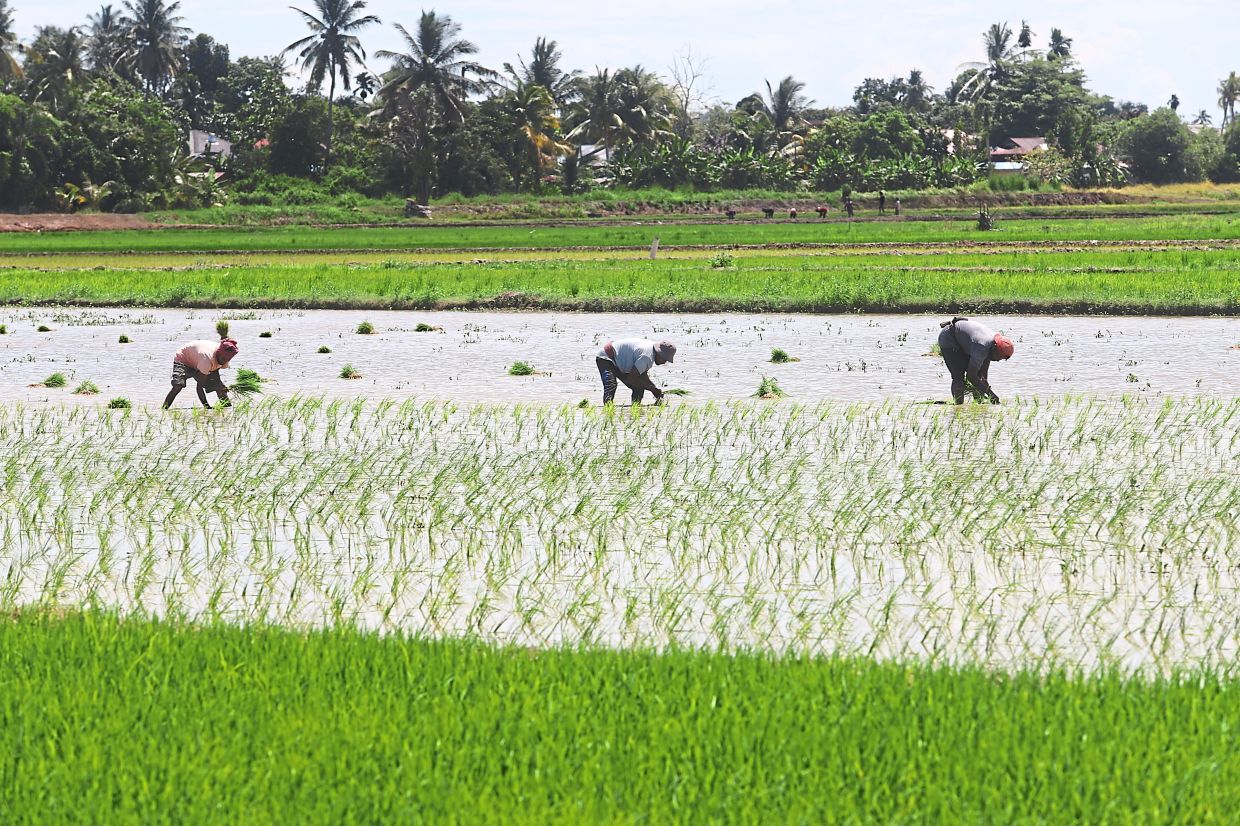
The government's approach centred on reducing production costs for farmers at moments when they are most vulnerable to price volatility. In April, the Ministry of Finance substantially increased Budi Agri-Komoditi, a diesel subsidy for agricultural machinery, from RM300 to RM400 monthly—a 33 percent elevation that directly addresses one of farming's largest variable costs. Simultaneously, the government nearly doubled the ploughing incentive (Insentif Pembajakan kepada Pesawah, IPKP) from RM160 to RM300 per hectare for the 2026 planting season. Farmers in Peninsular Malaysia additionally received advance payments of RM200 per hectare to facilitate land preparation before sowing, effectively providing cash flow support during the season's most capital-intensive phase.
According to Prof Datuk Dr Nasir Shamsudin, an agricultural economist at Putra Business School and professor emeritus at Universiti Putra Malaysia's Faculty of Agriculture, these interventions have proven their worth as short-term cost-mitigation mechanisms. The monthly RM400 Budi Agri-Komoditi assistance helps offset rising diesel and transportation costs that have squeezed farm profitability, while the enhanced IPKP incentive improves farmers' capacity to fund essential pre-planting operations. These measures have collectively helped sustain agricultural output and protected farmers' incomes, thereby moderating upward pressure on food prices at the consumer level.
The effectiveness of this approach is evident in Malaysia's food inflation data. Food price increases remained relatively modest at 1.4 percent year-on-year in May 2026, compared to 1.2 percent in April, suggesting that the cost savings generated by government support have been meaningful enough to contain inflationary pressures. Prime Minister Datuk Seri Anwar Ibrahim acknowledged these realities in a May Facebook post, recognising the broader economic pressures on Malaysians and justifying the decision to extend Budi Agri-Komoditi as recognition that smallholders and entrepreneurs form the backbone of the country's economy.
Beyond immediate relief measures, Budget 2026 signals a commitment to sustaining agricultural competitiveness through more substantial allocations. The government has earmarked RM2.62 billion for various subsidies and assistance programmes encompassing paddy prices, crop cultivation, fertiliser provision, seeds, and production incentives. For the fishing community, RM160 million has been allocated to provide living allowances of up to RM300 monthly alongside catch incentives, while RM55 million supports local fruit growers through incentives and infrastructure funding for high-value crops including pineapples, soursop, water apple and pomelo. These budget lines reflect a multi-sector approach rather than a single-commodity focus, acknowledging that food security depends on diversified domestic production.
Government assurances regarding stock levels underscore the preparedness with which policymakers have approached potential supply disruptions. Current inventories of essential items—chicken, eggs, fish, milk and fresh fruits—are sufficient for at least one month of consumption, while rice supplies including the strategic national buffer stock cover five to six months' worth of demand. Fertiliser stocks span approximately nine months, providing a meaningful cushion against sudden import shocks. These buffer stocks represent deliberate policy choices to maintain resilience rather than relying solely on just-in-time supply chain models vulnerable to disruption.
However, Prof Nasir emphasises that the full benefits of subsidies depend critically on how effectively these cost savings propagate throughout the food supply chain rather than being absorbed by intermediaries. More fundamentally, he argues that long-term food price stability cannot rest indefinitely on subsidy programmes. Instead, Malaysia must invest in raising agricultural productivity and strengthening systemic resilience through mechanisation, precision agriculture, climate-smart farming technologies, high-yield seed varieties, efficient irrigation infrastructure, modern post-harvest facilities and integrated supply chain logistics. Such investments would permanently reduce unit production costs and lessen the sector's structural dependence on continuous government assistance.
Recognising this longer-term imperative, the government has begun initiatives to reduce reliance on chemical fertilisers whose global market prices remain volatile. The Agriculture and Food Security Ministry is promoting a transition toward organic fertilisers, biofertilisers and Effective Microorganisms (EM) products that could stabilise input costs and reduce exposure to international price fluctuations. A RM5.5 million project approved under the 13th Malaysia Plan aims to strengthen the circular economy by converting agri-food waste into compost and organic fertilisers, creating domestic alternatives to imported chemical inputs.
Yet structural constraints remain formidable. Malaysia's greatest vulnerability lies in its substantial dependence on imported food and agricultural inputs, a reality that no single policy intervention can fully resolve. The country imports significant quantities of rice, wheat, dairy products and meat, making its food security inherently vulnerable to global logistics disruptions and international price movements. Data from 2024 revealed that Malaysia's agri-food trade deficit reached RM39.34 billion, demonstrating the magnitude of this import dependency and the inevitable exposure of Malaysian consumers and producers to external price shocks. Even sectors that appear domestically self-sufficient in production terms often depend on imported inputs, meaning global supply chain disruptions transmit costs throughout the food system.
The Middle East tensions have thus exposed both the effectiveness of Malaysia's current mitigation strategies and the limits of subsidies alone in addressing structural vulnerabilities. While targeted assistance programmes have successfully contained food inflation in the near term, achieving genuine long-term food security requires sustained investments in domestic productivity and supply chain independence. For Malaysian policymakers, the challenge ahead involves maintaining the delicate balance between immediate consumer price relief and the larger strategic imperative of reducing the nation's structural dependence on global markets. The subsidies announced in Budget 2026 and the productivity initiatives being implemented represent moves in the right direction, but they must be paired with accelerated investments in agricultural innovation and domestic production capacity if Malaysia is to achieve durable food security in an increasingly volatile global environment.

