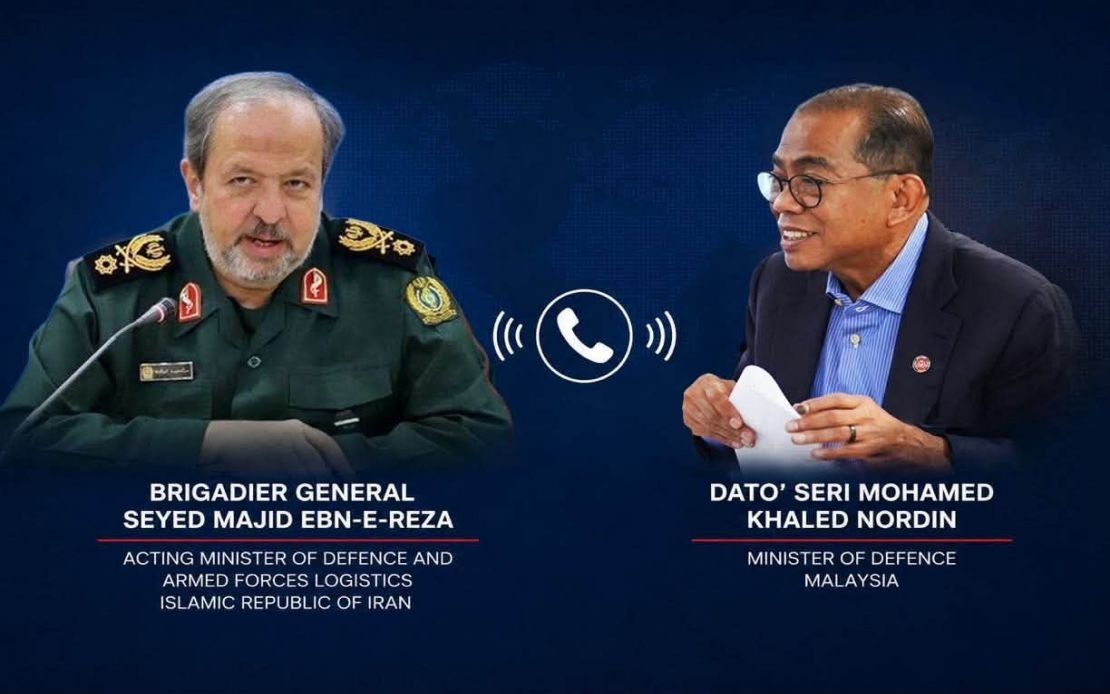
Malaysia has expressed its intention to substantially expand defence cooperation with Iran, marking a significant development in bilateral relations between the two nations. Defence Minister Datuk Seri Mohamed Khaled Nordin conveyed this commitment during a telephone discussion with Iran's Acting Minister of Defence and Armed Forces Logistics, Brigadier General Seyed Majid Ebn-e-Reza, underscoring the close diplomatic friendship that underpins the relationship.
The two defence officials discussed formalising their military partnership through a dedicated Memorandum of Understanding, which would serve as the official framework for future defence collaboration. This document, once finalised, would provide a structured platform for coordinating defence initiatives and deepening institutional ties between Malaysia's armed forces and their Iranian counterparts. Such instruments are typically designed to facilitate regular dialogue, joint exercises, training programmes, and technology sharing between defence establishments.
A notable initiative emerging from these discussions is Iran's planned participation in next year's Langkawi International Maritime and Aerospace Exhibition, one of the region's premier defence trade shows. This participation would offer Iranian defence companies and military representatives a significant opportunity to showcase capabilities and explore partnership possibilities with regional militaries, including Malaysia's. For Malaysia, hosting Iranian exhibitors reinforces the country's position as a neutral, inclusive convener of defence discussions in Southeast Asia and demonstrates the breadth of its international defence partnerships.
Malaysia's approach reflects a broader diplomatic posture that maintains engagement with multiple regional and international actors while advocating for peaceful resolution of conflicts. The Defence Minister used the conversation to extend Malaysia's condolences regarding the deaths of Iranian military leaders, security personnel, and civilians caught in the ongoing conflict in West Asia, acknowledging the humanitarian toll of regional instability.
Crucially, Malaysia reaffirmed its commitment to ceasefire efforts and emphasized the importance of dialogue and diplomatic channels in resolving disputes. This position aligns with Malaysia's longstanding foreign policy preference for peaceful settlement of international disputes and reflects the country's concern about the destabilising effects of prolonged conflict on regional security and economic prosperity. The emphasis on maintaining space for diplomacy signals Malaysia's willingness to play a constructive role in facilitating communication between parties.
The Defence Minister also commended Iran's independent development of defence capabilities, recognising the country's technological advancement and self-sufficiency in military systems. This acknowledgment reflects Malaysia's respect for Iran's sovereignty and technological achievements, even as Malaysia itself pursues partnerships with multiple defence suppliers to maintain a balanced security posture.
An important practical dimension of the partnership concerns maritime security, particularly the critical Strait of Hormuz. Malaysia highlighted the necessity of ensuring safe passage through this vital waterway, through which a significant portion of global oil supplies transit daily. Malaysia's emphasis on the security of maritime routes reflects both its own position as a significant maritime nation and its broader interest in maintaining regional stability essential for trade and commerce. The Defence Minister specifically acknowledged Iran's cooperation in facilitating passage during the conflict, indicating that despite geopolitical tensions, practical working relationships have been maintained.
The timing of this defence outreach carries significance within Malaysia's broader engagement strategy in the region. As Southeast Asian nations increasingly balance relationships between various global powers and regional actors, Malaysia's approach demonstrates a pragmatic commitment to maintaining dialogue with all stakeholders while advancing its own security interests. The defence cooperation framework represents a measured expansion rather than a dramatic shift in policy.
For Malaysia, deepening ties with Iran serves multiple strategic objectives. It reinforces the country's credentials as a non-aligned player capable of engaging constructively across different geopolitical alignments, enhances Malaysia's soft power in diplomatic circles, and potentially opens avenues for technology transfer and military cooperation. Additionally, stronger defence relations with Iran could improve Malaysia's understanding of security dynamics in West Asia, informing the country's broader regional foreign policy.
The initiative also reflects Malaysia's recognition that Iran, despite international sanctions and regional tensions, remains a significant regional power with considerable military capabilities and technological sophistication. Engaging Iran through defence cooperation channels allows Malaysia to maintain constructive relations while promoting stability in a region that significantly impacts global security and economic performance.
Moving forward, the formalisation of a defence MoU and Iran's participation in LIMA would represent tangible steps in translating political will into concrete institutional frameworks. These mechanisms would enable regular high-level engagement, exchange of military delegations, and exploration of mutually beneficial defence projects. For regional observers, Malaysia's approach underscores the value of maintaining diplomatic channels and pursuing engagement even amid broader geopolitical tensions, a principle that carries particular relevance for smaller nations navigating complex international relationships.

