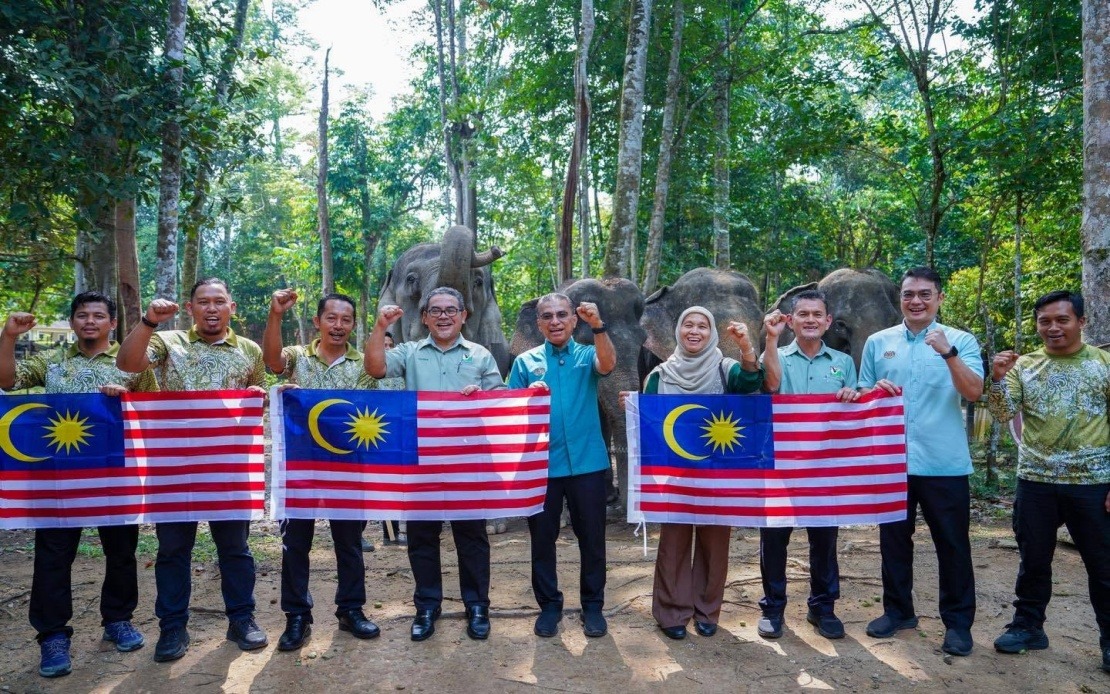
The Ministry of Natural Resources and Environmental Sustainability is pivoting toward innovative solutions as human-wildlife conflicts intensify across Malaysia, threatening both vulnerable animal populations and rural communities. Deputy Minister Syed Ibrahim Syed Noh underscored the urgency of the challenge during remarks in Tangkak, acknowledging that escalating encounters between people and wild animals—especially elephants—represent one of the most pressing environmental management issues facing the nation's wildlife authorities.
The Department of Wildlife and National Parks, or Perhilitan, confronts a fundamental dilemma shaped by Malaysia's rapid development trajectory. As the country continues to expand settlements, agricultural zones, and infrastructure projects, wildlife habitats shrink correspondingly, forcing animals into closer proximity with human populations. This collision between progress and conservation represents not merely a technical problem but a complex socio-environmental issue requiring sophisticated policy responses that balance competing national interests.
Syed Ibrahim framed the ministry's approach with nuance, emphasizing that inaction does not stem from indifference but rather from a commitment to preserving natural ecosystems. The strategy prioritizes allowing wild animals, particularly elephants, to remain within their original habitats rather than adopting heavy-handed interventions that could disrupt animal behaviour and welfare. This reflects a growing recognition within Malaysian environmental management that coercive approaches often generate counterproductive outcomes, driving animals to become increasingly desperate and dangerous.
The underlying tension driving current policy deliberations centers on land use competition. Elephants and other megafauna require vast territories to sustain viable populations, yet Malaysia's development needs demand conversion of forests into agricultural land, residential areas, and commercial zones. This zero-sum dynamic has forced authorities to seek creative compromises that allow wildlife corridors while accommodating human settlement patterns. The ministry's current efforts involve studying how to create physical and behavioral barriers that discourage animals from approaching populated areas without confining them artificially.
A high-profile case illustrates both the challenges and the ministry's commitment to animal welfare. Sulong Chalil, an adult male elephant, traveled hundreds of kilometers across difficult terrain on an injured leg after being relocated to a forest reserve in Gerik, Perak. The animal's determination to return to its original habitat in Gua Musang, Kelantan, despite its physical condition, demonstrates the deep territorial attachments elephants possess and the limitations of translocation as a conflict-reduction tool. Rather than force the animal to remain in unfamiliar territory, Perhilitan opted for continuous monitoring while allowing the elephant to follow its natural instincts.
This case exemplifies a paradigm shift in wildlife management philosophy. Traditional approaches often emphasized removing problem animals through relocation or, in extreme cases, culling. Contemporary understanding of elephant cognition and social structures suggests such interventions frequently fail because elephants possess remarkable memory, strong family bonds, and complex emotional lives. Sulong Chalil's journey underscores that elephants cannot simply be transplanted and expected to establish new homes; they experience displacement as trauma and will endure significant hardship to return to familiar territories.
The ministry's commitment to developing new methodologies reflects a broader regional challenge affecting Southeast Asia. As developing nations accelerate economic growth and infrastructure expansion, human-wildlife conflicts have become endemic across the region. Thailand, Indonesia, and other nations grapple with similar pressures from expanding populations and land conversion. Malaysia's efforts to formulate evidence-based solutions could offer valuable lessons for neighboring countries facing identical pressures.
Syed Ibrahim indicated that the ministry and Perhilitan are collaborating with multiple stakeholders to identify practical solutions. This multi-sectoral approach acknowledges that wildlife management cannot be isolated from broader development planning. Agricultural departments, land-use authorities, local governments, and community leaders must coordinate to ensure that conservation objectives receive consideration during planning stages rather than attempting remediation after conflicts have emerged. Preventive strategies—such as establishing wildlife corridors, implementing early-warning systems, and designing settlements with wildlife awareness—offer more sustainable outcomes than reactive crisis management.
The economic dimensions of human-wildlife conflicts deserve equal attention. Elephants raiding crops cause substantial losses for smallholder farmers in peninsular Malaysia, creating resentment that undermines conservation support among rural populations. Without addressing the economic hardships experienced by those living at conflict interfaces, public backing for wildlife protection initiatives becomes vulnerable to erosion. Potential solutions might include compensation schemes, insurance programs, or alternative livelihood development that reduces dependence on crops attractive to elephants.
Technological innovations increasingly feature in conflict-reduction strategies globally, and Malaysian authorities are presumably evaluating similar tools. GPS collars enable real-time monitoring of animal movements, allowing authorities to warn communities of approaching elephants. Acoustic deterrents, improved fencing technologies, and mobile alert systems represent evolving tools in the wildlife management toolkit. However, technology alone cannot resolve fundamentally structural problems arising from habitat loss and land conversion.
The comments by Syed Ibrahim reflect acknowledgment that sustainable human-wildlife coexistence requires patience, scientific understanding, and long-term commitment. Malaysian decision-makers increasingly recognize that wildlife conservation and economic development need not exist in permanent tension if planning incorporates ecological considerations from inception. This represents meaningful evolution in Malaysian environmental policy, though implementation challenges remain substantial given competing pressures for land and resources.
Forward momentum depends on translating ministerial commitment into concrete policy changes and funding allocations. Successfully reducing human-wildlife conflicts will require sustained investment in research, monitoring infrastructure, community engagement programs, and enforcement of wildlife protection regulations. The experiences with Sulong Chalil and other conflict cases provide valuable data for refining strategies, suggesting that Malaysia's wildlife authorities are learning from practical experiences rather than remaining wedded to established protocols.

