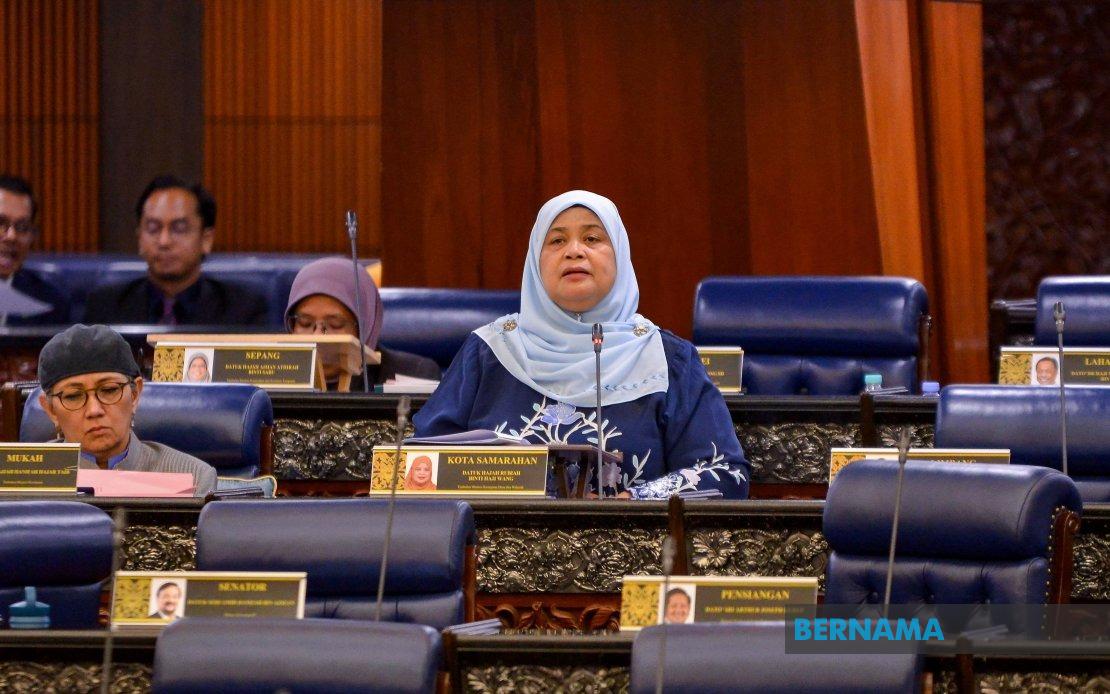
The Malaysian government is undertaking a comprehensive restructuring of its Technical and Vocational Education and Training (TVET) sector, with fresh emphasis on forging direct partnerships between educational institutions and industry leaders. Speaking in Parliament on July 14, Deputy Minister of Rural and Regional Development Datuk Rubiah Wang outlined how this accreditation transformation represents a fundamental shift in how vocational qualifications are validated and recognised within the broader economy. Rather than relying solely on traditional certification pathways, the new approach integrates feedback and endorsement from major employers, ensuring that training content remains responsive to rapidly evolving workplace demands.
The core challenge that TVET 2.0 seeks to address is the persistent mismatch between graduate competencies and what employers actually require. By anchoring accreditation processes in direct industry input, the Ministry of Rural and Regional Development (KKDW) aims to boost employment prospects for vocational students while simultaneously reducing the frustration employers encounter when recruiting workers lacking practical, job-ready skills. This alignment between education and labour market realities is particularly crucial in Southeast Asia, where technological disruption is accelerating across manufacturing, services, and emerging digital sectors. Malaysia's approach positions it as a regional leader in embedding employer expectations directly into the training curriculum.
Under the TVET 2.0 framework, the ministry is pursuing a dual strategy centred on technological competency and entrepreneurial mindset. Beyond traditional technical instruction, the emphasis now includes preparing graduates to become independent job creators capable of stimulating economic activity in rural and developing regions. This reflects a strategic understanding that vocational education must produce not just skilled workers but also individuals equipped to launch small enterprises and contribute to regional prosperity. The pivot toward producing "techno-entrepreneurs" represents a meaningful departure from purely employment-focused training, recognising that many vocational graduates in Malaysia will operate outside conventional corporate structures.
A particularly innovative dimension involves the TVET Tahfiz programme, which integrates Islamic religious training with advanced technological instruction. This initiative aims to develop a cohort of hafiz—those who have memorised the Quran—who simultaneously possess cutting-edge digital and technical capabilities. By combining spiritual and character development with proficiency in modern technologies, the programme addresses concerns about producing well-rounded individuals whose values and skills reinforce rather than contradict one another. This model has significant implications for Malaysia's Muslim-majority population and reflects cultural considerations often overlooked in purely technocratic vocational frameworks.
The government has strategically established specialised training centres across different locations, each focusing on emerging technologies critical to global competitiveness. TVETMARA Petaling Jaya concentrates on Internet of Things (IoT) applications, positioning graduates to work in smart city development and industrial automation projects increasingly common across Malaysia and the region. TVETMARA Besut offers cloud computing specialisation, equipping learners with skills in data management and virtualised infrastructure—fields experiencing explosive demand as businesses migrate operations online. TVETMARA Pasir Mas serves as a Building Information Modelling (BIM) centre, addressing the construction and real estate sectors' growing reliance on digital design and project management tools.
Beyond these MARA institutions, the Malaysian government's vocational ecosystem includes the German-Malaysian Institute, which functions as a conduit for advanced manufacturing knowledge and Industrial Revolution 4.0 technologies. This partnership reflects Malaysia's strategic positioning within global supply chains and the imperative to maintain competitiveness in precision manufacturing sectors. Simultaneously, Universiti Kuala Lumpur operates at the higher education tier, offering Bachelor-level programmes in fields such as Artificial Intelligence Technology. This vertical integration—from pre-university TVET through to AI-focused bachelor degrees—creates a coherent pathway for learners seeking to progress from foundational vocational training toward advanced technical qualifications.
The emphasis on artificial intelligence, Internet of Things, cloud computing, cybersecurity, automation, robotics, and smart manufacturing systems reflects Malaysia's recognition of where labour demand is concentrating globally. Rather than training students in techniques that may become obsolete within years, TVET institutions are pivoting toward competencies anchored in transformative technologies likely to remain relevant across the coming decade. This forward-looking approach is essential for a country competing with regional neighbours like Vietnam and Thailand for foreign direct investment in high-value manufacturing and digital services. Malaysian vocational graduates equipped with AI and IoT expertise become immediately attractive to multinational corporations seeking to establish or expand regional operations.
The implementation of this transformed accreditation system carries significant implications for Malaysia's economic trajectory. Skills mismatch—where jobseekers lack qualifications employers require—represents a drag on productivity and innovation. By making industry recognition central to accreditation, the government creates a feedback mechanism ensuring curricula evolve in lockstep with workplace realities. This responsiveness is particularly valuable in technology sectors where capability requirements can shift substantially within two to three years. Employers participating in accreditation processes gain assurance that graduates possess genuinely applicable knowledge, reducing hiring and training costs while accelerating time-to-productivity.
For aspiring vocational students, the reformed TVET 2.0 system offers clearer pathways to employment. Rather than completing qualifications that lack explicit industry validation, learners can pursue specialisations directly endorsed by employers actively recruiting in those fields. This transparency helps students make informed decisions about specialisation choices and provides confidence that their investment in vocational training will yield tangible employment opportunities. The establishment of regional specialisation hubs also creates geographic incentives, allowing communities across Malaysia—particularly in rural and less-developed areas—to access world-class technical instruction without necessarily relocating to major urban centres.
The broader regional context amplifies the significance of Malaysia's TVET reforms. Across Southeast Asia, rapid deindustrialisation in traditional manufacturing sectors and accelerating automation mean vocational education systems must continuously adapt or risk producing graduates with obsolete skills. Countries failing to keep pace with technological change risk brain drain, as talented young people migrate seeking opportunities in more dynamically evolving labour markets. Malaysia's commitment to embedding industry partnership and technological excellence into vocational training represents a competitive response to these regional pressures, signalling to both domestic and international investors that the country maintains a talent pipeline aligned with twenty-first century economic requirements.

