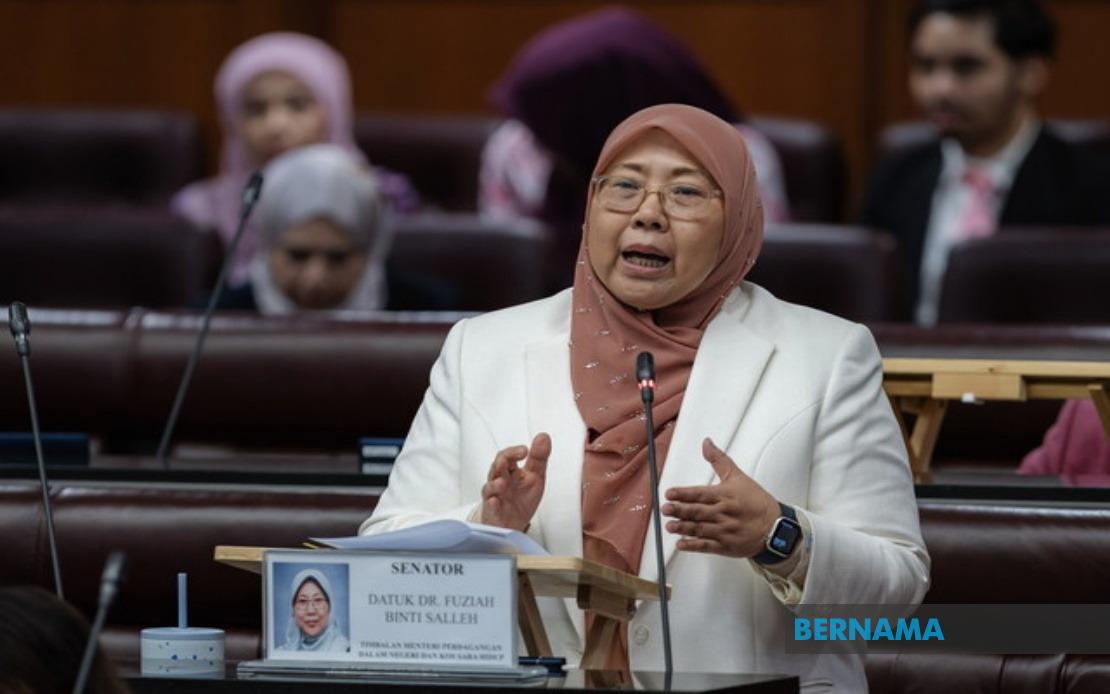
Malaysia's government has reinforced that copyright owners must grant approval before their work is used for artificial intelligence model training, aligning the regulation of AI technology development with existing intellectual property protections. Deputy Domestic Trade and Cost of Living Minister Datuk Dr Fuziah Salleh made the clarification during parliamentary proceedings at the Dewan Negara, emphasizing that the requirement applies uniformly across all applications, whether technological or otherwise. This stance establishes a clear legal boundary for the burgeoning AI sector operating within Malaysia's jurisdiction and reflects the government's commitment to protecting creator rights in an era of rapid technological advancement.
The regulatory framework governing such arrangements rests on Section 27 of the Copyright Act 1987, which establishes that compensation structures must emerge through direct negotiation between the parties involved. These agreements can take multiple forms, including traditional licensing arrangements where usage rights are granted in exchange for specified fees, outright assignment of rights from creators to technology developers, or involvement of Collective Management Organisations that act as intermediaries representing groups of copyright holders. This flexibility acknowledges the diverse nature of creative industries and the varying business models that might emerge as AI technology becomes more integrated into content production and training processes.
The clarification responds to growing uncertainty among Malaysia's creative community regarding how their intellectual property is being leveraged in the development of increasingly sophisticated AI systems. Content creators, publishers, and entertainment industry stakeholders have expressed concern about whether their works are being incorporated into training datasets without authorization or compensation. The government's restatement of existing legal requirements aims to provide reassurance that copyright protections remain enforceable even as technological capabilities evolve beyond what legislators originally envisioned when the Copyright Act 1987 was drafted.
However, the government's current approach is notably cautious regarding new interventions. Datuk Dr Fuziah indicated that no comprehensive impact assessment has been undertaken to evaluate how AI-generated content might disrupt employment prospects and income levels for Malaysia's creative workers. This gap in analysis is particularly significant given that countries worldwide are grappling with structural changes in creative industries as generative AI systems become capable of producing written content, visual art, and music with minimal human involvement. Without empirical data on local effects, policymakers may be operating with incomplete information when addressing future regulatory needs.
Instead of rushing toward new legislative measures, the government is pursuing a consultative approach, examining how other nations are addressing the intersection of AI development and copyright protection. This deliberate pace reflects the recognition that AI technology is advancing so rapidly that regulatory frameworks established today may become outdated within months. The ongoing engagement with stakeholders across multiple sectors—including technology companies, creative industry associations, legal professionals, and academic institutions—suggests the government is attempting to build consensus before introducing more specific rules or mechanisms for AI governance.
A notable distinction in Malaysia's current copyright framework concerns what qualifies for legal protection. Works demonstrating originality through human effort, skill, and intellectual contribution receive copyright protection, whereas purely AI-generated content lacking significant human creativity falls outside these protections. This distinction has profound implications as AI systems become increasingly autonomous. Content created entirely by algorithms without meaningful human creative direction occupies an ambiguous legal space, raising questions about authorship, ownership, and whether such works should be freely available for use by others.
The absence of court cases involving AI-related copyright violations in Malaysia suggests either that disputes have been minimal so far or that parties are resolving conflicts through alternative mechanisms rather than litigation. This quiet period may not persist as AI adoption accelerates across creative industries. Early detection and resolution of conflicts through guidance and policy frameworks might prevent contentious legal battles that could constrain innovation or harm creators' livelihoods. The government's engagement process could be viewed as an opportunity to establish norms and expectations before disputes multiply.
For Malaysia's creative industries, the government's position offers both protection and uncertainty. Copyright owners possess clear legal grounds to demand authorization and compensation when their works are used for AI training, placing negotiating power in creators' hands. Yet without detailed guidance on valuation, licensing terms, or dispute resolution mechanisms specific to AI applications, creators face practical challenges in asserting these rights effectively. The reliance on direct negotiation or CMOs means that well-resourced parties and established organizations may navigate these arrangements more successfully than individual creators or smaller enterprises.
The regional context amplifies the significance of Malaysia's stance. As Southeast Asia develops AI capabilities and attracts technology investment, how individual nations regulate AI development and copyright interplay will influence competitive positioning. Countries that establish clarity around intellectual property protections while remaining attractive to AI developers may capture more of the innovation benefits while safeguarding local creators. Conversely, regulations perceived as overly restrictive could drive investment and development activity to neighboring jurisdictions with more permissive frameworks.
The government's commitment to continued engagement and study reflects pragmatism about the pace of technological change and the genuine difficulty of crafting durable policy in rapidly evolving domains. However, this incremental approach may frustrate stakeholders seeking immediate clarity and protection. Content creators, technology companies, and educational institutions all benefit from knowing definitively how they can legally operate within Malaysia's AI ecosystem. The government's next steps—whether they involve impact assessments, stakeholder forums, or proposed amendments to existing legislation—will likely emerge from the ongoing consultative process, but no timeline has been specified.
Ultimately, Malaysia's position reaffirms that intellectual property law applies to artificial intelligence technologies, rejecting the notion that the disruptive nature of AI justifies abandoning creator protections. This stance aligns with evolving international approaches emphasizing that copyright frameworks should adapt to accommodate new technologies rather than be superseded by them. The challenge ahead lies in translating this legal principle into practical mechanisms that enable copyright owners to enforce rights, allow legitimate AI development, and ensure that Malaysia's creative workforce shares in the economic value generated when their work trains valuable AI systems.

