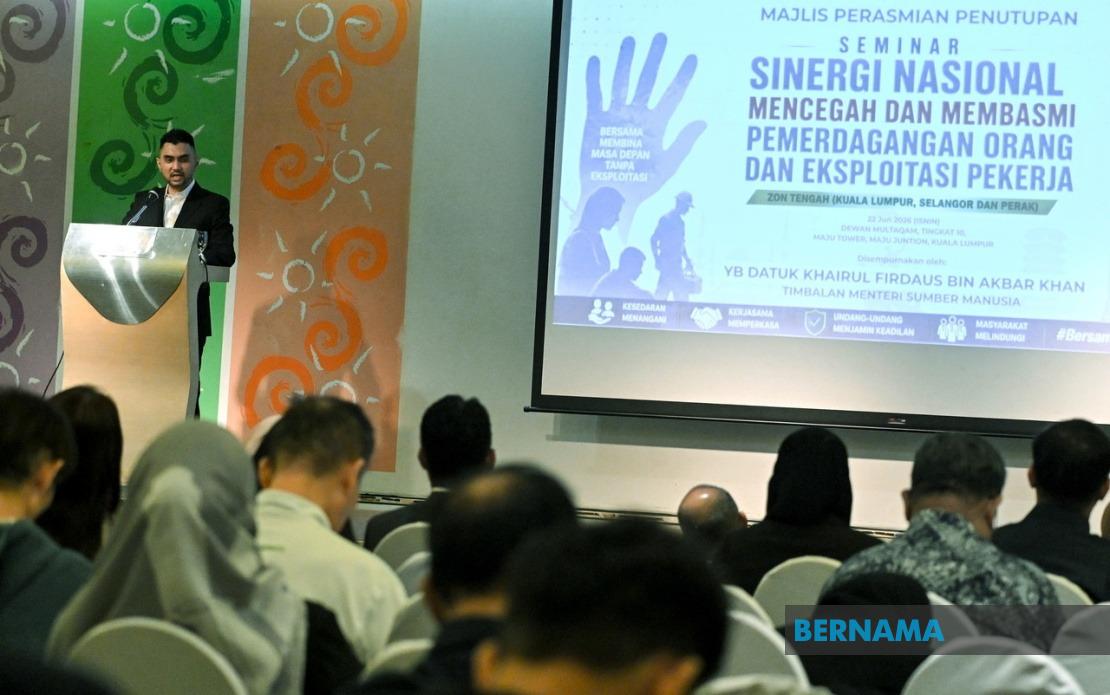
Malaysia's efforts to combat human trafficking and labour exploitation appear to be yielding measurable results, with the number of victims rescued showing a significant downward trajectory since 2023. Deputy Human Resources Minister Datuk Khairul Firdaus Akbar Khan disclosed these figures while officiating the closing ceremony of the National Synergy Seminar on Preventing and Eradicating Human Trafficking and Labour Exploitation in the Central Zone, highlighting what government authorities view as vindication of their multi-pronged enforcement strategy.
According to data compiled by the Peninsular Malaysia Manpower Department, the rescue figures have fallen dramatically over the past three years. The department recorded 70 victims in 2023, followed by a sharper decline to just 10 cases in 2024. The numbers fluctuated slightly in 2025 with 17 victims identified, before dropping to only four individuals rescued through May of the current year. This downward trend reflects intensified coordination between government agencies and improved detection mechanisms targeting labour traffickers and exploiters.
Yet despite these encouraging statistics, Datuk Khairul Firdaus urged caution in interpreting the data. He acknowledged that declining reported cases could indicate genuine progress in prevention and enforcement, but warned that official numbers may not capture the full extent of trafficking occurring within Malaysia's borders. His remarks underscore a persistent challenge in anti-trafficking work: distinguishing between actual reductions in exploitation and cases that remain hidden from authorities due to victims' fear, isolation, or lack of awareness about available assistance.
The government's broader enforcement operations provide additional context for these rescue numbers. From January through May 2026, Malaysian authorities conducted 386 labour-related enforcement operations across the nation, resulting in the initiation of 311 investigation papers. These figures demonstrate sustained institutional focus on identifying and prosecuting those responsible for labour trafficking, though the relatively small number of victims formally rescued suggests either that enforcement is preventing trafficking before it occurs, or that victims remain uncounted in official statistics.
Malaysia's commitment to addressing forced labour aligns with international standards established through International Labour Organisation protocols that the country has ratified. This diplomatic framework obligates the government to maintain rigorous anti-trafficking mechanisms and report progress to the international community. For Malaysian policymakers, meeting these obligations while demonstrating measurable domestic results has become an important dimension of their governance agenda.
The National Synergy Seminar series represents the government's strategy for raising awareness beyond enforcement operations themselves. These awareness campaigns, designed to educate stakeholders and the public about trafficking risks and available resources, have reached approximately 1,000 participants across three regional seminars. The Central Zone event in Kuala Lumpur followed earlier sessions in the North Zone at Sungai Petani, Kedah in May and the South Zone in Kluang, Johor in June, establishing a coordinated national approach to prevention education.
These seminars serve a critical function in Malaysia's anti-trafficking architecture by bringing together government officials, civil society representatives, employers, and other stakeholders to share experiences and develop collective responses to exploitation. The participatory model encourages local communities and businesses to contribute suggestions and identify solutions tailored to their regions. For a country with significant migrant worker populations and complex supply chains, this decentralized awareness-building complements top-down enforcement.
The falling victim numbers merit analysis within Malaysia's broader socioeconomic context. The country remains a destination for migrant workers from Bangladesh, Indonesia, Myanmar, and other neighbouring nations, many of whom occupy vulnerable positions in domestic work, agriculture, and manufacturing sectors. While enforcement efforts may genuinely be reducing trafficking, the low rescue figures also raise questions about whether trafficking has shifted to different industries, jurisdictions, or victim profiles that escape current detection methods.
For Malaysian businesses and employers, the government's enforcement intensity carries implications for workplace practices. Companies operating in labour-intensive sectors face increasing scrutiny regarding recruitment practices, worker compensation, and employment conditions. The 311 investigation papers initiated between January and May signal that authorities are actively pursuing cases, creating incentives for firms to ensure compliance with labour standards and avoid inadvertent involvement in exploitation schemes.
Regional comparisons also contextualise Malaysia's figures. Other Southeast Asian nations have reported substantially higher victim numbers, suggesting either greater prevalence of trafficking in those countries or more robust identification mechanisms. Malaysia's relatively modest figures may reflect successful prevention, but could also indicate that detection capabilities remain constrained in certain sectors or geographic areas where informal employment arrangements predominate.
Looking forward, the government faces the dual challenge of sustaining enforcement momentum while acknowledging hidden dimensions of trafficking that statistics may not capture. Datuk Khairul Firdaus's cautionary statement demonstrates official awareness that declining numbers require interpretation rather than simple celebration. Continued investment in awareness, worker education, and employer accountability will likely prove essential to addressing both reported and unreported cases.
For Malaysian and regional readers, these developments highlight the ongoing tension between visible government action and the persistent underground nature of labour trafficking. While the declining rescue figures offer some reassurance about enforcement effectiveness, they simultaneously underscore the importance of remaining vigilant about exploitation that occurs beyond official detection. The government's commitment to ILO protocols and coordinated regional approaches suggests recognition that human trafficking represents a transnational challenge requiring sustained, sophisticated responses.

