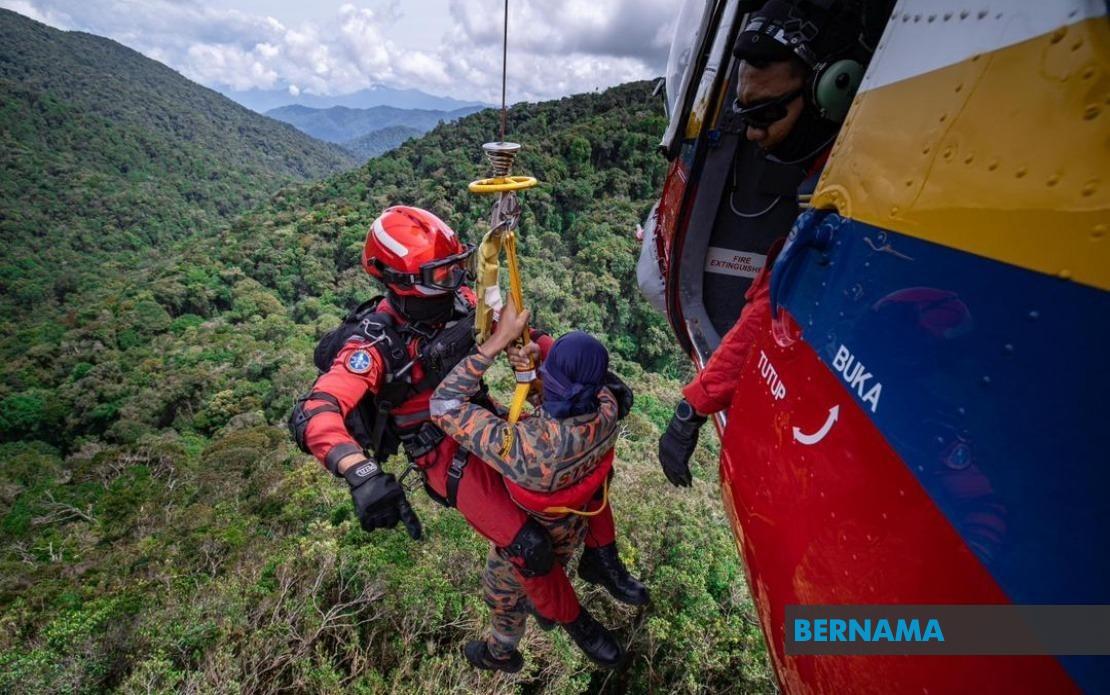
The growing popularity of hiking in Malaysia has come with a sobering human cost. Between 2021 and 2025, the country experienced 1,059 accidents across hiking activities, resulting in 63 deaths and 87 injuries according to data from the Fire and Rescue Department of Malaysia. Deputy Minister of Natural Resources and Environmental Sustainability Syed Ibrahim Syed Noh revealed these figures during a parliamentary session, underscoring the urgent need to strengthen safety protocols as more Malaysians venture into forest recreational areas and mountain trails.
The statistics serve as a stark reminder of the risks inherent in hiking activities, particularly in Malaysia's diverse terrain ranging from the lowland rainforests to high-altitude mountains. The rate of accidents translates to approximately 211 incidents annually over the five-year period, suggesting that safety concerns extend beyond isolated incidents. For Malaysian outdoor enthusiasts and adventure tourism operators, these numbers highlight the critical importance of adhering to safety guidelines and understanding the environmental hazards present in protected forest areas.
In response to the troubling trend, the government has developed comprehensive frameworks designed to mitigate risks systematically. The Peninsular Malaysia Forestry Department, with financial support from the United Nations Development Programme, created the Mountain Risk Assessment and Management Guideline, or MoGRAM, which serves as a technical reference document for identifying hazards, implementing mitigation strategies, and determining safe hiking trail capacity levels. This guideline represents a shift towards evidence-based management of recreational activities in Malaysia's Permanent Reserved Forests, bringing international best practices into the national context.
A cornerstone of Malaysia's safety initiative involves the certification and deployment of Forestry Mountain Guides across high-risk areas. The government has made it mandatory to engage these certified professionals in 189 designated high-risk hiking locations throughout Peninsular Malaysia. These guides undergo rigorous training and play a multifaceted role in ensuring hiker safety, coordinating emergency responses, and ensuring compliance with established hiking protocols. To date, 2,322 individuals from local and indigenous communities have completed the Forestry Mountain Guide skills development programme, creating employment opportunities while simultaneously enhancing trail safety.
The employment of community-based mountain guides reflects a broader strategy that intertwines economic development with safety outcomes. By drawing from local populations, particularly indigenous communities with inherent knowledge of forest ecosystems and terrain challenges, the government creates a sustainable safety network while supporting rural livelihoods. These guides possess both formal training and traditional knowledge, positioning them uniquely to address the diverse risks hikers encounter in Malaysian mountains and forests.
Beyond on-ground personnel, Malaysia is embracing technological solutions to enhance hiking safety and emergency response capabilities. The ministry is collaborating with the Malaysian Space Agency to develop an advanced hiking trail management system that leverages geospatial technology, geographic information systems, and remote sensing capabilities. This system will enable comprehensive mapping and real-time monitoring of hiking trails, centralised management of trail information accessible to relevant authorities, and significantly improved search and rescue operations through precise spatial analysis and data integration.
Currently, hiking activity registration in Permanent Reserved Forests operates on a decentralised basis, with individual state forestry departments managing either manual or online registration systems. This fragmented approach, while respecting state jurisdiction over forest resources, creates coordination challenges during emergencies. The Deputy Minister acknowledged that a unified national digital hiking registration log system could substantially strengthen safety management by creating a systematic record of hiker movements, accelerating the identification and location of missing hikers, and enabling more effective and coordinated search and rescue operations across state boundaries.
The proposed national registration system represents a significant policy shift towards centralised coordination of outdoor recreation safety. While Malaysia's federal structure necessitates coordination with state governments, a standardised digital platform would create interoperability between different state systems and provide emergency responders with real-time information about hiker locations and group compositions. For tourists and adventurers, such a system would offer additional security through enhanced tracking and emergency notification capabilities.
Training and professional development form another pillar of the government's safety strategy. Beyond the initial certification of mountain guides, the ministry conducts regular training programmes covering hiking safety protocols, risk assessment and management, first aid response, wilderness survival techniques, and search and rescue methodologies. This ongoing commitment to skills development ensures that guides remain current with best practices and can effectively respond to evolving challenges and emergency scenarios encountered on Malaysian trails.
The comprehensive approach reflects recognition that hiking safety requires multiple interconnected interventions rather than isolated measures. Risk assessment frameworks, certified personnel, technological monitoring systems, and continuous training collectively address the complex factors contributing to hiking accidents. For Malaysia's tourism industry, which increasingly markets hiking and outdoor adventures as key attractions, these initiatives enhance the safety profile that both domestic and international visitors require before engaging in such activities.
Looking forward, the success of these initiatives will depend on consistent implementation, adequate funding, and continued coordination between federal and state authorities. The involvement of the United Nations Development Programme and the Malaysian Space Agency indicates the government's commitment to international collaboration and technological sophistication in addressing this public safety challenge. As hiking's popularity continues growing among Malaysians and international visitors, these comprehensive measures aim to ensure that increased participation does not translate to proportionally higher accident rates.
The initiatives also carry implications for sustainable tourism development in Southeast Asia. Malaysia's experience with developing systematic hiking safety frameworks could serve as a model for neighbouring countries facing similar challenges as outdoor recreation expands. By prioritising safety alongside accessibility, the government demonstrates that popular outdoor activities and risk mitigation are not mutually exclusive, provided sufficient resources, technology, and professional expertise are deployed comprehensively across all relevant dimensions.