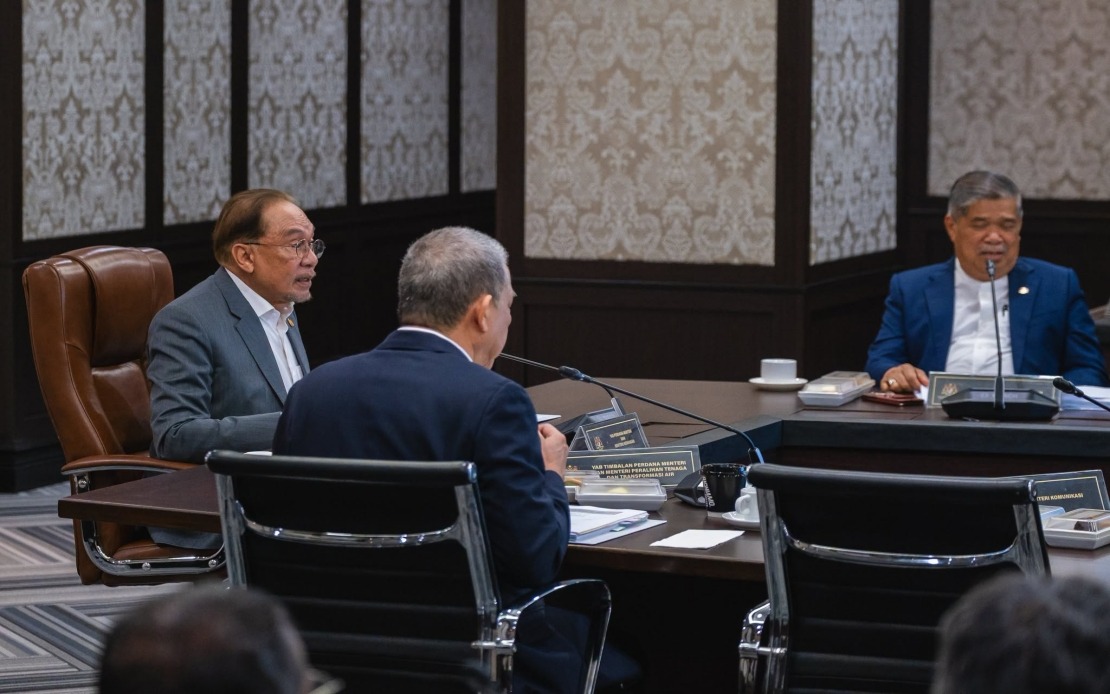
Malaysia's government has placed the resolution of trade barriers with Thailand high on its policy agenda, with Agriculture and Food Security Minister Datuk Seri Mohamad Sabu confirming that negotiations are underway to address multiple restrictions affecting the country's food exports. The Thai government has maintained restrictions on Malaysian shrimp since 2017, a barrier that has persisted through successive administrations and regional trade discussions. Beyond the longstanding shrimp issue, Malaysia is also pressing its application for market access to Thailand for livestock products, a request that has been pending since 2024. These matters were brought before the National Food Security Council Meeting No. 1 of 2026, chaired by Prime Minister Datuk Seri Anwar Ibrahim, underscoring the political significance of agricultural trade relationships within the government's broader food security framework.
The bilateral trade friction extends beyond established restrictions. Thailand recently implemented new import restrictions on shrimp from Malaysia beginning June 1, adding a fresh layer of complexity to negotiations. Simultaneously, Malaysian exporters of siakap, or barramundi, face stringent inspection protocols when shipping to the Thai market, effectively raising non-tariff barriers that complicate commerce. These overlapping restrictions suggest a pattern of protective measures rather than isolated trade disputes, reflecting broader regional competition in high-value aquaculture products. For Malaysian producers, the cumulative effect of these barriers has translated into lost market share and reduced competitiveness in a sector where Thailand is a major regional competitor.
The timing of these negotiations occurs against a backdrop of environmental pressures that threaten agricultural output across Southeast Asia. The government has publicly acknowledged the implications of the El Niño phenomenon and ongoing climate change, which create significant drought risks capable of disrupting local food production. These climatic stressors compound the challenges facing Malaysia's agri-food sector, which must simultaneously navigate international trade barriers and domestic production vulnerabilities. The Ministry of Agriculture and Food Security has responded by developing a multi-faceted strategy encompassing prevention, adaptation, and protection measures designed to insulate agricultural entrepreneurs from these converging pressures.
Within this context, the council meeting reflected a strategic shift toward diversifying Malaysia's food security architecture. One emerging focus involves exploring the viability of alternative protein sources, a direction that could reduce dependency on traditional aquaculture exports and create new domestic value chains. This represents a longer-term adaptation strategy that acknowledges the unpredictability of international market access and the mounting environmental constraints on conventional protein production. By developing alternative protein pathways, Malaysia could buffer itself against both trade restrictions and climate-related production losses, though such ventures require substantial investment and technological development.
The government also prioritised enhancing the competitiveness of the domestic agricultural industry through structural improvements and operational efficiency. A key element of this agenda involves upgrading services and operations at the Malaysian Fisheries Development Authority slipway, an infrastructure component that directly affects the productivity and logistics of the fishing sector. Such investments acknowledge that trade barriers cannot be overcome through negotiation alone; Malaysia must strengthen its underlying productive capacity and export infrastructure to maintain relevance in regional markets. Improvements to fishery infrastructure also position Malaysia more competitively should trade barriers eventually be lowered, ensuring the sector is prepared to capitalize on expanded market access.
The government has designated the Malaysian Agriculture, Horticulture and Agro-tourism Exhibition, scheduled for August 28 to September 6 at the Malaysian Agricultural Expo Park in Serdang, as a platform for sector transformation. Holding this biennial showcase demonstrates the government's commitment to promoting the agri-food sector as a dynamic and modernizing domain. The event serves multiple functions: it provides a venue for domestic producers to network and coordinate, attracts international buyers and investors, and communicates to regional partners that Malaysia views agriculture as a strategic priority worthy of substantial promotional investment.
The broader context of these negotiations reveals tension between Malaysia's role as a significant food producer and its vulnerability to bilateral trade restrictions. Thailand's restrictions, whether motivated by domestic industry protection or other considerations, highlight the asymmetries in regional trade relationships where larger or more politically connected nations can impose barriers with limited consequences. Malaysia's pending livestock product application since 2024 suggests that bilateral negotiations can move slowly, requiring sustained diplomatic pressure and strategic persistence. The government's willingness to elevate these matters to the National Food Security Council indicates recognition that agricultural trade disputes carry implications extending beyond individual producers to national food resilience and economic stability.
Food security has been framed by the government as a matter requiring coordinated commitment across all stakeholders, reflecting acknowledgment that no single entity can address the interconnected challenges of trade access, climate adaptation, and domestic production simultaneously. This holistic framing suggests the government intends to pursue trade negotiations while simultaneously building domestic alternatives and improving sectoral competitiveness. The strategy reflects a pragmatic understanding that trade barriers may persist regardless of diplomatic efforts, necessitating parallel investments in domestic capacity and supply chain diversification.
For Malaysian readers and policymakers, the significance of these negotiations extends beyond the immediate trade barriers. The outcome will shape the viability of employment in fisheries and livestock sectors, influence food prices and availability, and determine whether Malaysia can sustain its position as a reliable agricultural exporter within Southeast Asia. The government's emphasis on collective commitment and strategic cooperation suggests that resolving these issues will require engagement not only with Thai counterparts but also with domestic industry stakeholders, research institutions, and regional bodies. The path forward appears to combine patient bilateral diplomacy with proactive domestic reforms designed to reduce dependency on any single export market.

