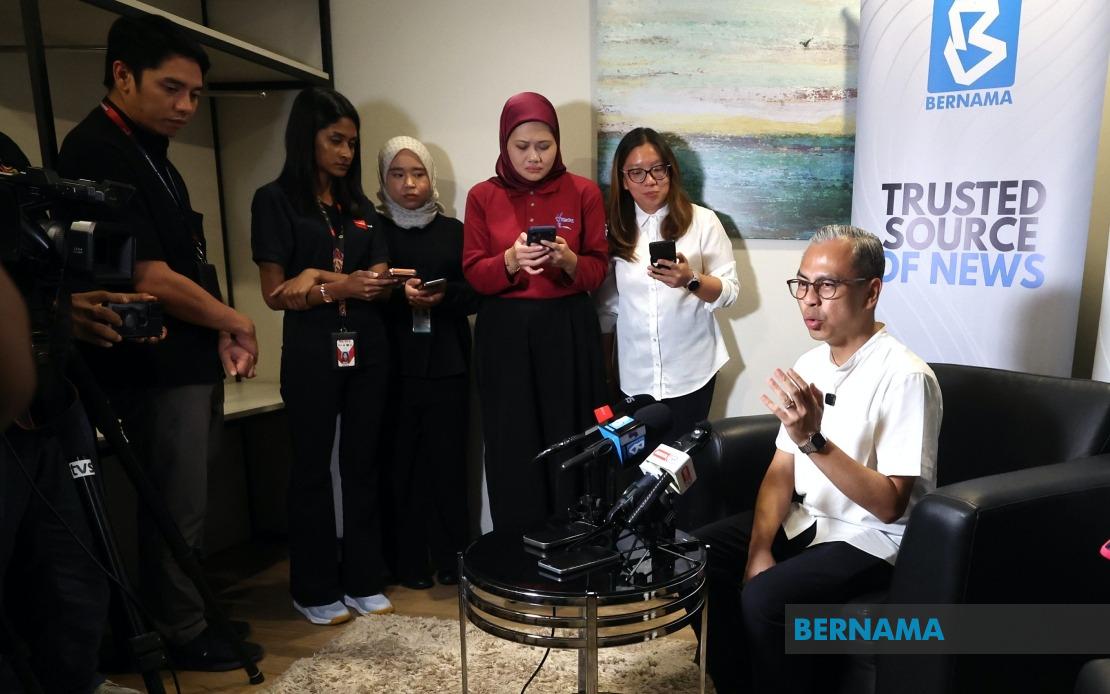
The Malaysian government is moving to reinforce industry self-regulation of media content, with Communications Minister Datuk Fahmi Fadzil announcing plans to expand the Malaysian Media Council's reach and authority during a visit to the national news agency in Johor Bahru on July 7. The push represents a significant shift in how Malaysia intends to manage media ethics and content standards, marking a transition away from sole reliance on government regulation towards collaborative industry-led oversight that the administration believes will foster more responsible journalism while protecting press freedom.
Fahmi emphasised that the fledgling Malaysian Media Council requires purposeful strengthening as it establishes itself in its role as the country's primary self-regulatory mechanism for media conduct. His statement reflects growing recognition within government circles that a purely top-down regulatory approach may be less effective than structured industry participation in setting and enforcing ethical standards. The Communications Ministry plans to provide substantial assistance during the council's formative years, signalling that government support will be instrumental in building the institution's credibility and operational capacity. This collaborative framework aims to position the council as a trusted arbiter of journalistic standards rather than merely another government enforcement body.
A cornerstone of the new framework involves the involvement of social media platforms, which Fahmi identified as crucial to the council's effectiveness and reach. The minister acknowledged that contemporary information challenges extend well beyond traditional newsrooms, with digital platforms now serving as primary distribution channels for both professional journalism and user-generated content. The inclusion of social media companies in the council's structure would theoretically enable coordination on content moderation policies and ethical standards that account for Malaysia's specific cultural, religious, and social context. This recognition addresses a persistent gap in content governance, whereby international platforms have historically applied global moderation policies that sometimes prove misaligned with local sensitivities and legal frameworks.
Prime Minister Datuk Seri Anwar Ibrahim previously announced a procedural safeguard designed to protect journalists from arbitrary action. Under the new mechanism, complaints against practitioners from recognised media organisations will no longer trigger automatic government investigations or prosecutions. Instead, such matters must first be referred to the Malaysian Media Council for independent assessment and handling. This structural change aims to ensure that any disciplinary or legal action against journalists follows transparent processes with proper scrutiny, reducing the risk of political weaponisation of media regulation that has been a concern in regional democracies.
Fahmi illustrated the rationale behind bringing social media platforms into the regulatory framework by referencing a recent incident in Banting, where a teenager's stabbing of another student resulted in graphic images and sensitive police investigative details circulating widely on digital platforms. The uncontrolled dissemination of such material, particularly involving minors, demonstrates how conventional journalistic codes of conduct provide no guardrails for user-generated content and algorithmically-amplified posts. While individual social media companies maintain their own community guidelines, these policies are typically designed for global audiences and often fail to account for Malaysia's distinct concerns regarding privacy, religious sensitivity, and the protection of vulnerable individuals in reporting on crime and tragedy.
The government's approach reflects a broader strategic calculation that voluntary participation by platforms may prove more effective than regulatory coercion. By positioning the Malaysian Media Council as a collaborative space where both traditional media and digital platforms can address common challenges, authorities aim to build consensus around ethical standards while preserving the operational autonomy that technology companies typically demand. This carrot-and-stick approach—offering reputational standing and streamlined dispute resolution in exchange for participation—mirrors strategies employed in other democracies grappling with platform accountability.
Fahmi noted that Malaysia's performance in the World Press Freedom Index has been a matter of concern for policymakers, and the integration of social media into self-regulatory mechanisms could improve the country's standing by demonstrating commitment to independent oversight and journalistic independence. International media freedom rankings increasingly evaluate not only press persecution but also the broader ecosystem of accountability and self-regulation within media industries. By establishing formal channels for platform participation in ethics governance, Malaysia can argue that it has created robust safeguards against both government overreach and unchecked content dissemination.
The expansion of the Malaysian Media Council's scope presents particular challenges given the fragmented nature of social media content creation and distribution. Unlike traditional news organisations, which maintain institutional hierarchies, editorial standards, and accountability structures, digital platforms aggregate content from millions of individual users whose outputs vary dramatically in accuracy, intent, and ethical consideration. Bringing platforms meaningfully into a self-regulatory council will require establishing workable procedures for addressing user-generated content while preserving the open participation that defines social media's appeal. The council must therefore develop mechanisms that distinguish between platform responsibility for algorithmic amplification and editorial responsibility for individual posts.
The minister's emphasis on encouraging broader media organisation membership underscores recognition that the council's effectiveness depends on representative participation across Malaysia's media landscape. Beyond national broadcasters and major news agencies, thousands of smaller outlets, online publications, and community media platforms operate throughout the country. Achieving meaningful coverage would necessitate a tiered membership structure that accommodates organisations of varying size and resources while maintaining consistent ethical standards. This democratisation of the council's membership base could enhance its legitimacy as a representative industry body rather than a forum dominated by established media titans.
Fahmi's announcement also reflects international trends in platform governance, where self-regulatory approaches are increasingly favoured over purely statutory regulation. The European Union's Digital Services Act represents one model, while various democracies have experimented with industry codes of conduct and voluntary commitments. Malaysia's approach, centred on a strengthened media council incorporating social platforms, positions the country as seeking a middle path between light-touch regulation and heavy-handed government control. The success of this model will likely influence how other Southeast Asian nations approach similar challenges, given the region's shared concerns about balancing press freedom, platform accountability, and government oversight.
The practical implementation of expanded council participation by social media companies remains uncertain, particularly regarding how the council will address complaints, enforce standards, and manage jurisdictional questions when platforms operate across multiple countries with varying legal frameworks. Malaysian authorities will need to develop clear protocols for escalation and enforcement, clarifying what remedies the council can impose and what triggers government referral. These operational details will ultimately determine whether the council becomes a genuinely effective mechanism for ethical accountability or remains largely symbolic. The Communications Ministry's commitment to providing resources and support in the council's early stages suggests government awareness that adequate institutional capacity will be essential to success.
Looking ahead, the Malaysian Media Council experiment will serve as a test case for whether industry self-regulation can effectively address contemporary content challenges in a multi-platform environment. The model's success depends on sustained commitment from both government and industry stakeholders, transparent rule-making, independent dispute resolution, and willingness to enforce standards against all members regardless of size or influence. If executed effectively, Malaysia's approach could demonstrate how democracies can maintain editorial independence and press freedom while ensuring responsible content practices across traditional and digital media. Conversely, failure could vindicate sceptics who argue that meaningful platform accountability ultimately requires statutory regulation rather than voluntary participation.

