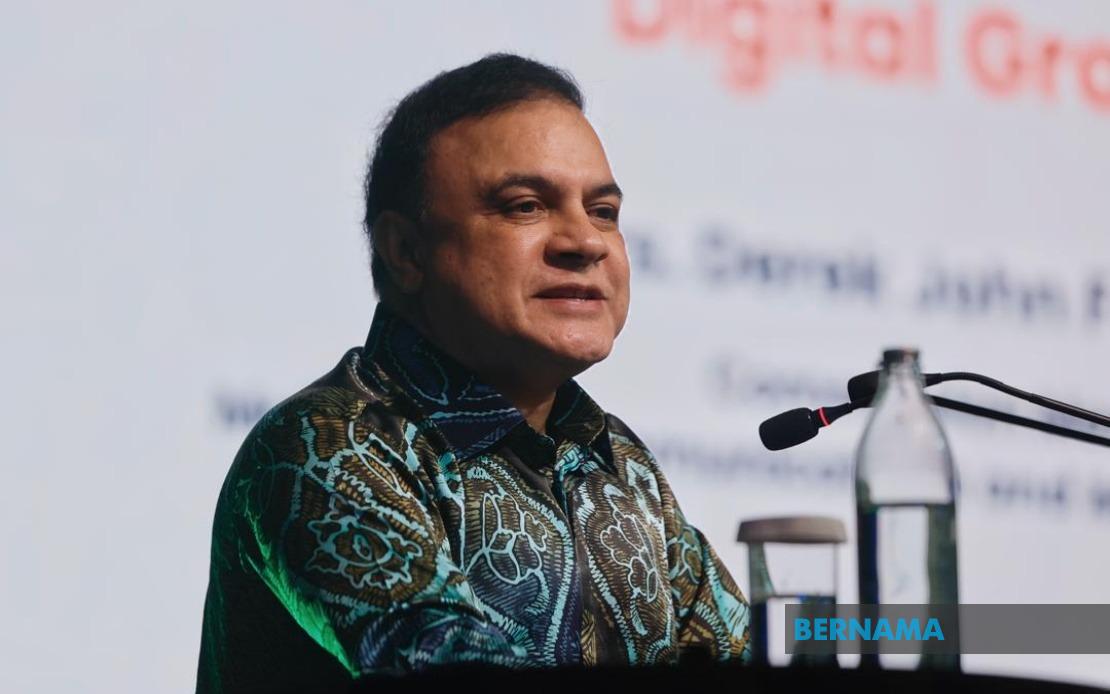
Malaysia's regulatory approach to online safety faces a critical asymmetry that criminals are systematically exploiting, according to Malaysian Communications and Multimedia Commission (MCMC) member Derek John Fernandez. Speaking at the International Regulatory Conference (IRC) 2026 in Kuala Lumpur on July 21, Fernandez highlighted a troubling disconnect between how the nation safeguards minors in the physical world and the considerably weaker protections that currently exist in the digital realm, where anonymity and looser enforcement create an attractive environment for criminal activity.
The disparity Fernandez identified extends to fundamental concepts of age-based restrictions that Malaysian society has long accepted as necessary. In the physical world, governments consistently enforce age limitations on activities deemed harmful to developing minds—whether viewing certain films, purchasing alcohol, or accessing specific venues. Yet these same protective principles have failed to translate coherently into digital environments, where young people face unfiltered access to potentially harmful content and predatory interactions. This inconsistency has created what Fernandez described as a "great shift" that actively encourages criminals to migrate their operations online, where legal consequences are perceived as less severe and evidentiary trails more easily obscured.
The Malaysian government has recognised this regulatory gap and responded with legislative measures designed to establish greater parity. The Online Safety Act 2025 (ONSA), which came into force on January 1 this year, represents a significant step in establishing consistent digital safeguards. Complementing this framework are recent amendments to the Communications and Multimedia Act 1998 and modifications to the Penal Code that introduce mechanisms for verifying user identities and ages on digital platforms. These legal innovations signal Malaysia's determination to translate traditional child protection principles into a digital context, though implementation challenges remain substantial.
The scale of online exploitation in Malaysia underscores the urgency of these regulatory responses. The MCMC now processes between two and three reports of child sexual abuse material daily and conducts approximately 1,700 takedowns of harmful online content every day. These figures illustrate not merely a problem of individual victims but rather a systemic challenge involving the industrialised production and distribution of exploitative content. The sheer volume of daily enforcement actions required indicates that reactive measures, while necessary, cannot alone solve a problem that fundamentally stems from regulatory architectural weaknesses.
Beyond child protection, the digital domain presents broader safety challenges that conventional legal frameworks struggle to address. Rapid advancement in artificial intelligence, the proliferation of social media platforms, and the expansion of interconnected digital technologies have created new vectors for criminal activity. Scams targeting elderly citizens, fraud schemes that exploit financial vulnerabilities, cyberbullying campaigns that inflict psychological harm, and various other online harms operate across jurisdictional boundaries and at speeds that traditional law enforcement agencies find difficult to match. The Communications Minister, Datuk Seri Fadhmi Fadzil, formally recognised these challenges in officially opening the IRC conference, signalling government-wide commitment to addressing this evolving threat landscape.
A particularly concerning dimension of digital threats involves the transformation of children's home environments from sanctuaries into spaces of potential vulnerability. Unlike the physical world where parents can observe their children's movements and social interactions, the digital realm operates without geographic or temporal boundaries. Smartphones, tablets, computers and connected devices provide 24-hour channels through which predators, fraudsters and purveyors of harmful content can reach young people without the awareness of parents or guardians. This unseen exposure distinguishes digital risks from their physical counterparts and demands regulatory approaches that account for the fundamentally different nature of online spaces.
Personal data has emerged as a crucial vulnerability amplifier in this threatening landscape. In the contemporary digital economy, information about individuals—their preferences, locations, financial details, communication patterns and behavioural characteristics—has become a high-value commodity. Criminals weaponise this information for scams targeting specific demographic groups, for executing fraud schemes tailored to individual vulnerabilities, and for facilitating exploitation of children through personalised manipulation tactics. The challenge for regulators like Malaysia involves protecting citizens' data while respecting the legitimate business operations of technology companies that increasingly depend on data collection as a foundational component of their commercial models.
The balancing act between commercial interests and public protection has become one of the defining tensions in digital regulation. Technology platforms argue that extensive data collection enables them to provide personalised services and supports their financial viability in competitive global markets. Regulators counter that unchecked data accumulation creates unacceptable security risks and enables predatory business practices. Malaysia's regulatory approach, as demonstrated through the ONSA 2025 and supporting legislative amendments, attempts to navigate this tension by establishing baseline protections while allowing technological innovation to continue. However, ongoing dialogue between government bodies and industry players will be essential as digital technologies evolve faster than legislative frameworks can accommodate.
Age verification mechanisms represent one significant tool in Malaysia's emerging defensive arsenal against online harms. Fernandez acknowledged that age verification alone cannot eliminate online threats, a realistic assessment that distinguishes Malaysian regulatory thinking from more simplistic approaches. Instead, age-based access restrictions should function as one component within a comprehensive, multi-layered strategy. This approach combines legislative requirements, technological solutions such as verification systems and content filtering, active enforcement actions by regulatory agencies, and international cooperation to address threats that routinely transcend national boundaries. The sophistication of this multi-pronged strategy reflects recognition that online safety problems cannot yield to single-solution interventions.
International regulatory trends provide important context for Malaysia's evolving approach. Fernandez noted that an increasing number of countries are implementing age-based restrictions on children's social media access as part of their online safety agendas. Australia, the United Kingdom, and several European nations have introduced or considered similar measures, creating a potential regulatory convergence around age verification principles. For Malaysia as a major Southeast Asian economy and increasingly influential voice in digital governance discussions, aligning with international standards while maintaining sovereignty over national implementation approaches strengthens the country's position in shaping regional digital norms.
The IRC 2026 itself, organised around the theme "Shaping the Next Digital Era: Regulation, Resilience and Trust," reflects Malaysia's evolving self-conception in digital governance. The country has shifted from primarily adopting international regulatory models towards developing its own policy frameworks grounded in Malaysian legal traditions and social priorities. The ONSA 2025 exemplifies this transition, representing a distinctly Malaysian response to online safety challenges rather than a simple transplant of foreign regulatory approaches. This confidence in developing indigenous regulatory solutions, coupled with openness to international cooperation and learning, positions Malaysia as a potential model for other developing nations navigating comparable digital governance challenges.
Implementing regulatory parity between physical and digital worlds will require sustained commitment across multiple institutions and stakeholder groups. The MCMC, as primary regulator, must develop sufficient capacity and technological sophistication to enforce new requirements at scale. Technology platforms must integrate new compliance requirements into their business operations and interface designs. Parents and educators must develop competencies to guide young people through digital risks that adults themselves may not fully comprehend. Law enforcement agencies must acquire specialised skills in digital investigation and evidence collection. This multi-institutional challenge explains why achieving genuine regulatory parity remains aspirational rather than accomplished, requiring years of coordinated effort and resource commitment to realize the protective vision that Fernandez articulated at the IRC conference.

