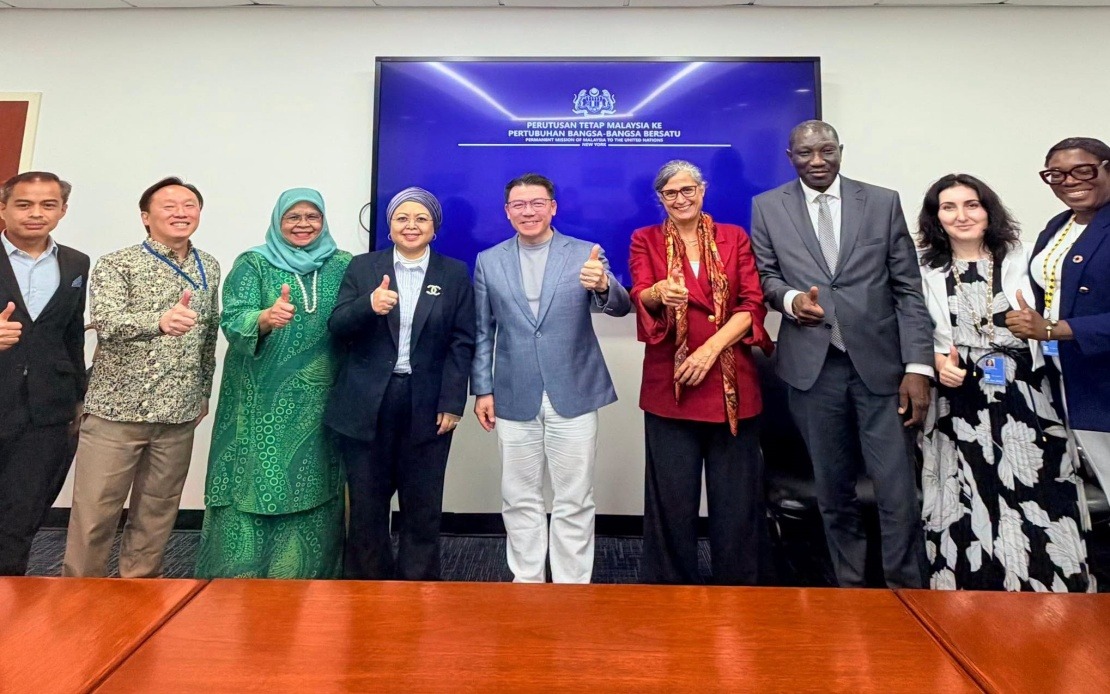
Malaysia has stepped up pressure on the global community to transform rhetorical commitments into concrete action on sustainable urban development, with Housing and Local Government Minister Nga Kor Ming warning that time is running out to meet critical environmental and social targets. Speaking at the United Nations Headquarters in New York following a high-level review of the New Urban Agenda, Nga argued that mid-term assessments risk becoming mere documentation of failure unless countries fundamentally shift focus towards delivering measurable outcomes for the billions of people living in cities worldwide. With only four years remaining until the 2030 deadline, the minister's intervention underscores growing anxiety within developing nations about the pace of global urbanisation efforts.
Nga's remarks, delivered during the two-day High-Level Meeting examining progress on the New Urban Agenda, reflect Malaysia's increasingly prominent role in shaping regional and global sustainability discourse. As President of the UN-Habitat Assembly, Malaysia has positioned itself at the forefront of efforts to reframe urban development from a purely aspirational agenda into a practical, implementable strategy. His statement reflects frustration that many nations have made declarations without translating them into policy, investment, or institutional change. The minister's direct challenge to the assembled delegates represents a departure from the ceremonial language that typically characterises such international gatherings, signalling Malaysia's determination to hold both developed and developing countries accountable for their urban development commitments.
Among the most pressing challenges requiring immediate action, Nga identified the escalating global housing shortage, which has left hundreds of millions without adequate shelter, particularly across developing regions. The widening digital divide in urban areas compounds this crisis, as swelling populations in cities lack reliable access to internet infrastructure and technology services essential for economic participation. Climate resilience represents another urgent priority, with urban centres increasingly vulnerable to floods, extreme heat, and other weather-related disasters intensifying under climate change. The minister's articulation of these interconnected challenges reflects Malaysia's understanding that sustainable urbanisation cannot be compartmentalised into isolated policy domains but must be addressed through integrated, holistic approaches that link housing, technology, and environmental protection.
Malaysia's advocacy for stronger action is grounded partly in the MADANI Economy framework, a national development philosophy emphasising inclusive growth and people-centred progress. Through this lens, the government has positioned itself as a champion of development models that do not sacrifice environmental sustainability or social equity in pursuit of economic growth. The framework provides intellectual scaffolding for Malaysia's international advocacy, allowing the nation to articulate development priorities that resonate with other middle-income countries navigating similar pressures. By framing global urban challenges through a distinctly Malaysian interpretive lens, the government has managed to elevate its voice in international forums beyond what its economic size alone might command, establishing it as a thoughtful voice on behalf of developing Asia.
The Asia-Pacific Urban Action Platform represents a cornerstone of Malaysia's regional strategy for translating global commitments into localised action. Established in partnership with neighbouring countries, the platform acknowledges that sustainable development goals cannot be imposed uniformly across diverse contexts but must be adapted to regional characteristics and local capacities. The mechanism facilitates knowledge exchange among governments wrestling with similar urbanisation pressures, enables financing schemes for green infrastructure suited to tropical climates, and strengthens political will through peer learning and mutual accountability. For Malaysia specifically, this platform provides channels through which it can exercise leadership proportionate to its regional stature while building coalitions that amplify developing Asia's voice in global sustainability negotiations.
Malaysia's record on green building construction, with more than 500 million square feet of certified green index buildings already achieved, provides tangible evidence underpinning the minister's calls for accelerated climate action. These buildings represent not merely environmental commitments but demonstrate technical capacity, regulatory frameworks, and financing mechanisms that have enabled the private sector to embrace sustainability standards. The government's pledge to expand this footprint further before 2030 converts abstract environmental goals into measurable infrastructure targets, establishing Malaysia as a nation walking rather than merely talking on climate resilience. This practical track record enhances the credibility of Malaysian advocacy in international forums, allowing the nation to speak from experience about what is achievable rather than merely what is desirable.
Nga's emphasis on leaving no community behind reflects acute awareness among developing nations that urban growth often exacerbates inequality, concentrating wealth and services in commercial districts while marginalising informal settlements and peripheral communities. This principle, articulated repeatedly in international development discourse, carries particular resonance in Southeast Asia where rapid urbanisation has created stark contrasts between affluent urban cores and sprawling informal residential areas. Malaysia's focus on inclusive urbanisation responds to domestic pressures as well as global rhetoric, acknowledging that sustainable development cannot be credible if it merely benefits wealthy segments while condemning the majority to inadequate housing, limited services, and precarious employment.
The minister's call for renewed determination rather than merely renewed declarations represents subtle but significant criticism of the international process itself. Many developing nations have grown weary of cyclical global conferences that produce communiqués rich in aspiration but light on implementation mechanisms or accountability structures. By insisting that the midterm review become an inflection point rather than a documentary exercise, Nga articulates frustration widespread among nations seeking to translate global agreements into domestic results. His implicit critique challenges the United Nations system to evolve beyond convening functions toward providing genuine enforcement mechanisms, financial commitments, and technical support that would enable countries to meet their stated objectives.
Malaysia's positioning on sustainable urbanisation also reflects strategic calculation about its role in the broader Asian century. As China, India, and other major Asian economies accelerate urbanisation at unprecedented scales, the region's approach to sustainable development will substantially determine global environmental trajectories. By establishing itself as a thoughtful advocate for development models balancing growth with sustainability, Malaysia enhances its diplomatic influence while contributing to regional conversations about what Asian urbanisation should represent. The nation's advocacy transcends mere rhetorical leadership, grounded instead in domestic policies, regional partnerships, and concrete achievements that demonstrate commitment extending beyond conference halls.
The appreciation Nga extended to UN officials, local governments, and civil society organisations reflects acknowledgment that sustainable urbanisation requires multi-stakeholder engagement transcending traditional state-centric governance models. Local authorities possess detailed knowledge about their urban populations' needs, while civil society organisations provide accountability and mobilisation capacity that government alone cannot generate. This recognition, articulated by Malaysia's housing minister, indicates evolving understanding within Southeast Asian governments about the necessity of partnership models in addressing complex development challenges. Such acknowledgment carries significance for regional development discourse, suggesting Malaysia's vision of governance encompasses coordination across hierarchical levels and sectoral boundaries.
Looking forward, Malaysia's interventions at the UN Headquarters signal that developing Asia intends to shape the remaining four years of the 2030 agenda according to its own priorities rather than passively accepting frameworks designed elsewhere. The emphasis on locally driven solutions, strong political commitment, and cross-border collaboration suggests Malaysia envisages a development landscape where regional powers take initiative rather than awaiting directives from global north institutions. This assertiveness, expressed diplomatically rather than confrontationally, indicates Malaysia's confidence in advocating for development approaches reflecting Asian contexts and capacities. As urbanisation intensifies across the region and climate pressures mount, Malaysia's voice advocating for action tempered with pragmatism will likely grow more influential in shaping how Southeast Asia approaches the decade's critical development challenges.

