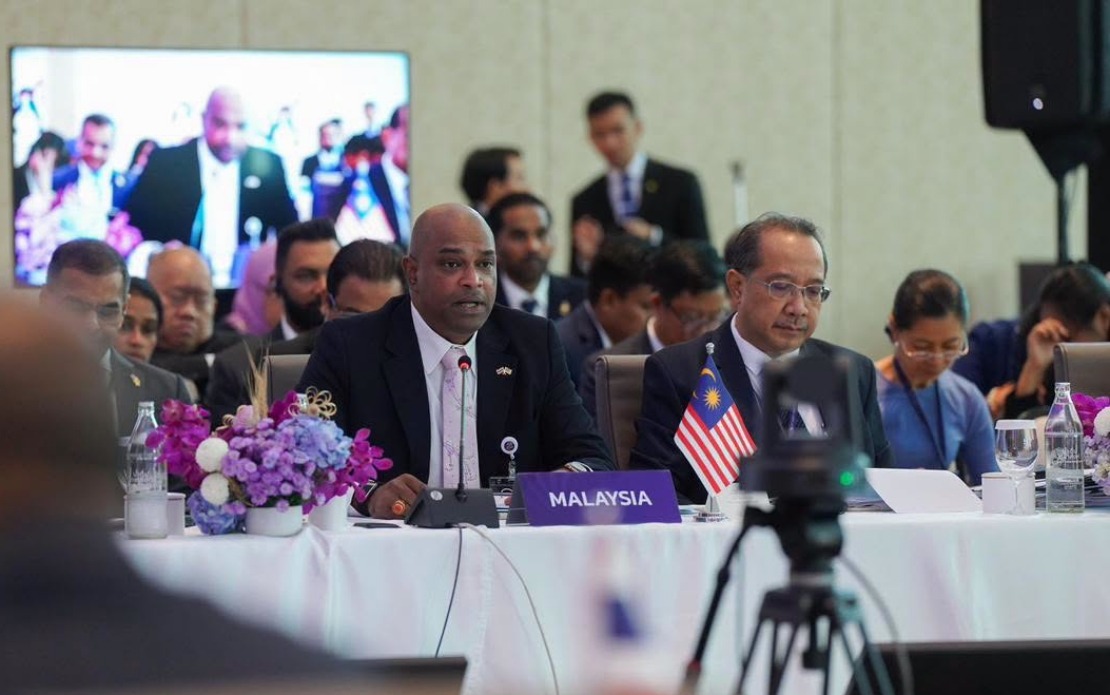
Malaysia has positioned itself as a driving force behind efforts to create a more cohesive skills ecosystem across Southeast Asia, urging fellow ASEAN members to establish robust frameworks for recognising and validating workforce qualifications across borders. Speaking at the 14th ASEAN Plus Three Labour Ministers' Meeting in Bangkok, Thailand, Human Resources Minister Datuk Seri R. Ramanan outlined an ambitious agenda focused on ensuring that talented workers trained throughout the region possess credentials that command trust from employers worldwide and facilitate career mobility across national boundaries.
The minister articulated three core priorities that Malaysia believes should anchor regional cooperation on this critical front. First among these is the strengthening of joint certification mechanisms and the harmonisation of Technical and Vocational Education and Training qualifications—a move designed to eliminate the current fragmentation that leaves workers trained in one ASEAN nation uncertain about their employment prospects in another. Equally important is the expansion of technology transfer initiatives and professional development for educators, recognising that the quality of instruction directly determines the calibre of graduates entering the workforce. The third pillar involves cultivating world-class training programmes tailored to emerging sectors such as artificial intelligence, next-generation automotive technologies and advanced robotics, fields where Southeast Asia must establish competitive advantage to capture high-value employment opportunities.
The challenge Malaysia seeks to address reflects a persistent structural weakness in the regional economy. While ASEAN represents a combined market of over 650 million people with significant labour resources, the absence of mutually recognised skills standards has fragmented the regional talent pool. Workers trained in Thai automotive manufacturing or Filipino healthcare sectors often find their qualifications viewed with scepticism across borders, forcing either costly re-certification or underemployment in lower-skilled roles. This inefficiency represents not merely individual hardship but a collective economic loss for a region competing against cohesive labour markets in Europe and increasingly sophisticated East Asian neighbours.
Ramanan emphasised that the initiative transcends mere bureaucratic harmonisation of paper credentials. Instead, Malaysia envisions a system where skills recognition becomes genuinely meaningful—where a certificate earned in any ASEAN nation signals authentic capability meeting industry-validated standards. This distinction matters profoundly for employers considering regional hiring strategies and for workers contemplating cross-border career advancement. The Malaysian vision reflects understanding that in an era of rapid technological disruption and shifting labour demand, workers must be able to move fluidly across the region to match their capabilities with emerging opportunities.
The inclusion of major external partners—China, Japan and South Korea—in the Bangkok discussions signals recognition that harmonising ASEAN standards requires engagement with developed economies that will ultimately employ or partner with the region's workers. These three nations bring established frameworks for technical education, accumulated experience in managing large-scale skill development and technological sophistication particularly relevant to AI and advanced manufacturing sectors. By facilitating knowledge transfer and best-practice sharing with these partners, Malaysia argues that ASEAN can compress the timeframe for establishing world-competitive training ecosystems rather than undertaking this transformation in isolation.
For Malaysia specifically, this agenda holds particular strategic importance given the nation's positioning as a regional hub for advanced manufacturing and services. A more fluid, regionally validated skills marketplace would enhance Malaysia's ability to source mid-level and technical talent from neighbouring economies while also creating export opportunities for Malaysian vocational training expertise. The initiative also addresses demographic realities; as some ASEAN nations face ageing populations and tightening domestic labour markets, cross-border skills recognition becomes essential for sustaining growth in labour-intensive sectors.
The timing of Malaysia's push reflects broader structural pressures reshaping Southeast Asian economies. Automation and digitalisation are simultaneously eliminating routine jobs while creating demand for workers with advanced technical competencies. Manufacturing sectors across the region are transitioning from simple assembly toward more sophisticated production requiring precision skills and technical understanding. Without coordinated regional investment in harmonised vocational training and credentials recognition, ASEAN risks a scenario where labour shortages coexist with youth unemployment—a paradox already visible in pockets across the region.
Implementing this agenda will require navigating considerable complexity. Individual ASEAN nations maintain different educational philosophies, quality assurance mechanisms and labour market structures. Creating mutual recognition frameworks demands establishing shared standards while respecting national sovereignty—a balance that regional institutions have struggled to achieve in other domains. Additionally, industries across ASEAN employ different technologies and practices; a welding certification valid in Vietnam's shipyards may require supplementation for Singapore's precision manufacturing. Resolving such practical challenges will demand sustained technical collaboration extending well beyond ministerial declarations.
The Malaysia-led initiative also implicitly acknowledges that ASEAN's competitive position faces pressure from demographic and economic shifts. India and Bangladesh increasingly compete with Southeast Asia for labour-intensive manufacturing investment, while China advances rapidly in high-technology sectors. ASEAN's advantage lies in geographic positioning, political stability in many countries and relatively abundant working-age populations—assets that become valuable only if the region can credibly demonstrate that its workers possess globally marketable skills. A fragmented approach to skills recognition undermines this advantage; a coordinated regional system amplifies it.
Looking forward, success will depend on translating ministerial ambition into concrete mechanisms. This requires establishing independent bodies capable of certifying training programmes across ASEAN, creating transparent appeal processes for workers whose qualifications are disputed, and continuously updating standards as technology evolves. It equally demands investment in trainer development, since even well-designed curricula produce weak outcomes without qualified instructors. Malaysia's willingness to champion this agenda positions it to influence the shape of regional frameworks and potentially derive outsized benefits from emerging skilled labour networks.

