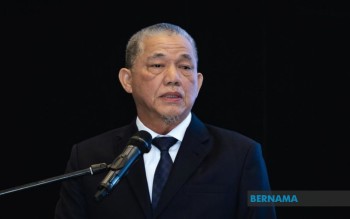
Malaysia is positioning itself to transform the economic landscape of retiring coal-fired power plants rather than let valuable infrastructure become obsolete. Deputy Prime Minister Datuk Seri Fadillah Yusof announced at the World Economic Forum's Malaysia Energy Future conference that the government will pursue a National Coal Site Repurposing Framework, converting coal station sites into hubs for clean energy generation and battery energy storage. This strategic pivot reflects an emerging global consensus that coal phase-out need not leave communities and investments stranded, but instead can catalyse new industrial growth aligned with decarbonisation goals.
The coal-fired power plants scheduled for retirement represent far more than aging generators. These facilities sit at the intersection of critical national infrastructure: they connect to established transmission networks, sit on industrialised land with existing supply chains, and occupy geographically strategic locations across the country. Rather than viewing their retirement as a loss, Malaysian policymakers are recognising these sites as platforms for concentrated renewable energy development. The transmission connections already in place can immediately serve new solar farms or wind installations, dramatically reducing the cost and complexity of deploying distributed renewable capacity. This infrastructure advantage is particularly valuable in Southeast Asia, where grid modernisation remains a significant hurdle to renewable adoption.
Fadillah, who also serves as Energy Transition and Water Transformation Minister, stressed that this repurposing initiative would create genuine economic opportunities beyond merely replacing fuel sources. Retiring power station sites can host manufacturing facilities for solar panels and battery components, attract investment in energy storage innovation, and generate skilled employment in maintenance and technical roles. For the local communities surrounding these plants, which have often depended on coal operations for decades, the repurposing framework signals a managed transition rather than economic abandonment. This consideration is crucial in Malaysia's context, where coal-dependent regions require credible pathways to alternative prosperity.
The World Economic Forum's accompanying insight paper, "Beyond Coal: Building a Flexible, Resilient and Clean Power System for Malaysia", provides the intellectual foundation for this framework. It proposes that government, regulators, utilities, investors and local stakeholders engage in coordinated planning to identify which retiring sites offer the strongest potential for renewable development. This collaborative approach acknowledges that coal transition is not purely a technical challenge but a social and economic one requiring multi-stakeholder commitment. For Malaysian investors and policymakers, the framework creates a clear blueprint for stewarding the country's energy future while preserving value from existing assets.
Malaysia's energy transition targets are notably ambitious for the region. The government has committed to building no new coal plants, phasing out coal-fired generation by 2044, and achieving 70 percent renewable energy installed capacity by 2050. These milestones situate Malaysia as a potential regional leader in decarbonisation, particularly relevant as ASEAN nations struggle to balance economic growth with climate commitments. However, Fadillah issued a crucial caveat: renewable deployment must accelerate faster than coal retirement, or Malaysia risks exchanging one dependency for another. Should coal plants retire before sufficient renewable capacity comes online, the country could pivot toward greater reliance on imported liquefied natural gas, merely shifting energy vulnerability rather than reducing it.
This risk of fuel import substitution is particularly acute for Malaysia and Southeast Asia. While renewable energy deployment is increasingly cost-competitive, the intermittency challenges of solar and wind require either massive battery storage investments or backup thermal capacity. If LNG becomes the default replacement fuel, Malaysia faces exposure to global gas price volatility and geopolitical uncertainties beyond its control—risks that proved especially acute during recent energy crises in Europe and Asia. The transition strategy must therefore prioritise renewable deployment at a pace that stays ahead of coal retirement, ensuring coal capacity declines only as clean energy comes online.
To maintain momentum, Malaysia's Energy Transition and Water Transformation Ministry is concentrating efforts on large-scale solar deployment, expanded corporate renewable energy procurement schemes, battery energy storage system development, and smart grid infrastructure. Large-scale solar projects can be rapidly deployed on the repurposed coal sites, while corporate renewable schemes incentivise private sector participation in clean energy investment. Battery storage is essential to address intermittency without resorting to imported gas, and smart grid modernisation enables the integration of distributed renewable sources across the national network. Together, these initiatives form a comprehensive approach to clean energy transition rather than relying on any single technology.
Regional cooperation amplifies Malaysia's transition prospects. The country is advancing the ASEAN Power Grid initiative, which would enable cross-border electricity trading among Southeast Asian nations. This framework allows Malaysia to export excess renewable generation during peak solar hours to neighbouring countries, maximising returns on clean energy investments while strengthening regional energy security. Cross-border trade also creates incentives for neighbours to develop their own renewable capacity, catalysing decarbonisation across the bloc. For Malaysia, participation in ASEAN Power Grid integration positions the nation as a clean energy exporter rather than merely a consumer of regional power.
Malaysia is also exploring longer-term low-carbon energy options including advanced nuclear technologies and small modular reactors. This forward-looking stance acknowledges that deep decarbonisation may eventually require dispatchable, carbon-free baseload generation beyond what renewable and battery technology can provide. However, Fadillah emphasised that safety, governance, regulatory preparedness and public confidence must remain paramount in any nuclear development pathway. Given regional sensitivities around nuclear technology and public concern over plant safety, Malaysia must proceed methodically with public consultation and international best-practice adoption. Any nuclear component of Malaysia's energy transition will likely emerge only in the 2040s, well after renewable and battery technologies mature.
The National Coal Site Repurposing Framework represents a fundamental shift in how Malaysia conceptualises energy transition. Rather than viewing coal retirement as a loss requiring compensation, the framework treats retiring infrastructure as a foundation for new prosperity. This approach offers a replicable model for other coal-dependent Southeast Asian economies facing similar pressures to decarbonise. By transforming coal sites into renewable hubs and battery facilities, Malaysia can retain economic value, maintain employment, and accelerate the clean energy transition simultaneously. For investors watching ASEAN's energy future, the framework signals Malaysia's commitment to managed, economically sound decarbonisation—a pathway that may offer more sustainable outcomes than rushed coal retirement elsewhere in the region.
Successfully executing this transition will require sustained political will and coordinated investment across the next two decades. The government must ensure renewable deployment keeps pace with coal retirements, infrastructure spending reaches battery and grid modernisation, and regional cooperation through ASEAN Power Grid materialises. Local communities in coal-dependent areas need credible evidence that repurposing will deliver promised employment and investment. International investors require confidence that Malaysia's regulatory environment will remain stable and supportive of clean energy projects. These conditions are challenging but achievable for a middle-income Southeast Asian nation committed to both economic progress and climate responsibility.

