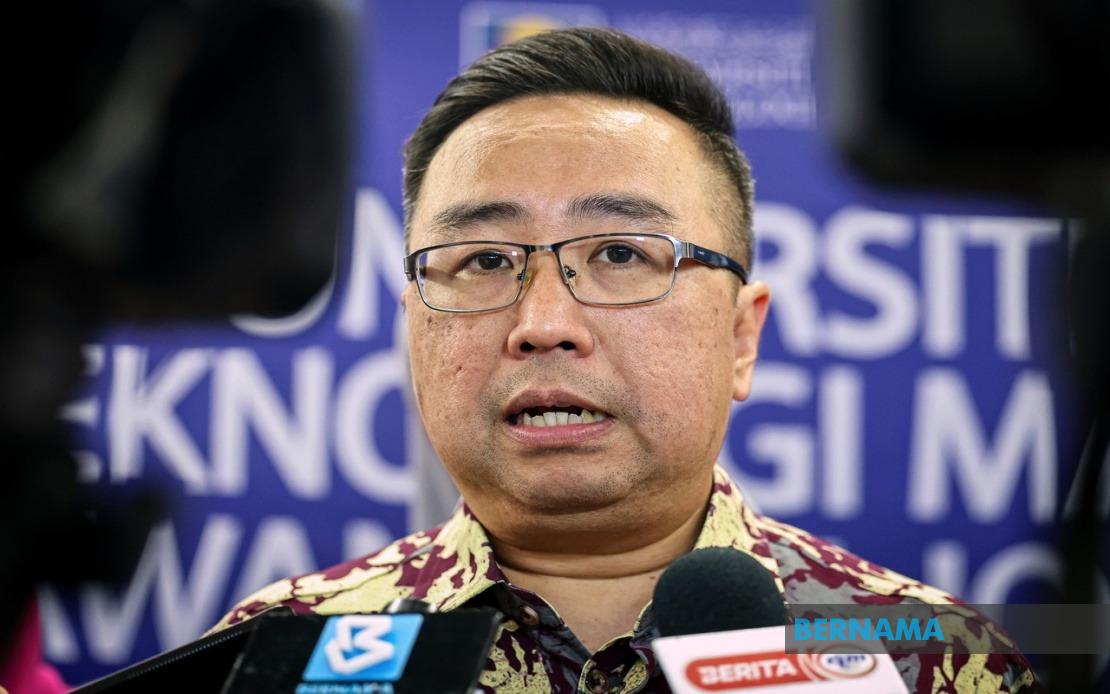
The Ministry of Science, Technology and Innovation has committed to placing talent development at the centre of Malaysia's science and technology agenda as the nation gears up to host AMMSTI-23 in June 2027. The timing represents both an opportunity and a challenge for Malaysian policymakers seeking to deepen the country's competitive position in the rapidly evolving regional innovation landscape. Minister Datuk Chang Lih Kang outlined this priority during remarks following the MOSTI TechTalks Series 2/2026 initiative in Johor Bahru, signalling that the ministry intends to use the hosting responsibility as a catalyst for accelerating domestic capacity building across multiple emerging technology domains.
The selection of Malaysia to host AMMSTI-23 was formalised at the previous ministerial gathering in Vientiane, Laos, on June 26, marking a responsibility that comes amid intensifying regional competition for technological leadership and foreign direct investment. Malaysia's approach reflects a strategic recognition that a skilled workforce versed in cutting-edge fields represents the foundation upon which durable competitive advantages are built. Rather than pursuing a scattered approach to innovation, MOSTI has identified a focused portfolio of priority sectors that will anchor the nation's talent development efforts. These include energy transition and hydrogen technologies, artificial intelligence and advanced digitalisation capabilities, sophisticated materials science, nanotechnology applications, and biotechnology innovation.
The emphasis on talent development must be understood against the backdrop of Malaysia's broader economic ambitions. High-tech foreign investment, particularly from semiconductor manufacturers, electronics producers, and technology firms, depends crucially on the availability of qualified technicians, engineers, and researchers who can operate sophisticated equipment and drive innovation on the factory floor and in research laboratories. Without a continuous pipeline of such professionals, Malaysia risks losing investments to competitor nations in the region that are aggressively pursuing similar development strategies. The ministry's heightened focus on this dimension suggests a sobering assessment that current talent generation efforts may not be keeping pace with industry requirements or regional benchmarks.
Crucially, the ministry has thrown its weight behind comprehensive reform of Malaysia's Technical and Vocational Education and Training ecosystem, even though TVET sits formally under other government departments. This cross-ministerial coordination reflects growing consensus that siloed approaches to workforce development no longer suffice in an economy increasingly dependent on technological sophistication. MOSTI has engaged in collaborative efforts with 12 other ministries administering TVET programmes, including the Ministry of Education, the Ministry of Higher Education, the Ministry of Rural and Regional Development, and the Ministry of Human Resources. This coalition-building approach suggests that addressing workforce gaps requires alignment across multiple institutional stakeholders with different mandates and constituencies.
The ministry's conviction that TVET curricula require substantive modernisation carries important implications for Malaysia's education policy direction. Conventional technical training—centred on mechanical skills, basic electrical knowledge, and manufacturing fundamentals—no longer adequately prepares students for contemporary labour market demands. Instead, MOSTI argues that emerging technologies such as robotics, artificial intelligence, and computer coding must be woven throughout TVET programmes, transforming them from repositories of traditional craft knowledge into gateways to participation in twenty-first-century industries. This recalibration demands investment in instructor retraining, curriculum development, and updated laboratory facilities across Malaysia's TVET institutions.
The MOSTI TechTalks programme serves as a vehicle for pursuing these talent development ambitions at the grassroots level. Conducted regularly at university campuses across the country, these engagement initiatives create platforms through which young people encounter and absorb contemporary developments within Malaysia's science, technology and innovation ecosystem. University students represent a critical audience because their educational and career choices, shaped during formative years of study, will determine whether Malaysia possesses the specialised expertise required for advanced manufacturing, research, and technology development. By exposing undergraduates to the government's strategic STI priorities and the professional opportunities embedded within them, MOSTI aims to align individual aspirations with national developmental needs.
The timing of these initiatives carries particular significance for Malaysia's position within ASEAN. Several neighbouring countries, notably Singapore, Thailand, and Indonesia, have pursued aggressive domestic innovation strategies supported by substantial public investment. Vietnam has positioned itself as an emerging technology hub attracting semiconductor manufacturing investment. The Philippines has built significant business process outsourcing capabilities with technology components. Thailand's government has promoted Eastern Economic Corridor development with emphasis on advanced manufacturing. Malaysia's decision to prioritise talent development and hosting AMMSTI-23 reflects an effort to consolidate its position within this competitive regional ecosystem and demonstrate serious commitment to technological upgrading rather than remaining dependent on assembly and manufacturing operations with limited local value creation.
The ministerial articulation of these priorities also signals to ASEAN counterparts that Malaysia intends to be an active, forward-thinking participant in regional technology cooperation frameworks. When AMMSTI-23 convenes in June 2027, Malaysia will present not merely a host nation's formal courtesies but a substantive narrative of domestic progress in talent development and sectoral innovation capability. This positioning has diplomatic dimensions that extend beyond science policy into broader questions of regional standing and soft power influence. Nations that demonstrate technological dynamism and capacity attract investment, partnerships, and talent migration in ways that purely traditional economies do not.
The scale and scope of Malaysia's talent development agenda should not be underestimated. Moving from rhetorical commitment to meaningful reform across TVET systems, university engineering programmes, and industry-education partnerships requires sustained funding, bureaucratic coordination, and pedagogical innovation. Success will depend on sustained political commitment beyond the immediate pre-2027 period and on creating incentive structures that retain trained talent within Malaysia rather than losing skilled professionals to international emigration or relocation within more developed regional economies. The ministry's multi-ministry coordination approach suggests awareness of these implementation challenges, yet translating coalition agreements into coordinated action across different government departments remains notoriously difficult in practice.
For Malaysian businesses and investors, MOSTI's signalled priorities provide useful strategic guidance. Companies investing in robotics, AI applications, advanced materials processing, or biotechnology can reasonably expect a gradually improving environment of trained workers, supportive government policies, and integrated supply chains. The hydrogen and energy transition emphasis reflects Malaysia's position as an energy-rich nation seeking to maintain relevance in a decarbonising global economy. These sectoral choices are neither arbitrary nor merely fashionable; they reflect deliberate assessment of where Malaysia can develop defensible competitive advantages given its geographic position, resource endowments, and existing industrial capabilities.
As Malaysia moves toward 2027, the success of these talent development initiatives will shape not only the substance of AMMSTI-23 discussions but also Malaysia's capacity to participate credibly in advancing regional science and technology cooperation. The minister's emphasis on alignment between STI strategy and workforce preparation reflects mature understanding that innovation ecosystems require both frontier research capabilities and the practical skills necessary to translate discoveries into industrial applications and competitive advantages. Whether Malaysia can execute this agenda at the required scale and pace will reveal much about the effectiveness of Malaysian governance and the nation's readiness for genuinely advanced technology-driven development.

