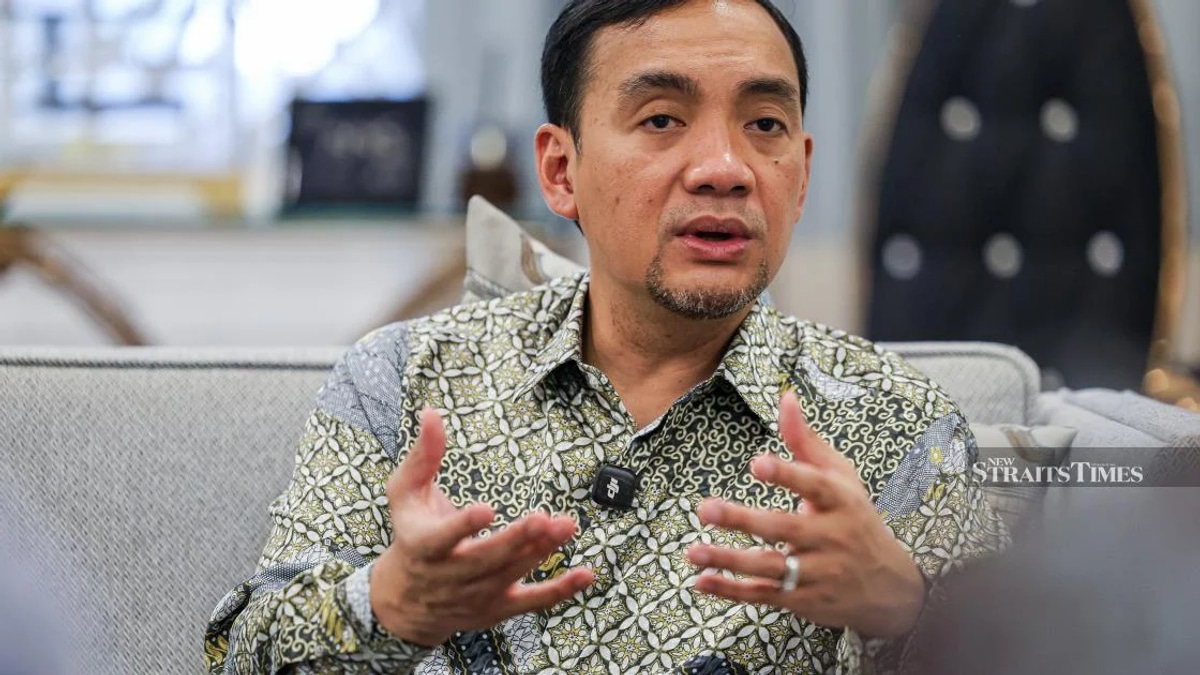
Malaysia has reaffirmed its commitment to strengthening academic and educational ties with Palestine, signalling broader regional solidarity and a strategic focus on knowledge-sharing as a tool for national development. Datuk Seri Dr Zambry Abd Kadir, the country's Higher Education Minister, outlined this position during a recent meeting with Palestinian Ambassador to Malaysia Jehad Alqedra in Kuala Lumpur, underscoring that education remains central to Malaysia's approach to supporting Palestinian institutional capacity.
The bilateral discussion, which took place on June 17, centred on practical mechanisms for expanding cooperation across the higher education sector. Both officials explored concrete avenues through which Malaysian universities could deepen engagement with Palestinian academic institutions, moving beyond symbolic gestures toward sustained partnership frameworks. The ambassador's visit to Malaysia's education ministry reflects the importance both nations place on formalising educational exchanges and creating structured pathways for collaboration.
A key element of the renewed commitment concerns enhanced support for Palestinian students pursuing studies in Malaysia. The country has long positioned itself as an educational hub for international students from the Muslim world and beyond, and Palestinian learners represent an important constituency within this broader strategy. By prioritising assistance for Palestinian scholars, Malaysia signals both humanitarian intent and strategic recognition of education's role in building human capital within conflict-affected regions.
Dr Zambry emphasised that Malaysia views education as more than mere credential-building or technical skill acquisition. In his public remarks following the meeting, he characterised learning as a bridge connecting hope, peace, and future possibilities—a framing that acknowledges education's potential to transcend immediate political divisions and foster mutual understanding. This articulation reflects a longstanding Malaysian diplomatic narrative in which educational engagement serves as a softer complement to formal political advocacy.
The initiative also contemplates expanded institutional partnerships between Malaysian and Palestinian universities. Such arrangements typically encompass student and faculty exchange programmes, collaborative research projects, and capacity-building initiatives. For Malaysian institutions, these partnerships offer opportunities to extend their regional influence and demonstrate commitment to knowledge transfer within the developing world. For Palestinian universities, Malaysian academic partnerships represent vital connections to established research and teaching ecosystems, particularly valuable given the infrastructure challenges Palestinian higher education faces.
Malaysia's positioning on this issue carries particular weight within Southeast Asia and the broader Muslim-majority world. As a middle-income nation with a reasonably developed higher education system and international academic standing, Malaysia functions as a bridge institution—capable of linking Palestinian scholars to wider networks and resources while maintaining credibility within both developed and developing academic spheres. This intermediary role has become increasingly central to Malaysia's soft power projection across regional and global forums.
The emphasis on education as a tool for national rebuilding directly addresses Palestinian institutional needs. Higher education in Palestine has faced significant disruptions due to the long-running conflict, with universities struggling to maintain consistent operations, secure adequate funding, and retain talented academics. External partnerships, particularly with countries demonstrating genuine long-term commitment, become crucial for maintaining academic continuity and ensuring that Palestinian students have viable pathways to quality education.
From Malaysia's perspective, deepening ties with Palestine aligns with broader foreign policy objectives and domestic political considerations. Education-based cooperation allows Malaysia to demonstrate substantive engagement with Palestinian causes while operating in a domain less fraught with immediate political complications than direct military or economic aid. Universities and student exchanges generate positive public diplomacy outcomes and strengthen people-to-people connections across borders.
The timing of this renewed commitment also reflects broader regional dynamics. Within Southeast Asia and globally, educational cooperation has emerged as a preferred mechanism for states to express solidarity and build relationships across ideological and geopolitical divides. Malaysia's emphasis on this approach positions the country as a pragmatic actor capable of advancing its values while maintaining constructive international relations.
Practical implementation of these commitments will likely involve Malaysian universities establishing formal memoranda of understanding with Palestinian counterparts, creating scholarship pathways for Palestinian postgraduate students, and potentially hosting visiting scholars and research collaborations. Such arrangements require sustained institutional commitment beyond rhetorical endorsement, demanding that Malaysian universities invest resources and administrative attention to making these partnerships meaningful and durable.
Looking forward, the sustainability of Malaysia-Palestine educational cooperation will depend on consistent policy implementation and institutional willingness to navigate practical challenges. Malaysian universities must actively recruit Palestinian students, provide adequate support services, and create genuine research opportunities rather than treating such initiatives as ceremonial gestures. Similarly, both governments must allocate resources to support these initiatives through scholarships, funding, and administrative facilitation.
The initiative also opens potential avenues for expanding cooperation beyond bilateral channels. Regional frameworks involving other Southeast Asian nations, Middle Eastern partners, and international education organisations could amplify the impact of Malaysian-Palestinian educational engagement, creating larger ecosystems of mutual learning and development. Such expansion would reinforce Malaysia's role as a connector between diverse regions and cultures, strengthening its standing as a moderate Islamic nation committed to practical cooperation for development.