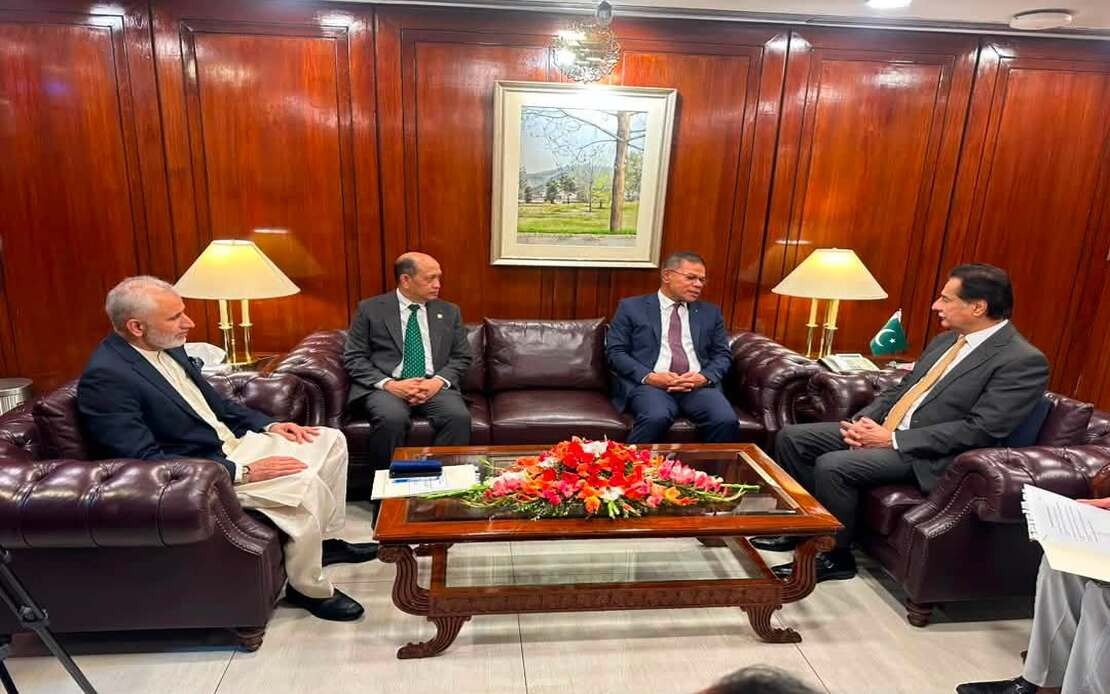
Malaysia and Pakistan have jointly advocated for dialogue and diplomatic engagement as essential mechanisms for resolving current geopolitical tensions and security challenges facing the region. Home Minister Datuk Seri Saifuddin Nasution Ismail made this emphasis clear during high-level consultations in Islamabad, where he met with pivotal parliamentary figures including the Speaker of the National Assembly of Pakistan, Sardar Ayaz Sadiq, and the chairman of the Senate of Pakistan, Syed Yousaf Raza Gilan. The discussions underscored both countries' conviction that peaceful resolution pathways remain viable even amid complex regional dynamics.
During his official visit to Pakistan's capital, Saifuddin Nasution articulated Malaysia's longstanding approach to regional conflict management, drawing on the nation's experience navigating intricate geopolitical landscapes through institutional frameworks. He highlighted how Malaysia has leveraged the Association of Southeast Asian Nations (ASEAN) as a platform for constructive dialogue, enabling member states to address contentious issues while maintaining regional equilibrium. This diplomatic model, he suggested, holds relevance for Pakistan and other nations grappling with security challenges, as it demonstrates how multilateral mechanisms can foster understanding without compromising national interests or sovereignty.
The bilateral meetings served as a platform for both nations to reaffirm the foundational pillars of their relationship—namely trust, mutual respect, and the deep cultural and historical bonds connecting their populations. Pakistan and Malaysia have long enjoyed cordial ties rooted in shared Islamic heritage, strategic geography, and complementary economic interests. The emphasis on these enduring connections during Saifuddin Nasution's visit reflects a deliberate strategy to reinforce bilateral bonds at a moment when regional stability is increasingly contested.
Particularly significant was the discussion on expanding institutional cooperation between Malaysia and Pakistan's parliamentary systems. The two sides recognised that parliamentary diplomacy—direct engagement between legislative bodies and their representatives—can serve as a crucial confidence-building mechanism. Such interactions transcend formal governmental channels and enable legislators to develop personal relationships that foster goodwill and mutual comprehension. By prioritising exchanges at the institutional level, Malaysia and Pakistan aim to deepen their partnership beyond traditional state-to-state relations.
Saifuddin Nasution's visit to the Parliament Museum in Islamabad provided practical insight into Pakistan's constitutional history and the evolution of its parliamentary institutions. Understanding Pakistan's experience with democratic governance, constitutional frameworks, and legislative development offers Malaysia valuable perspective on how neighbouring nations navigate institutional challenges. This educational component of the diplomatic visit reflects a commitment to knowledge-sharing and mutual learning—principles that strengthen long-term bilateral relationships.
The timing of this engagement carries particular significance for Southeast Asia and South Asia alike. As both regions confront interconnected security challenges ranging from terrorism and maritime disputes to great power competition, the willingness of Malaysia and Pakistan to prioritise dialogue represents a counterweight to more confrontational approaches. Malaysia's emphasis on ASEAN's role in regional stability is especially pertinent, as the bloc has established itself as a platform for managing tensions through consensus-building and constructive engagement rather than military posturing.
For Malaysia specifically, maintaining strong diplomatic ties with Pakistan serves multiple strategic objectives. Pakistan remains a crucial partner for Malaysia in addressing transnational security threats, counterterrorism cooperation, and intelligence sharing. A robust bilateral relationship ensures that both nations can coordinate responses to challenges that transcend borders. Additionally, Pakistan's geographic position at the intersection of Central Asia, South Asia, and the Indian Ocean makes it strategically valuable for Malaysia's broader regional objectives.
The emphasis on dialogue also reflects both governments' recognition that unilateral military or coercive approaches yield limited benefits in contemporary conflict scenarios. Complex geopolitical challenges—whether stemming from ideological extremism, resource competition, or territorial disputes—require sustained dialogue informed by mutual understanding. By championing diplomatic pathways, Malaysia and Pakistan position themselves as advocates for rational statecraft at a time when some global actors resort to zero-sum calculations.
Looking forward, the outcomes of Saifuddin Nasution's visit should translate into concrete institutional mechanisms for sustained engagement. Regular legislative exchanges, joint committees addressing shared concerns, and reciprocal visits by parliamentary delegations can institutionalise the dialogue process, ensuring continuity beyond individual high-level meetings. Such mechanisms create predictable frameworks for managing disagreements and exploring areas of cooperation.
The Malaysian approach—rooted in ASEAN's principle of non-interference, respect for sovereignty, and peaceful resolution of disputes—offers a model increasingly worthy of international attention. As geopolitical competition intensifies globally, the insistence on dialogue and diplomacy by nations like Malaysia and Pakistan provides a stabilising force within their respective regions. This commitment also demonstrates that smaller and medium-sized powers need not capitulate to great power pressures; instead, they can forge independent paths grounded in principled diplomacy.

