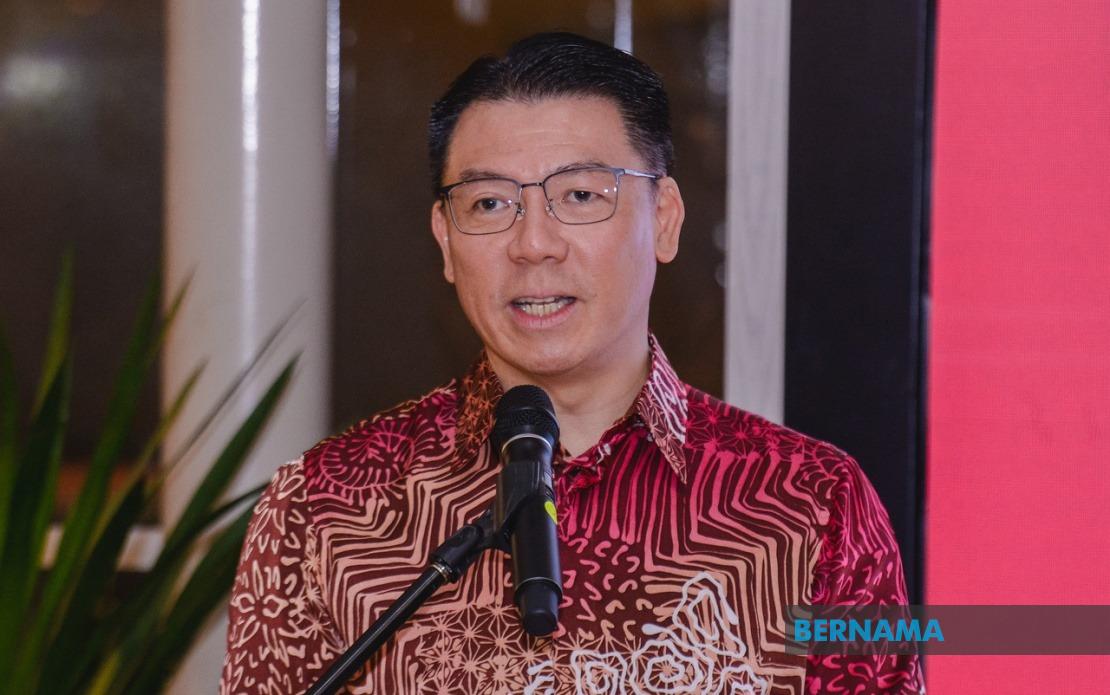
The Malaysian government is rolling out a sweeping incentive programme to support property buyers and cement the nation's standing as a regional real estate powerhouse. Housing and Local Government Minister Nga Kor Ming unveiled a 10 per cent discount on residential purchases timed to the ASEAN Real Estate Conference (AREC) 2026, scheduled for July 29 to August 1 at the Malaysia International Trade and Exhibition Centre (MITEC) in Kuala Lumpur. The scheme, developed jointly with the Real Estate and Housing Developers' Association Malaysia (REHDA), targets one of the sector's most persistent obstacles: the substantial downpayment burden that deters many aspirational homeowners from entering the property market.
The discount directly alleviates the financial strain associated with the standard 10 per cent deposit stipulated in Sale and Purchase Agreements, a threshold that has historically created barriers for middle-income Malaysians seeking homeownership. By reducing this requirement through an upfront incentive, the government hopes to expand the pool of qualified buyers and accelerate transaction volumes during the four-day conference. Industry analysts anticipate the AREC 2026 event will generate approximately RM1.5 billion in real estate transactions, reflecting confidence in Malaysia's market fundamentals and the purchasing power mobilised by such promotional measures.
Prime Minister Datuk Seri Anwar Ibrahim is scheduled to formally open the conference, underscoring the federal administration's commitment to property sector development as a pillar of economic growth and social well-being. The event programme encompasses sector forums, business-to-business matching sessions, and a comprehensive exhibition designed to connect developers, investors, financiers, and end-users. This positioning reflects the government's broader strategy of leveraging real estate as both a wealth-creation vehicle and a mechanism for addressing the affordable housing crisis that has dominated public discourse across Southeast Asia's largest economy.
Beyond the purchase discount, the ministry has introduced complementary measures to sustain housing affordability. The Rahmah Cement initiative represents a particularly innovative approach, allocating 1.6 million metric tonnes of subsidised cement to developers constructing affordable residential units. Construction costs have emerged as a primary driver of final house prices, and by reducing material expenses at source, the government effectively transfers savings downstream to end-buyers. This intervention demonstrates understanding that affordability requires multifaceted action—not simply demand-side incentives but supply-side cost management that maintains developer viability whilst restraining price escalation.
Nga articulated the philosophical underpinning of these initiatives through the campaign slogan "Rumahku, Syurgaku" (My Home, My Heaven), framing homeownership as a fundamental right rather than a luxury commodity. This rhetoric resonates across Malaysian society, where property acquisition carries profound cultural and economic significance. The minister's emphasis on quality alongside affordability—rejecting the false choice between these objectives—signals recognition that Malaysia's housing stock must meet international standards whilst remaining financially accessible. This positioning carries particular weight given regional competition from Thailand, Vietnam, and the Philippines, where developers increasingly target the aspirational middle-class buyer segment.
The occasion for these announcements was the Developers' Excellence Appreciation Ceremony, held alongside the FIABCI World Prix d'Excellence Awards 2026, an international competition benchmarking built environment projects against global standards. Malaysia's performance at this year's iteration reinforced the nation's property sector credentials, with local developers capturing 14 awards comprising eight gold and six silver medals across diverse categories. Among the gold-medal recipients were Park Regent @ Desa ParkCity in high-rise residential; The Mansions @ ParkCity Hanoi in low-rise residential; Merdeka 118 in office and sustainable development; Elmina Lakeside Mall in retail; Sunway Velocity Two (Phase 1) in mixed-use development; Gamuda Gardens in master planning; and Diamond Precinct in Vietnam's residential mid-rise segment.
These accolades carry significance extending beyond domestic prestige. Since the FIABCI World Prix d'Excellence Awards launched in 1992, Malaysian projects have accumulated 135 gold medals, positioning the country among the world's top performers in design excellence and development innovation. This sustained recognition translates into international investor confidence and attracts global talent to Malaysian development teams. Nga framed the awards as validation that Malaysian developers operate at world-class calibre, capable of competing against international competitors and establishing benchmarks that elevate regional standards. Such external validation becomes increasingly valuable as Southeast Asian real estate markets mature and competition intensifies.
The internationalisation of Malaysian developer expertise constitutes a strategic economic asset often overlooked in domestic policy debates. Companies including ParkCity Group, SP Setia, OSK Property, and EcoWorld have successfully established substantial operations across Vietnam, Australia, and the United Kingdom, generating foreign exchange revenues and establishing Malaysia as an exporter of development expertise. These overseas expansions validate the competitiveness of domestic building practices, project management methodologies, and design philosophies. The government explicitly encourages this outward trajectory, positioning Malaysian champions in global real estate markets as extensions of national soft power and economic influence.
Complementing the immediate AREC 2026 initiatives, the government will launch a revised National Housing Policy on July 30, positioning this foundational document as central to Malaysia's long-term residential sector evolution. The timing—announced during a high-profile international conference—signals that housing policy constitutes a pillar of national development strategy rather than a peripheral administrative concern. This policy framework will likely encompass affordability targets, environmental sustainability standards, infrastructure coordination, and mechanisms for channelling private sector capabilities toward public interest objectives. The policy's development reflects accumulated lessons from previous iterations and engagement with international best practices, including models from Singapore, South Korea, and European nations that have achieved measurable progress in balancing market-driven development with social housing objectives.
For Malaysian readers, these announcements converge on several interconnected themes. The 10 per cent purchase discount and Rahmah Cement initiative represent direct government intervention in housing markets to counteract cost escalation, acknowledging that market mechanisms alone have failed to deliver affordability at scale. The AREC 2026 platform simultaneously positions Malaysia as a regional real estate hub attractive to international capital and expertise. The National Housing Policy launch provides the strategic framework binding these initiatives into coherent long-term direction. Collectively, these measures suggest the federal administration views housing accessibility as sufficiently urgent to warrant sustained policy innovation, substantial resource allocation, and international showcase efforts that few other sectors receive.

