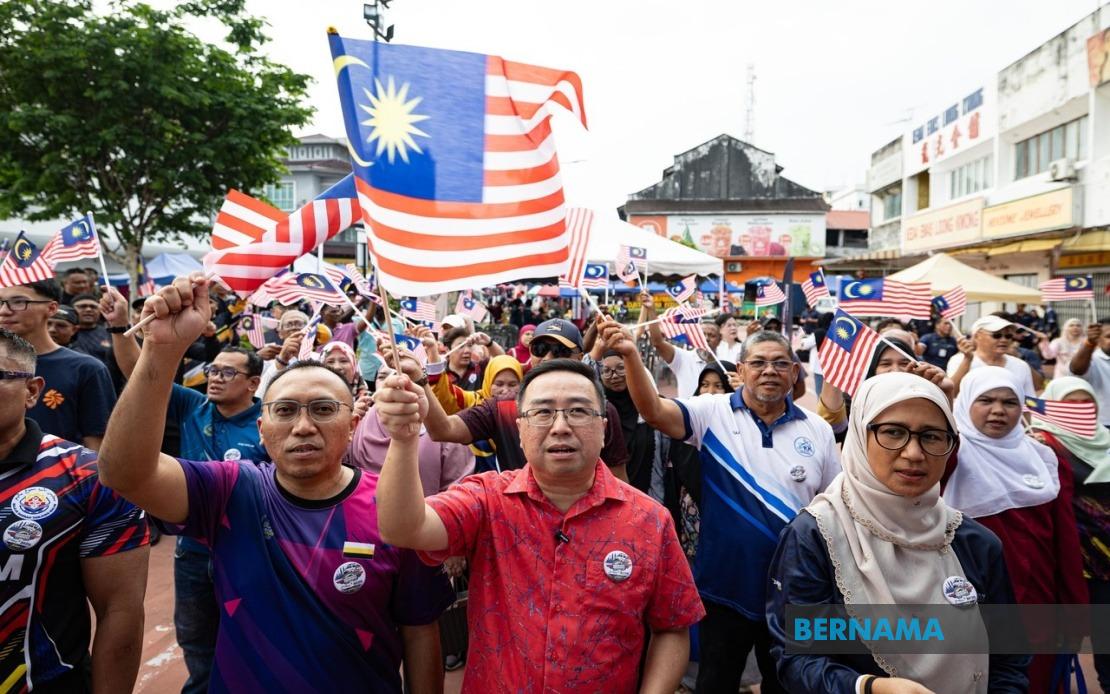
Malaysia must evolve beyond the divisive framework of identity politics toward a more sophisticated understanding of what it means to be a nation, according to Science, Technology and Innovation Minister Datuk Chang Lih Kang. Speaking as the country marked another Merdeka Day, Chang contended that national strength cannot be forged through coercion, fear or enforced silence, but rather through ensuring every Malaysian—irrespective of ethnic origin, religious faith, socioeconomic background or political conviction—genuinely believes they have a meaningful role in shaping the nation's trajectory.
The Tanjong Malim MP's intervention addresses a growing concern among moderate voices in Malaysian politics: the tendency to frame national discourse predominantly through communal and religious lenses. When electoral politics consistently mobilises voters by emphasising what divides them rather than what unites them, Chang argues, the consequence is a fragmented society where competing groups become locked in zero-sum competition, each fearing they will be disadvantaged relative to others. This competitive framing, he suggests, undermines the possibility of building trust across communities and creates a political environment hostile to pragmatic, evidence-based policymaking.
At the heart of Chang's argument lies a fundamental institutional challenge. He contends that Malaysia requires governance structures characterised by genuine professionalism, impartiality and consistency in law enforcement—qualities that remain aspirational in many jurisdictions, including Malaysia. When public services are delivered with visible bias based on ethnicity, faith, political loyalty or social standing, the underlying social contract fractures. Citizens who perceive discrimination in how the state treats them—whether in business licensing, education admissions, contract awards or criminal justice—become less inclined to accept state authority as legitimate. Good governance, in this framing, becomes the strongest prophylactic against the kind of societal dissolution that excessive identity politics threatens to produce.
Chang's remarks about the national flag illustrate his concern about the gap between aspirational patriotism and the lived experience of citizens navigating an increasingly legalistic environment. He distinguishes between deliberate desecration—which warrants serious consequences—and honest mistakes or contextual errors in flag protocol. When enforcement becomes so stringent that ordinary citizens fear displaying their national symbol lest they face arrest or public humiliation, the effect paradoxically undermines patriotism rather than strengthening it. Citizens become apprehensive and defensive rather than confident and engaged. The appropriate response to genuine mistakes, he argues, should be educational guidance rather than punitive action, reserving the full force of law for cases of clear intentional provocation.
Proportionality, intent and context—these three principles form the bedrock of Chang's philosophy on patriotism and governance. A mature nation, in his view, demonstrates confidence in how it responds to challenges. It distinguishes between the clumsy and the malevolent, between the ignorant and the deliberately destructive. This requires judgment and wisdom from those entrusted with enforcement authority. When government agencies operate primarily as instruments of punishment rather than education, they invite resentment and compliance born of fear rather than genuine commitment. The risk is that Malaysia cultivates a society of people looking over their shoulders rather than looking forward together.
Chang draws inspiration from remarks made by Sultan Perak Sultan Nazrin Shah at the 8th World Conference on Islamic Thought and Civilisation, emphasising that unity voluntarily embraced by citizens is considerably more durable than unity imposed through state machinery. This distinction carries significant implications for Malaysia's trajectory. Nations built on coercive unity tend to be brittle—held together by surveillance, punishment and controlled information rather than genuine civic solidarity. By contrast, diverse societies that genuinely accommodate difference, that create space for different voices and perspectives, develop resilient social bonds precisely because participation is voluntary rather than compelled.
The minister's vision imagines Malaysia's diversity—in culture, language, faith and tradition—as a source of collective strength rather than a problem requiring management. This represents a significant reframing of how Malaysian multiculturalism is often discussed in political circles. Rather than diversity as something to be carefully controlled to prevent conflict, Chang proposes it as a foundation for national identity precisely because it reflects the lived reality of Malaysians. When citizens see their own backgrounds reflected and respected in national institutions and public discourse, they develop genuine ownership of national success. Conversely, when significant segments of the population feel unseen or dismissed by national narratives, their commitment to collective welfare diminishes.
The political economy of identity-based mobilisation remains attractive to electoral strategists across much of Southeast Asia and beyond. Mobilising voters along ethnic or religious lines typically delivers faster, more predictable electoral returns than attempting to build consensus around policy platforms or competing visions of governance. Yet Chang's intervention suggests that short-term electoral gains from divisive messaging come at considerable long-term cost. Repeated appeals to communal anxiety and fear reshape how citizens relate to one another. Over time, the habit of viewing fellow Malaysians primarily through the lens of identity rather than common citizenship erodes the informal trust and social capital that hold diverse societies together.
For Malaysian readers, Chang's argument carries particular resonance given the country's current political trajectory. The last several years have witnessed intensifying contestation around religious authority, heightened scrutiny of communal boundaries, and increasing legislative elaboration of rules governing religious expression and practice. While these developments reflect genuine underlying tensions in a multi-religious society, Chang's implicit caution is that permitting electoral politics to be continuously refracted through religious and communal lenses risks making such tensions permanent features of political life rather than issues to be managed and ultimately transcended.
Chang's question—"What kind of Malaysia are we creating for the next generation?"—reorients the Merdeka Day conversation from historical commemoration toward future possibility. This temporal shift matters. It suggests that the ultimate measure of Malaysian nationhood should not be how loudly current citizens proclaim their patriotism or their adherence to particular identity markers, but rather whether they are bequeathing to their children a nation characterised by genuine opportunity, fair treatment and shared belonging. A Malaysia where young people, regardless of background, believe they have genuine stakes in national success. A Malaysia where diversity strengthens rather than weakens the national fabric. Such a Malaysia remains possible, Chang suggests, but only if contemporary political and institutional leaders resist the constant temptation to mobilise communities through fear and division.

