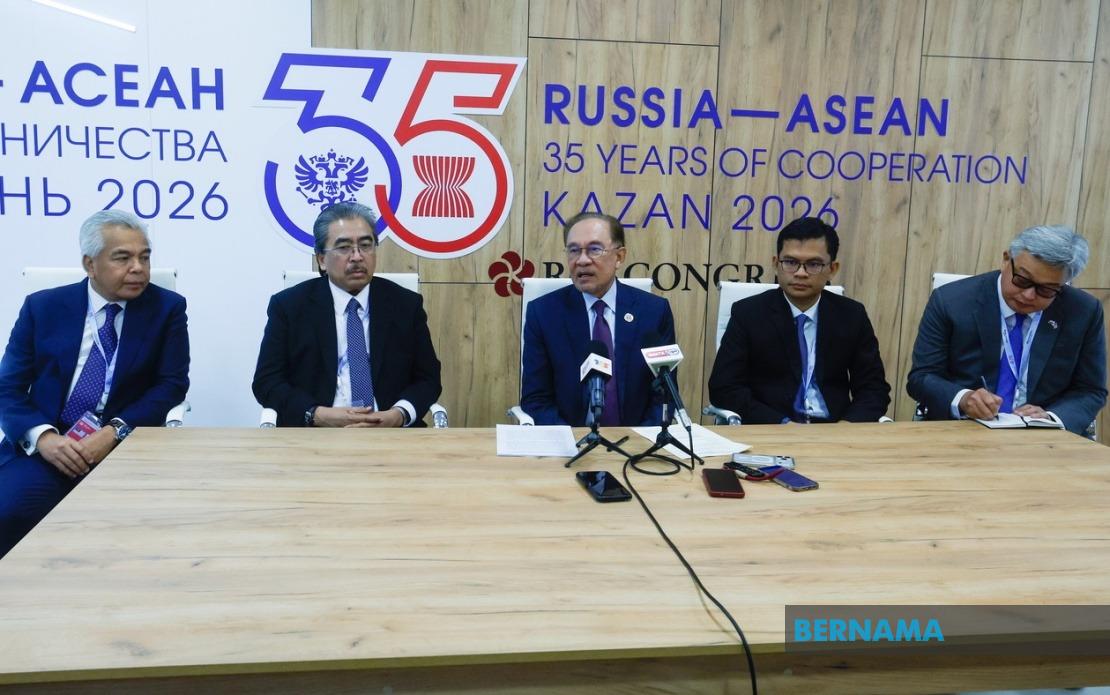
Prime Minister Datuk Seri Anwar Ibrahim has called for an urgent acceleration of visa-free travel arrangements and direct flight connections between Malaysia and Russia, arguing that current disparities in tourist flows reveal untapped potential in the bilateral relationship. Speaking in Kazan following Malaysia's participation in the ASEAN-Russia Commemorative Summit, Anwar highlighted the stark contrast between Russian visitor numbers to Malaysia and those flowing to neighbouring countries with comparable or lesser diplomatic ties to Moscow.
The figures paint a sobering picture of Malaysia's competitive position in attracting Russian tourists. Türkiye welcomes approximately five million Russian visitors annually, while Thailand attracts around two million. By comparison, Malaysia received only 100,000 Russian tourists in the same period—a disparity that Anwar suggested reflects not differences in appeal or geography, but rather avoidable bureaucratic impediments. The gap represents a significant economic opportunity, particularly given Russia's substantial middle class with disposable income for international travel and the geographic proximity of Malaysia to major Asian population centres.
Anwar identified multiple systemic obstacles impeding the growth trajectory that Malaysia's tourism sector could otherwise enjoy. Beyond the absence of visa-free arrangements, he singled out restrictive payment mechanisms as a major friction point. Cross-border financial transactions between Malaysia and Russia face complications arising from international sanctions regimes and correspondent banking challenges. The Prime Minister's observation that payment systems remain unnecessarily complicated reflects genuine structural constraints that deter casual tourism bookings and complicate group travel arrangements.
Equally significant are the procedural legacies that Anwar characterised as "archaic," suggesting that Malaysia's tourism and immigration frameworks have not evolved commensurately with global best practices. Countries competing for Russian tourists have streamlined approval processes and simplified documentation requirements. Malaysia's continued reliance on conventional procedures places it at a disadvantage relative to destinations that have modernised their entry protocols, creating friction that discourages discretionary travel decisions.
The Prime Minister's remarks also touched upon a delicate geopolitical consideration: the tendency of Malaysian policymakers to self-censor in response to perceived international pressures. Anwar appeared to suggest that concerns about how "certain countries" might react to closer Malaysia-Russia engagement have inadvertently influenced policy decisions affecting visa arrangements and flight services. This indirect reference acknowledges the complexity of Malaysia's balancing act between maintaining diverse international relationships and the apprehension that strengthening ties with Russia might provoke criticism from Western partners or affect broader strategic relationships.
Anwar drew a parallel to Iran, suggesting that similar tourism impediments affect other countries with which Malaysia maintains diplomatic relations but faces comparable geopolitical sensitivities. The implication is that Malaysia should not permit external pressure or reputational concerns to override domestic economic interests. This framing positions tourism facilitation as a matter of sovereign policy determination rather than one requiring calibration based on third-party reactions. The economic benefits of increased Russian tourism—particularly given Russia's significant outbound travel expenditure—arguably justify independent policymaking on visa and flight accessibility.
From a strategic perspective, Anwar's intervention signals a shift toward more pragmatic bilateral engagement. ASEAN-Russia relations have historically occupied a secondary position in Malaysia's diplomatic hierarchy, overshadowed by engagement with Western powers and regional neighbours. Enhanced tourism facilitation would represent a tangible manifestation of improved ties, demonstrating commitment beyond ceremonial diplomatic summits. For Russia, expanded travel access to Southeast Asia's premier tourism destinations carries symbolic significance as Western sanctions gradually reduce available leisure travel options.
The direct flights element deserves particular attention within Malaysian aviation policy. Currently, neither Malaysia Airlines nor budget carriers operate regular direct services between major Malaysian cities and Russian hubs. Establishing such connections would require coordination between Malaysian aviation authorities and Russian counterparts, alongside commercial discussions with carriers. The absence of direct connectivity creates friction that visa-free access alone cannot eliminate—tourists must navigate multiple connections, adding travel time and cost to regional journeys.
For Malaysia's tourism industry, the untapped Russian market represents significant revenue potential during periods when traditional European and Asian tourist flows may fluctuate. Russian visitors typically exhibit strong spending patterns across accommodation, dining, and retail sectors. The seasonal concentration of Russian outbound travel (particularly during European winter months) could help smooth Malaysia's tourist arrivals throughout the year, reducing dependency on school holiday peaks that strain infrastructure.
Implementing Anwar's recommendations would require coordinated action across multiple government agencies. The Immigration Department would need to establish visa-free arrangements through bilateral negotiation and possible reciprocal agreements. The Civil Aviation Authority would facilitate discussions with airlines about route viability. The Tourism Board would need to mount targeted marketing campaigns in Russia once barriers were lowered. Each agency represents a bureaucratic hurdle that must be overcome through executive direction.
The geopolitical dimensions of Anwar's statement merit careful analysis. By publicly calling for expedited Russia engagement despite international sensitivities, the Prime Minister has signalled that Malaysia intends to pursue pragmatic bilateral relationships based on economic merit rather than external pressure. This posture reflects Malaysia's broader non-aligned positioning and resistance to being drawn into great power competition dynamics that would require choosing sides between Western and Russian spheres.
Regionally, Malaysia's approach to visa-free travel with Russia could influence ASEAN's collective engagement with Moscow. If Malaysia successfully operationalises these arrangements and demonstrates positive outcomes, other regional members facing similar considerations might follow suit. Conversely, if external pressure prevents implementation, it would signal ASEAN vulnerability to external pressure on strategic decisions—a pattern that could have broader implications for regional autonomy.
The Prime Minister's remarks ultimately reflect a tension between maximising economic opportunities and navigating geopolitical constraints. His public intervention suggests that within Malaysia's leadership circles, the view has crystallised that tourism facilitation should not be sacrificed on the altar of external relations management. Whether implementation will match this rhetorical commitment remains to be seen, but Anwar's explicit commitment in Kazan has created measurable political accountability for policy action.