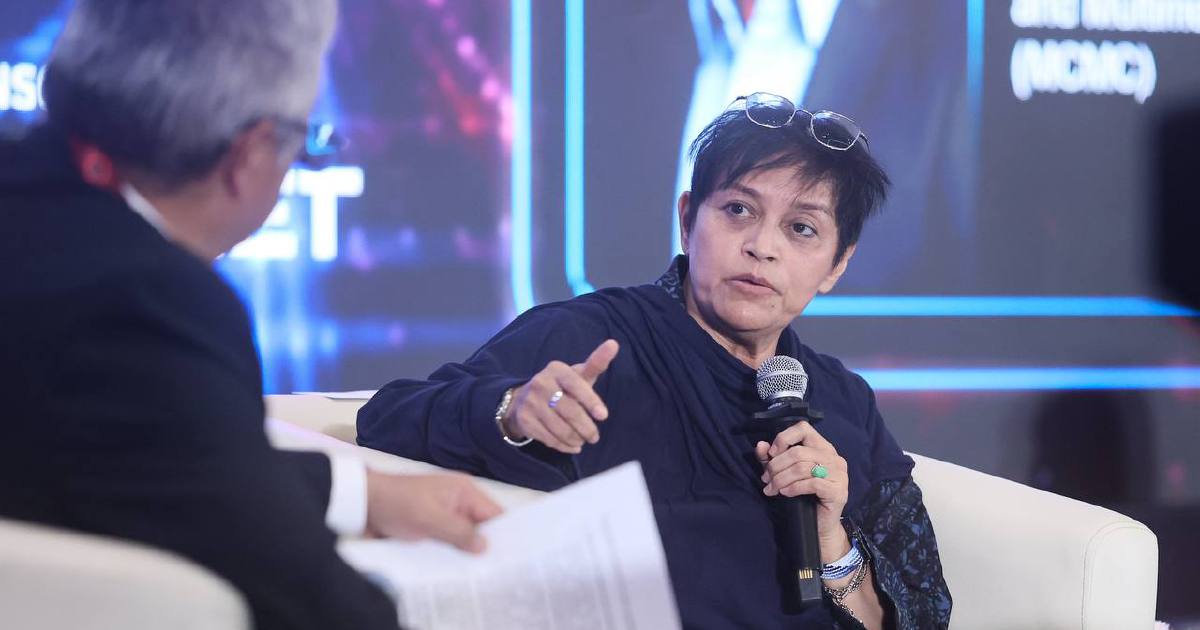
Malaysia's approach to regulating digital political discourse during electoral campaigns faces fresh scrutiny from the government's law chief, who warns that the communications watchdog must uphold impartial standards across all online platforms. Datuk Seri Azalina Othman Said, the Minister in the Prime Minister's Department (Law and Institutional Reform), has called on the Malaysian Communications and Multimedia Commission (MCMC) to guarantee transparent and even-handed supervision of internet content as the nation prepares for future electoral contests.
The intervention reflects mounting concerns within government circles about the challenges of managing political messaging in an increasingly digital landscape. Election campaigns now unfold simultaneously across traditional and social media channels, creating enforcement complexities that regulators have struggled to address consistently. Azalina's public statement underscores the administration's recognition that perceived inconsistency in moderation could undermine public confidence in the electoral process and provide ammunition for accusations of political bias.
The MCMC's responsibility extends to policing violations including false information, hate speech, and breaches of election advertising rules across Facebook, TikTok, Instagram, YouTube, and emerging platforms. However, critics and political observers have long questioned whether the commission applies identical criteria when examining content from government-allied parties versus opposition figures. Azalina's emphasis on a "level playing field" represents an acknowledgment that real or imagined double standards in digital regulation pose legitimacy risks for both electoral outcomes and institutional credibility.
Singapore and other regional democracies have grappled with similar tensions between regulating harmful online content and preventing regulatory capture by incumbent political forces. The European Union's Digital Services Act imposes transparency obligations on platforms and regulators alike, requiring public disclosure of content removal decisions. Malaysia's approach remains less prescriptive, relying more heavily on regulator discretion and industry cooperation, which creates space for inconsistent application.
The digital dimension of Malaysian politics has become increasingly consequential following the 2018 general election, when messaging on WhatsApp, Facebook, and YouTube influenced voter behaviour across demographic groups. Subsequent elections and by-contests demonstrated the speed with which unverified claims and emotionally resonant narratives propagate through encrypted and semi-encrypted platforms beyond conventional oversight mechanisms. Regulators' capacity to identify, assess, and act on potentially misleading content has not kept pace with the volume and velocity of information flows.
Azalina's call for vigilance also addresses a practical asymmetry: established political parties command sophisticated digital operations and professional communications teams, while smaller opposition entities and grassroots movements often operate with minimal resources and informal coordination. If regulatory enforcement is perceived as disproportionately targeting resource-constrained actors or less technically sophisticated campaigns, perceptions of unfairness intensify regardless of regulators' actual intent. Procedural fairness—ensuring that rules are applied transparently and uniformly—becomes as important as substantive rules themselves.
The MCMC currently operates under the Communications and Multimedia Act 1998, a framework predating widespread social media adoption and refined through a series of updates and regulatory guidance documents. This patchwork approach creates ambiguities about which specific content categories fall under MCMC jurisdiction versus state authorities, law enforcement agencies, or platform terms of service enforcement. Azalina's intervention suggests the government recognises these gaps undermine consistent application and may prompt legislative or administrative clarification.
For Malaysian voters and civil society observers, consistent and transparent digital content monitoring during elections affects fundamental trust in democratic institutions. When regulators appear to favour certain political actors or apply standards selectively, legitimacy suffers even if election results remain factually accurate. The challenge intensifies as artificial intelligence tools for generating or altering digital content become more accessible, potentially overwhelming human-powered moderation systems regardless of their stated commitment to impartiality.
Regional precedent offers limited reassurance. Thailand's strict lèse-majesté provisions have been weaponised against political opponents through digital channels, while Indonesia's experience reveals how decentralised platform moderation creates inconsistent standards across provinces. Philippines regulators have struggled to maintain credible separation from executive pressure when adjudicating political content disputes. These cautionary examples underscore why Azalina's emphasis on structural fairness rather than discretionary case-by-case decisions carries weight.
The path forward requires the MCMC to develop and publish explicit, detailed standards for content evaluation, establish independent review mechanisms for contested decisions, and report transparently on enforcement patterns across political affiliations. International expertise and peer review mechanisms could strengthen credibility. Most critically, regulators must distinguish between content removal justified by genuinely harmful effects and removal motivated by political inconvenience. Without this distinction, even well-intentioned regulatory efforts risk corroding public faith in democratic processes.
Azalina's statement signals that the government understands these stakes and recognises that regulatory credibility cannot be assumed but must be actively constructed through procedural rigour and demonstrated impartiality. Whether the MCMC possesses sufficient resources, technical capacity, and institutional independence to deliver on this aspiration remains an open question for Malaysian democracy watchers.

