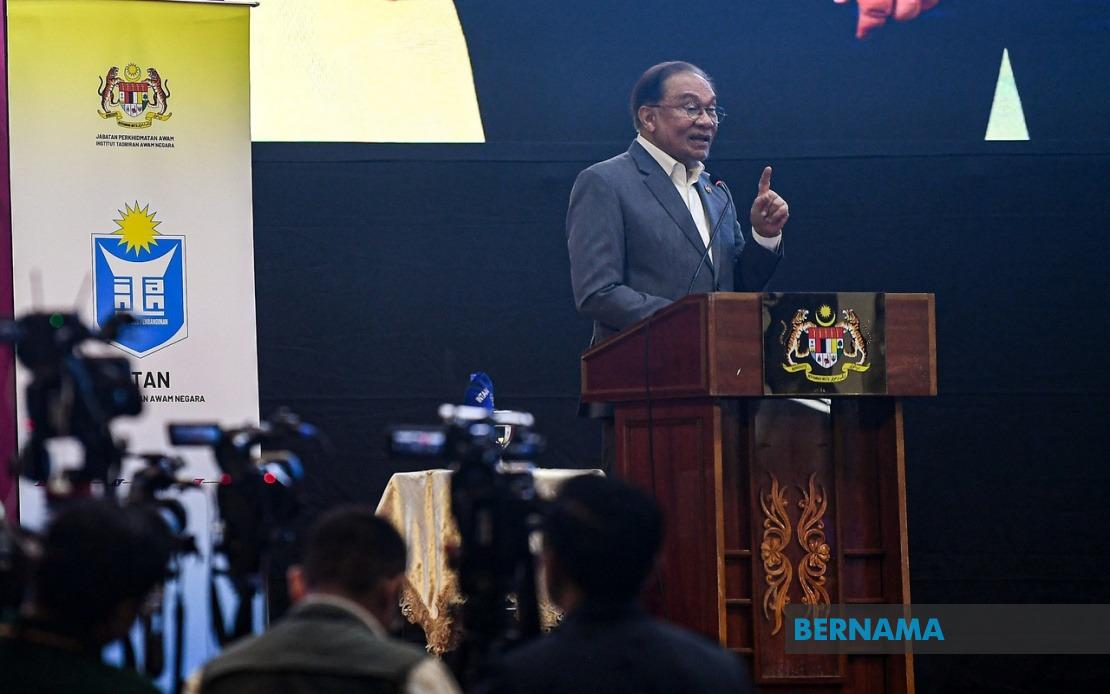
Prime Minister Datuk Seri Anwar Ibrahim has issued a forthright challenge to Malaysians to abandon deeply ingrained attitudes toward Western systems and culture, arguing that genuine national independence requires moving beyond intellectual dependence on external models. Speaking at Universiti Islam Selangor in Bangi on July 20, Anwar contended that nearly seven decades after independence, many citizens—including those born after 1957—continue to regard Western approaches to education, governance, economics and culture as inherently superior to homegrown alternatives.
The prime minister framed the issue as a matter of national identity and sovereignty that extends beyond the symbolic achievement of independence. He argued that the current generation carries responsibility not merely to enjoy the freedoms won by earlier patriots, but to actively construct a Malaysia rooted in authentic values and coherent national purpose. This perspective positions the rejection of Western-centric thinking as integral to genuine nation-building rather than mere cultural preference.
Anwar highlighted a specific pattern he observed among post-independence generations: individuals who maintain what he described as "half-English" thinking despite possessing decidedly Malaysian identities. His comment about citizens with brown skin who insist on English-medium education and Western economic and political frameworks captures a tension between external appearance and internal orientation. This phenomenon, he suggested, represents an incomplete decolonisation of the mind—a state where formal political independence has not translated into intellectual or cultural autonomy.
The speech reveals a substantive critique of how Malaysia's educated classes have adopted Western frameworks as universal standards. Anwar's observations about education highlight a particularly consequential domain: the assumption that English-language instruction and Western pedagogical models represent the pinnacle of educational achievement. This preference has shaped policy debates in Malaysia for years, though recent governments have sought to strengthen Bahasa Melayu's role while maintaining English competency. The tension between these approaches reflects broader uncertainties about how to balance global competitiveness with national identity.
Anwar's intervention carries weight given his position and his own biography. As an intellectual who studied at Oxford and has advocated for Islamic economics and governance models throughout his career, his call for rejecting Western models wholesale might appear contradictory. Yet his consistent argument has been that Malaysia should selectively adopt useful external ideas while developing distinctly Malaysian approaches to persistent challenges. This measured position differs from categorical rejection of Western influence.
The implications for Malaysia's development trajectory are considerable. If policymakers take this directive seriously, it could accelerate shifts already underway in education policy, governance philosophy and economic strategy. The strengthening of Bahasa Melayu in schools, the promotion of Islamic banking and finance, and efforts to develop home-grown technology and innovation ecosystems all align with Anwar's stated preference for indigenous models. However, the tension between national self-determination and participation in a globalised economy remains unresolved.
For civil servants in the Central Zone—Anwar's stated audience alongside Chief Secretary to the Government Tan Sri Shamsul Azri Abu Bakar and Director-General of the Public Service Tan Sri Wan Ahmad Dahlan Abdul Aziz—the message carries operational significance. Government bureaucracy shapes daily implementation of policy, and officials who internalise Anwar's vision might approach policy design and service delivery differently, prioritising Malaysian solutions over imported templates.
The regional context matters considerably. Across Southeast Asia, several nations grapple with similar questions about balancing Western influence with indigenous identity. Vietnam, Myanmar and Indonesia have variously emphasised national approaches to governance and development, though outcomes differ markedly. Malaysia's multicultural composition adds complexity: the Chinese and Indian communities maintain their own cultural and educational institutions, and decisions about national direction must account for these communities' aspirations and preferences.
Critics might argue that Anwar's formulation presents a false choice between wholesale adoption and wholesale rejection of Western models. Sophisticated modern governance often requires integrating proven approaches from multiple sources while adapting them to local contexts. The challenge lies not in rejecting everything Western but in developing critical faculties to assess what serves Malaysian interests and what does not. This requires institutional capacity, intellectual leadership and political will—qualities that Anwar's government has promised but that remain works in progress.
The practical implementation of Anwar's vision will test whether his rhetoric translates into coherent policy. Malaysia's position as an upper-middle-income country with aspirations toward developed-nation status requires competing simultaneously in global markets and maintaining distinct identity. These objectives frequently pull in different directions. Universities must attract international researchers and students while emphasising local knowledge. Companies must compete globally while embodying Malaysian values. The balancing act remains delicate and contested.
Moreover, Anwar's call for rejecting colonial mentality raises questions about what constitutes authentically Malaysian values and how consensus emerges around them. Malaysia encompasses multiple ethnic and religious communities with different historical experiences and contemporary interests. Some Malaysians view Western-derived secular governance frameworks as protections for minority rights, while others see Islamic governance models as the authentic expression of Malay-Muslim identity. Navigating these competing visions of national authenticity remains among Malaysia's most persistent challenges, one that transcends the colonial-versus-indigenous binary Anwar articulated.

