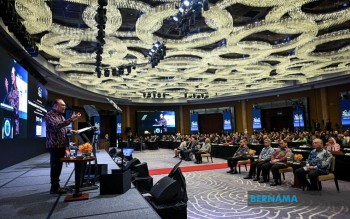
Prime Minister Datuk Seri Anwar Ibrahim has made a compelling case for Malaysia to establish dedicated sovereign cloud infrastructure, warning that the country must act decisively to protect its critical security and personal data as Southeast Asia becomes increasingly reliant on complex digital systems and technologies. Speaking at the 39th Asia-Pacific Roundtable in Kuala Lumpur on July 2, Anwar acknowledged the fundamental tension facing modern nations: the need to remain globally connected and attractive to investors while simultaneously defending sensitive information from foreign surveillance or unauthorised access.
The Prime Minister's remarks were prompted by questions about how Malaysia and other Southeast Asian nations could maintain strategic agency within an increasingly interconnected digital ecosystem dominated by major technological powers. Rather than advocating for isolation or protectionism, Anwar proposed what he characterised as a balanced approach—creating protective barriers for the most sensitive data categories while preserving the openness necessary for economic growth and technological advancement. This nuanced position reflects Malaysia's broader foreign policy challenge of engaging constructively with multiple powers without surrendering control over vital national interests.
Anwar specifically referenced the United States Cloud Act as a case study illustrating the vulnerabilities facing smaller nations. He noted that the legislation effectively permits American corporations operating internationally to grant their home government access to data stored on their servers, regardless of where those servers are physically located or which country's citizens the data concerns. While Anwar stopped short of criticising this arrangement as illegitimate—describing it as "their decision, nothing can be done"—he was clear that Malaysia cannot passively accept such asymmetries when they involve national security or personal information. The framing represents a pragmatic recognition that geopolitical realities constrain Malaysia's options, yet simultaneously demands that Malaysian policymakers take proactive measures to mitigate exposure.
The proposed sovereign cloud would function as a fortified digital repository, equipped with sophisticated firewalls and security protocols designed to prevent unauthorised penetration by foreign governments or corporations. Critically, Anwar's vision does not envision complete digital isolation. Instead, the sovereign cloud would serve as a selective barrier protecting only the most sensitive categories of information—those directly related to national security and personal privacy—while allowing Malaysia to continue participating in the global digital economy for less sensitive data flows and transactions. This tiered approach acknowledges that absolute digital sovereignty is neither achievable nor desirable in a world where global supply chains, financial systems, and communication networks are deeply integrated.
Yet Anwar was realistic about the limitations inherent in any protective strategy within a globalised context. He explicitly stated that democracies like Malaysia cannot entirely insulate themselves from external digital pressures without abandoning the openness and free information exchange that democratic systems require. This candid assessment distinguishes his position from more nationalist or isolationist rhetoric sometimes heard in other regional contexts. Malaysia's commitment to democratic values and free speech inevitably creates vulnerabilities that cannot be completely eliminated through technological means alone, a fact the Prime Minister appears to have fully internalised.
Beyond the technical infrastructure question, Anwar highlighted the specific harms and abuses that digital openness can unleash. He pointed to growing problems of social media manipulation and platform misuse manifesting across political, economic, personal, and sexual dimensions. The Prime Minister argued that governments have both a responsibility and legitimate authority to implement safeguards protecting citizens—particularly vulnerable populations like young people—from exploitation and harm facilitated by digital platforms. This acknowledgment of the dark side of digital globalisation contextualises the sovereign cloud proposal within a broader governance framework addressing digital-age challenges.
The sovereign cloud initiative also reflects Malaysia's strategic positioning as an investment destination amid superpower competition. Anwar emphasised that Malaysia remains attractive to investors from the United States, China, and Germany, suggesting that a robust domestic cloud infrastructure could actually enhance rather than undermine this appeal. Foreign investors increasingly face domestic political and regulatory pressure to demonstrate responsible data governance, and Malaysia's sovereign cloud could position the country as offering both secure business environment and protection against accusations of complicity in foreign surveillance activities. This reframing transforms data sovereignty from a barrier to investment into a competitive advantage.
In discussing Malaysia's role within the regional architecture, Anwar returned to core themes of ASEAN centrality and collective regional strength. He rejected the notion that Malaysia should aspire to great-power status, characterising such ambitions as misguided for a small nation. Instead, he argued that Malaysia's actual strength derives not from individual capacity but from its integration within ASEAN's collective framework and its capacity to build relationships with multiple external powers simultaneously. This perspective positions the sovereign cloud initiative not as an inward-looking defensive measure but as part of a coherent strategy enabling Malaysia to maintain agency within broader international structures.
Anwar's vision also encompasses Malaysia's role as a bridge-builder and neutral space within regional geopolitical competition. By implementing robust data protection without aligning exclusively with any single technological or geopolitical bloc, Malaysia can present itself as a trustworthy partner to investors and diplomatic counterparts from multiple countries. This non-aligned approach resonates with Malaysia's historical positioning and reflects lessons learned from regional experiences where excessive dependence on single external powers created vulnerabilities during periods of international tension or conflict.
The practical implementation of a sovereign cloud system would represent a substantial undertaking requiring significant investment in infrastructure, expertise, and governance frameworks. Malaysia would need to develop indigenous technical capabilities in cloud architecture and cybersecurity while potentially partnering with trusted international vendors and allies. The project also raises complex questions about standards, interoperability, and compliance with international data protection frameworks—issues that Malaysian policymakers will need to navigate carefully to ensure the sovereign cloud functions effectively without isolating Malaysia from global digital standards and practices.
Anwar's framing ultimately positions data sovereignty not as an obstacle to Malaysia's economic and technological development but as a prerequisite for it. By establishing clear boundaries protecting the most sensitive information while remaining open to global cooperation on less sensitive matters, Malaysia can pursue both security and prosperity simultaneously. This balanced approach, if executed effectively, could serve as a model for other Southeast Asian nations grappling with similar tensions between sovereignty and globalisation, positioning the region as having developed innovative solutions to genuinely new challenges posed by digital transformation and geopolitical competition in the technological sphere.

