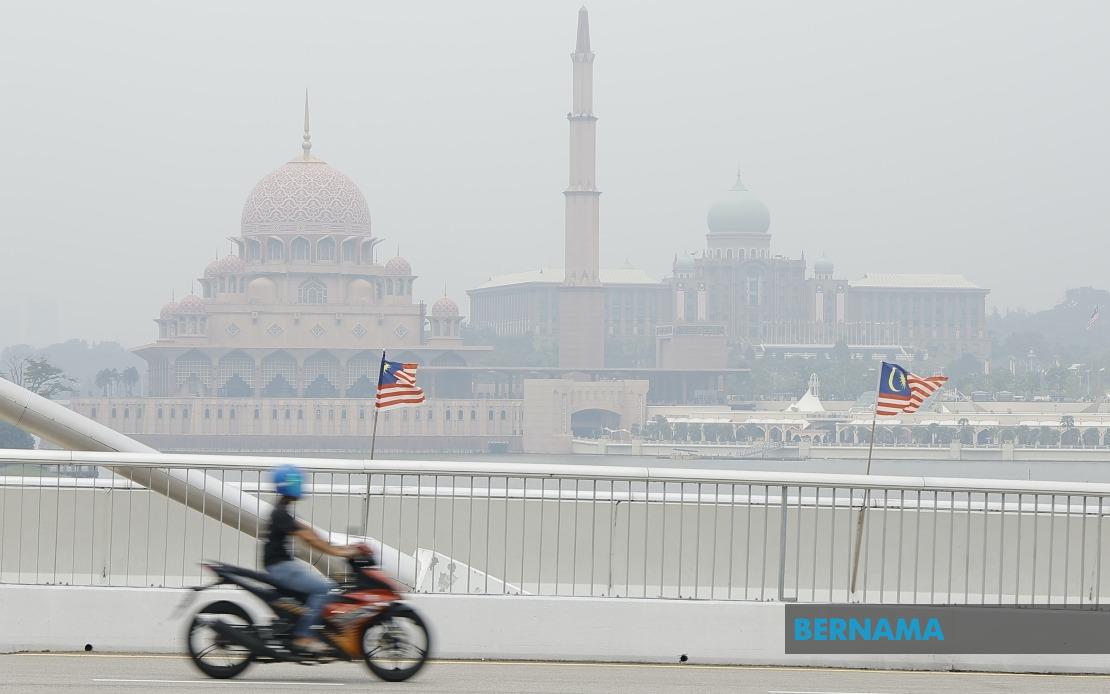
Malaysia needs to fundamentally overhaul its approach to managing haze episodes by building a predictive early warning system rather than waiting for hazardous air quality to emerge, according to a specialist in environmental science at Universiti Sultan Zainal Abidin. Associate Professor Dr Azman Azid, who directs the Besut Campus and has spent years researching air quality dynamics across the region, contends that the nation possesses sufficient data already available to create such a system but has not yet integrated these resources effectively for preventive purposes.
The timing of this call carries particular weight given recent health data gathered by Malaysia's Ministry of Health. During epidemiological weeks 32 and 33, asthma cases surged dramatically by 259 per cent, climbing from 61 to 219 recorded instances. This sharp increase underscores a troubling reality: while government agencies and media outlets focus heavily on Air Pollutant Index readings and tracking smoke movement, the actual human cost of deteriorating air quality manifests in hospital admissions, clinic visits, and mounting pressure on the healthcare system. The gap between monitoring air metrics and understanding their clinical consequences represents a critical blind spot in Malaysia's current framework.
Azman's proposal centres on transforming Malaysia's reactive posture into a proactive one by shifting from a cycle of monitoring, warning, and responding to a model built on forecasting, preventing, protecting, and acting. Just as the country maintains weather forecasting systems that alert citizens to approaching storms, he argues, Malaysia should deploy equivalent capacity for haze forecasting. This requires synthesising multiple data streams—hotspot information that pinpoints fire locations, satellite imagery that tracks smoke plumes, meteorological records showing wind patterns and atmospheric conditions, air trajectory models that reveal where pollution masses originate and how they move, current Air Pollutant Index measurements, and fine particulate matter data specifically for particles measuring 2.5 micrometres in diameter, commonly abbreviated as PM2.5.
When integrated intelligently, these data sources could generate forecasts extending 48 to 72 hours into the future, allowing institutions to prepare rather than merely respond. Hospitals and clinics could raise staffing levels and stock medications before respiratory cases peak. Schools could reschedule outdoor activities before air quality deteriorates, protecting children from exposure. Parents would gain advance warning to take protective measures for vulnerable family members. The Ministry of Health could allocate resources strategically rather than managing emergency surges after the fact. This preventive orientation would fundamentally shift the burden of adaptation from individuals and fragmented institutions toward a coordinated, system-wide defence.
Crucially, Azman emphasises that an early warning system need not replace the existing Air Pollutant Index framework but rather complement it. The API serves a vital function by communicating real-time air quality to the public. However, relying solely on API readings before implementing protective measures amounts to responding only after pollutants have already saturated the air. Forecast-driven intervention occurs upstream in the causal chain, addressing threats before they fully materialise. This distinction between concurrent monitoring and prospective forecasting represents a fundamental conceptual advance in how Malaysia manages an environmental challenge that recurs with seasonal regularity.
The regional dimension adds another layer of complexity to Malaysia's haze problem. Through the ASEAN Agreement on Transboundary Haze Pollution, Malaysia participates in cooperative arrangements with neighbouring countries, yet this framework remains largely reactive. Azman suggests that ASEAN collaboration should deepen substantially, moving beyond simple data sharing toward genuine operational integration. Fire source mapping conducted jointly across the region, shared smoke trajectory forecasting models, technology transfer among member states, coordinated firefighting assistance, and pre-agreed response mechanisms would represent a quantum leap from current practice. Since air and smoke inherently disregard political boundaries, fragmented national responses inevitably prove insufficient when pollution originates from fires in adjacent territories.
Beyond technological solutions, Azman underscores that enforcement mechanisms require strengthening across Malaysia itself. Laws governing open burning, bush fires, and peatland monitoring exist but appear insufficiently enforced relative to the scale of the problem. Peatlands deserve particular attention because their combustion releases enormous quantities of smoke and carbon whilst being difficult to detect and extinguish. A comprehensive approach therefore demands simultaneous progress on multiple fronts: technological capacity for forecasting and modelling, legal enforcement against preventable fire sources, regional diplomatic cooperation that transcends traditional boundaries of national sovereignty, and broader shifts toward more sustainable land use practices that reduce fire vulnerability in the first place.
The implications for Malaysia's standing as a regional economic and environmental leader merit consideration. Recurring haze episodes impose quantifiable costs on the economy through reduced tourism, disrupted outdoor industries, lost productivity, and escalating healthcare expenditure. They also affect neighbouring countries and undermine ASEAN's collective credibility on environmental stewardship. By pioneering an integrated early warning system, Malaysia could establish a model that other countries might adopt, positioning itself as a innovator in environmental governance rather than merely a victim of transboundary pollution. Such leadership would resonate both domestically and internationally.
Implementing such a system need not require entirely new technology or data infrastructure. Malaysia already gathers hotspot data, maintains satellite imagery capabilities, produces meteorological information, and monitors air quality across multiple stations. The missing element is integration—establishing operational links that transform disconnected data streams into a coherent, actionable forecasting capacity. This represents more of an organisational and bureaucratic challenge than a technical one. Government agencies would need to coordinate requirements, share information protocols, and develop decision-making frameworks that incorporate forecast data into institutional responses. The financial investment would be modest relative to the potential health and economic benefits.
Azman acknowledges that even a perfect early warning system cannot eliminate every haze episode entering Malaysia's airspace, particularly given the regional nature of fire sources. However, prevention remains possible on the fire-source side through better land management and enforcement. Early forecasting allows protective measures that reduce exposure. Together, these interventions could substantially diminish the health burden that currently manifests in surging asthma cases and other respiratory ailments. The question confronting Malaysian policymakers is whether maintaining the current reactive stance remains acceptable when an alternative, preventive approach lies within reach.

