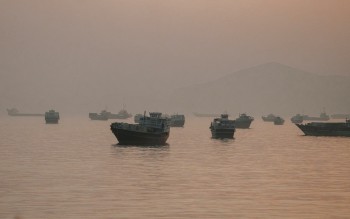
Malaysia's government is urging heightened vigilance among the public and business community in response to geopolitical tensions that threaten critical global trade routes. Economy Minister Akmal Nasrullah Mohd Nasir issued the warning on July 15 following reports of Iran's renewed closure of the Strait of Hormuz, a chokepoint through which a substantial portion of the world's oil and goods transit. The minister cautioned against complacency despite reports of limited commercial vessel traffic continuing through the waterway, emphasizing that Malaysia's economy remains vulnerable to external shocks regardless of intermittent movements through the strait.
The declaration of renewed closure came in the aftermath of military strikes launched by the United States against Iranian targets on July 8, escalating tensions in the West Asian region. This development carries particular significance for Malaysia and other Southeast Asian economies that rely heavily on stable international shipping routes and predictable commodity markets. The Strait of Hormuz serves as a vital artery for global energy supplies, making any disruption a matter of serious economic concern for oil-importing nations like Malaysia. The government's intervention in public messaging underscores the seriousness with which policymakers view the situation and their determination to prevent economic panic or complacency.
Akmal Nasrullah outlined multiple economic channels through which the crisis could transmit shocks throughout Malaysia's economy. Rising oil prices represent the most direct consequence, given Malaysia's reliance on petroleum for both domestic consumption and export revenues. Transportation costs would escalate due to extended shipping transit times as vessels navigate alternative, lengthier routes to avoid the Strait of Hormuz. Global raw material input prices would likely rise due to supply constraints and increased logistics costs, affecting manufacturing competitiveness. Food prices face particular upward pressure given Malaysia's significant dependence on imported agricultural products and food commodities, which must traverse extended shipping routes at higher cost.
The minister's analysis extended beyond simple price increases to encompass the interconnected nature of modern supply chains. He illustrated how pressure on one industry segment can cascade throughout the entire economic ecosystem. Plastic manufacturers, serving as a primary example, face direct costs from shipping delays and raw material price escalation. These pressures then ripple outward to dependent sectors including food packaging manufacturers, electrical and electronics component producers, automotive suppliers, medical device manufacturers, construction material suppliers, agricultural input providers, and export-oriented manufacturing enterprises. This web of interdependencies means that disruptions to seemingly distant supply chains can ultimately affect Malaysian consumers through broader inflationary pressures and product availability constraints.
The complexity of modern supply chains means that policymakers and business leaders cannot address disruptions in isolation. Rather, they must examine the entire ecosystem of supplier relationships, logistics networks, and input sourcing arrangements. Malaysia's manufacturing sector, which forms a crucial pillar of the national economy, depends on seamless integration with global supply networks. Any prolonged conflict in West Asia threatens to unravel carefully balanced just-in-time manufacturing systems that have become standard in industries ranging from semiconductors to automotive assembly. The government's emphasis on understanding these systemic vulnerabilities suggests a recognition that traditional crisis response mechanisms may prove inadequate.
Reducing dependence on geopolitically vulnerable external arrangements emerges as a critical strategic imperative from the minister's remarks. Malaysia has historically pursued economic resilience through geographic and sectoral diversification, but current circumstances suggest the need for more proactive supply chain risk management. Businesses may need to evaluate alternative sourcing arrangements, develop inventory buffers for critical inputs, and consider diversifying supplier bases away from regions vulnerable to conflict. However, such adjustments require significant capital investment and strategic planning, necessitating coordination between government and private sector stakeholders.
The timing of these warnings carries additional significance given Malaysia's position as a major hub for regional trade and manufacturing. As a middle-income economy with substantial exposure to global value chains, Malaysia faces distinct vulnerability compared to larger self-sufficient economies. The country's manufacturers compete on efficiency and cost, factors that become compromised when supply chain disruptions force costly adaptation measures. Additionally, Malaysia's role as a transshipment point and trading hub means that regional instability affecting global trade patterns directly impacts port activities, logistics services, and warehousing operations concentrated in facilities such as Port Klang and Port Tanjung Pelepas.
The minister's invocation of the need to remain vigilant and adapt to ongoing challenges acknowledges that the West Asian situation may persist for an extended period. Unlike temporary disruptions that economies can weather through drawing down inventories or accepting temporary margin compression, prolonged instability requires structural adjustments to business operations and supply chain strategies. Companies must evaluate whether to maintain higher safety stock levels of critical inputs, shift production locations closer to end markets, or develop contingency arrangements with alternative suppliers. These adaptations typically involve higher costs that ultimately affect consumer prices and business profitability.
For Malaysian consumers, the ultimate implications manifest through inflation in food prices, transportation costs, and manufactured goods. Households facing wage constraints may experience reduced purchasing power as commodity and energy-intensive products become more expensive. Businesses facing margin pressures may defer expansion plans or investment in workforce development, potentially affecting employment growth. The government's explicit messaging about these risks suggests acknowledgment that economic actors must begin preparatory measures now rather than waiting for crisis conditions to force reactive decisions. This proactive communication represents an attempt to mobilize collective economic adaptation before disruptions become acute.

