Malaysia must fortify its approach to refugee management by weaving together humanitarian commitments with robust national security safeguards, according to Deputy Prime Minister Datuk Seri Dr Ahmad Zahid Hamidi. His statement comes at a critical juncture when the global displacement crisis has reached unprecedented proportions, with more than 122 million individuals forcibly uprooted from their homes due to conflict and widespread instability. The challenge facing Malaysia and other nations is to craft coherent policies that honour international humanitarian principles without compromising domestic security or sovereignty.
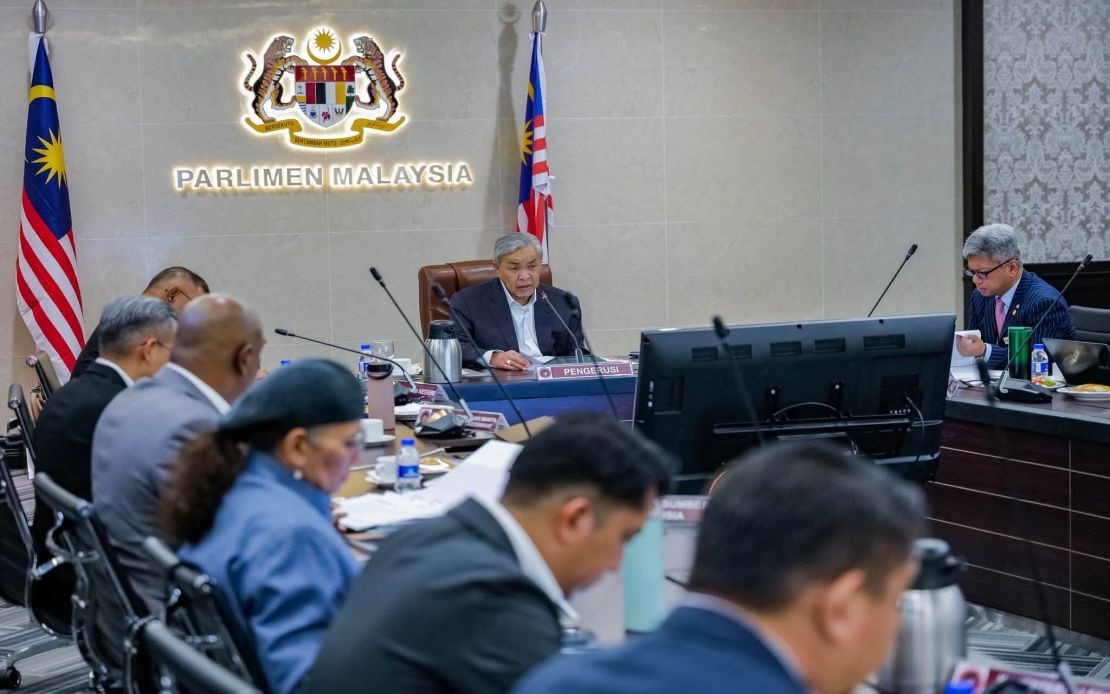
Ahmad Zahid articulated this nuanced position following his chairmanship of the 6th Meeting of the High-Level Committee on the Management of Refugees and Asylum Seekers, underscoring that refugee administration extends far beyond bureaucratic procedures. Rather, he framed it as a multifaceted governance issue that demands rigorous attention to maintaining public order, safeguarding national interests, and ensuring that policy decisions reflect the welfare priorities of the Malaysian population. This framing reflects a growing tension across Southeast Asia and beyond, where nations struggle to reconcile compassion for displaced persons with legitimate concerns about resource allocation, social cohesion, and security threats.
The deputy prime minister, who concurrently serves as Rural and Regional Development Minister, emphasized that Malaysia's existing refugee framework requires systematic enhancement to remain effective and aligned with national priorities. The statement acknowledges the reality that refugee management cannot be treated as a peripheral policy domain but must occupy a central place in national security architecture. Given Malaysia's geographic position as a transit and destination country for refugees fleeing crises in Myanmar, Afghanistan, and the Middle East, such clarity is particularly significant for the country's policymaking community.
During the high-level committee meeting, officials reviewed the operational effectiveness of current refugee policies and examined mechanisms designed to ensure systematic, coordinated implementation across government agencies. This review process signals recognition that fragmented approaches to refugee administration can create enforcement gaps, inconsistent treatment, and operational inefficiencies that ultimately undermine both humanitarian objectives and security objectives. The committee's work reflects international best practice whereby multiple stakeholders coordinate through centralized committees to prevent siloed decision-making.
A key focus of the meeting centred on the Refugee Registration Document (DPP), which serves as Malaysia's primary mechanism for documenting and tracking refugee populations. The registration system is foundational to any credible refugee management framework, enabling authorities to maintain accurate records, conduct background security checks, and allocate humanitarian assistance to verified populations. The committee's review of DPP implementation suggests ongoing refinement of this system to enhance both administrative efficiency and security verification protocols.
Beyond registration machinery, the high-level committee examined and sought to streamline guidelines governing refugee access to essential services, particularly education and healthcare. Malaysia's approach to refugee service access has historically been fragmented, with varying agency interpretations and inconsistent implementation at the operational level. By establishing clearer, more cohesive guidelines that integrate legal compliance with practical administrative feasibility, Malaysia aims to reduce confusion among service providers while ensuring equitable access for vulnerable populations. This effort acknowledges that refugees, while in a precarious legal status, include children and individuals with acute medical needs whose fundamental welfare cannot be entirely subordinated to administrative restrictions.
The context for Ahmad Zahid's pronouncements is the accelerating global displacement phenomenon. International displacement has grown progressively worse over the past decade, driven by protracted conflicts in Syria, Yemen, Afghanistan, and Myanmar, compounded by climate-induced migration pressures and economic collapse in fragile states. Malaysia, as a lower-middle-income country without refugee treaty obligations comparable to developed nations, faces considerable practical and financial challenges in managing refugee populations that sometimes number in the hundreds of thousands. The balance Ahmad Zahid advocates reflects this constrained capacity.
For Southeast Asian policymakers and regional observers, the Deputy Prime Minister's statement carries broader significance as an articulation of how nations in the region are attempting to navigate the refugee question. Unlike wealthy developed nations that maintain robust social safety nets and border control infrastructure, Southeast Asian countries often lack equivalent resources yet face proportionally larger refugee burdens. Malaysia's approach, emphasizing both humanitarian responsibility and security consciousness, represents a practical middle path that other regional governments may reference as they formulate their own policies.
The operational implications of Ahmad Zahid's position extend to everyday implementation across Malaysian government agencies responsible for immigration enforcement, social services, and law enforcement. By placing emphasis on systematic coordination and aligned policies, the committee's work aims to ensure that field-level officials across different departments operate from consistent understandings of refugee policy objectives and implementation procedures. This harmonization is essential for preventing ad-hoc decision-making that can create security loopholes or humanitarian violations.
Looking forward, Malaysia's refined refugee management framework will require sustained political commitment and adequate budgetary allocation to realize its objectives. The balance between humanitarian and security considerations remains perpetually contested terrain, with pressure from humanitarian organizations advocating expanded access and rights, alongside security establishments cautious about unvetted populations. Ahmad Zahid's emphasis on balancing these concerns suggests the government recognizes that sustainable refugee policy cannot favour either dimension at the expense of the other, but must instead achieve workable equilibrium through evidence-based policy development and continuous institutional learning.

