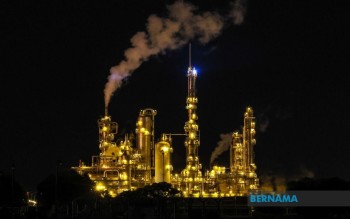
Malaysia should carefully design any national petroleum reserve by starting small and expanding gradually, rather than attempting to match the massive stockpiles held by wealthier countries, according to investment strategy experts examining the government's emerging energy security plans. Prime Minister Datuk Seri Anwar Ibrahim signalled last week that officials would investigate whether Malaysia needs such a reserve and how best to construct one, citing regional geopolitical instability and supply chain vulnerabilities. Yet this initiative carries significant budgetary implications that require rigorous scrutiny before the nation commits substantial taxpayer funds to infrastructure that may sit idle for years.
Mohd Sedek Jantan, director of investment strategy at IPPFA Sdn Bhd, contends that policymakers must resist the temptation to emulate the United States, Japan and other industrialised economies that maintain strategic reserves containing millions of barrels. These countries possess very different fiscal capacities, energy consumption patterns and geopolitical exposure compared to Malaysia. A blanket replication of their models would ignore Malaysia's particular circumstances, potentially locking public money into an initiative that does not reflect genuine national requirements. The economist emphasises that determining the appropriate reserve size should precede any physical construction, requiring detailed analysis of likely supply disruption scenarios, their probable duration, and the likely economic damage from each.
The fundamental tension underpinning this debate revolves around competing public priorities. Malaysia faces pressing demands for expanded healthcare systems, improved educational infrastructure, enhanced food security and social safety nets. Every dollar allocated to building petroleum storage becomes unavailable for these areas. Jantan stresses that officials must subject any reserve proposal to rigorous cost-benefit analysis, weighing the expense of constructing, maintaining and potentially replacing inventory against the economic damage that various disruption scenarios might inflict. This calculation is not straightforward, as it requires assumptions about the probability and severity of supply shocks that remain inherently uncertain.
Paradoxically, inadequate preparation during a genuine energy crisis could prove vastly more expensive than preventive investment. A prolonged interruption to global petroleum supplies would devastate Malaysia's manufacturing sector, immobilise transportation networks and generate cascading economic damage throughout the economy. From this perspective, maintaining some reserve capacity serves as insurance against low-probability but catastrophic outcomes. The economist therefore supports establishing a reserve, provided it emerges from methodical analysis rather than political expediency or pressure to match other nations' reserve sizes. The objective should be crafting a specifically Malaysian solution optimised for Malaysia's circumstances.
Jantan advocates a phased implementation strategy beginning with comprehensive risk assessment. This preliminary work should identify which supply disruption scenarios pose the greatest threat to Malaysia's economy, estimate the duration and magnitude of likely shortfalls, and calculate the reserve quantity necessary to mitigate damage during such events. Simultaneously, planners should model various financing approaches, including direct government funding, partnerships with private sector energy companies, or hybrid mechanisms that distribute costs and risks. These assessments would establish the intellectual foundation for any subsequent infrastructure development, ensuring that reserve specifications reflect actual needs rather than theoretical ideals or international peer pressure.
The financing question deserves particular attention, as building petroleum storage infrastructure requires substantial upfront capital and ongoing maintenance expenses. Direct government funding would burden the national budget, particularly if resources are diverted from essential services. Private sector partnerships could distribute costs but might introduce complications around access, pricing and commercial interests during crises. Some nations employ special-purpose financing vehicles or international partnerships to overcome these constraints. Malaysia should evaluate which approach aligns with its circumstances and institutional capabilities, recognising that no single model suits all contexts.
Implementation scalability represents another critical consideration that the economist highlights. Any reserve structure should permit gradual expansion as fiscal circumstances improve or as threat assessments evolve. A system that requires major capital reconstruction if circumstances change would represent poor planning. Instead, infrastructure should be designed modularly, allowing the nation to expand reserve capacity incrementally without scrapping previous investments. This approach reduces initial spending pressure while maintaining long-term flexibility, appealing to both fiscal conservatives concerned about public debt and security advocates worried about energy resilience.
Commercial viability also matters significantly for long-term sustainability. If petroleum reserve operations consume resources without generating offsetting revenue or demonstrating clear economic value, political support will likely erode over time, potentially leading to inadequate maintenance or premature liquidation during non-crisis periods. Structuring reserves to generate modest returns—perhaps through carefully managed sales and repurchases that profit from price fluctuations—could enhance financial sustainability. Such commercial thinking should not override security objectives, but integrating economic logic into reserve operations increases the likelihood that the system will endure.
The economist argues that only after establishing this comprehensive analytical groundwork should Malaysia proceed toward physical construction and gradual implementation. This sequencing prevents costly mistakes, ensures public resources are deployed efficiently, and builds political consensus based on evidence rather than assumption. Rushing to construction before completing risk assessment and financial planning risks creating a reserve that either proves insufficient during crises or squanders public funds on unnecessary capacity. The goal, Jantan emphasises, is not building the largest reserve but building the smartest one—tailored precisely to Malaysia's needs and fiscal realities.
Broader integration into economic security frameworks also warrants attention. Energy security intersects with food security, transportation networks, manufacturing competitiveness and dozens of other policy areas. A petroleum reserve that sits in isolation from broader resilience planning may miss important synergies. For instance, reserve infrastructure might support domestic refining capacity, emergency response systems or fuel efficiency initiatives that generate collateral benefits. Thinking systemically about how petroleum reserves fit within Malaysia's overall economic security posture could unlock additional value from the investment.
Geopolitical uncertainties continue multiplying across Southeast Asia, making energy security increasingly salient for all regional economies. Malaysia's specific vulnerability stems partly from reliance on imported petroleum for portions of consumption, dependence on global shipping routes passing through regional waters, and exposure to major-power competition in the South China Sea. These factors genuinely warrant consideration of strategic reserves. However, sound policy requires that concern be channelled into careful planning rather than hasty implementation driven by anxiety. The economist's recommendations for phased, analytically rigorous approaches reflect this necessary balance between acknowledging real risks and avoiding wasteful overreaction.

