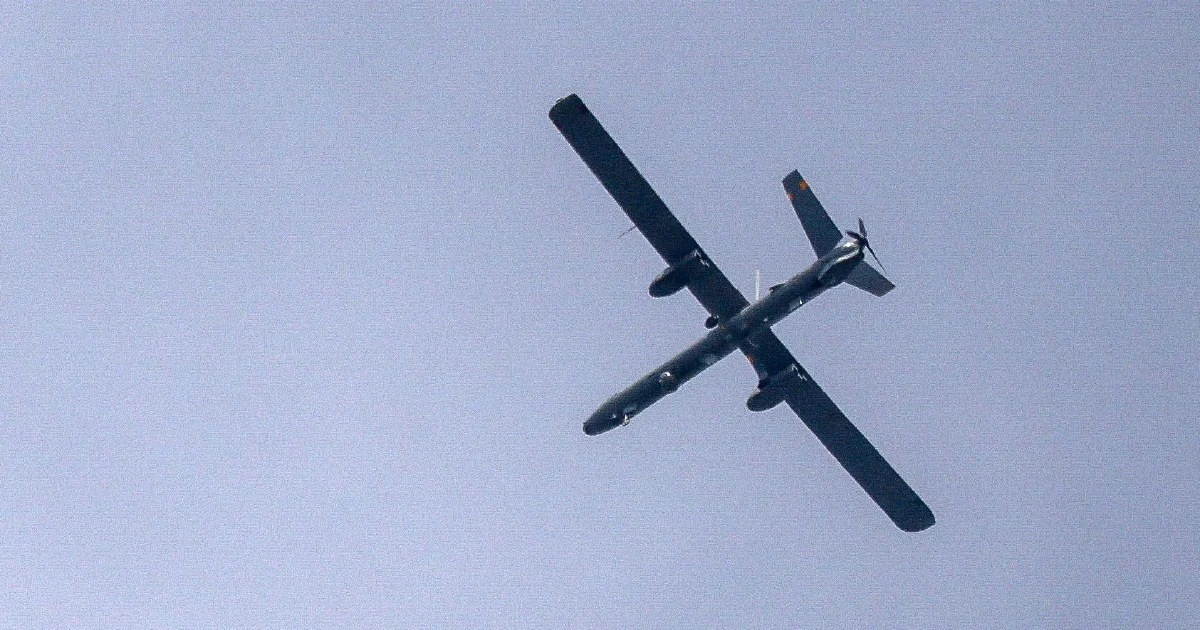
Prime Minister Datuk Seri Anwar Ibrahim has identified drone technology as a critical investment frontier for Malaysia, arguing that the country must move decisively to capture opportunities in the unmanned aerial vehicle sector if it hopes to maintain economic relevance in an increasingly competitive global marketplace. Speaking in Sepang, he underscored the urgency of adopting and refining drone capabilities across multiple industries, positioning the technology as essential infrastructure for Malaysia's long-term prosperity rather than a peripheral innovation.
The emphasis on drone technology reflects broader recognition within Malaysia's government that the nation risks falling behind regional and global competitors in advanced manufacturing and technology sectors. Countries such as China have rapidly scaled their UAV industries into major economic engines, while Singapore has developed sophisticated regulatory frameworks for autonomous flight operations. Malaysia's relative tardiness in these areas threatens to push it further down the value chain, potentially relegating the country to roles as an end-user rather than a creator of cutting-edge technology.
The commercial applications for drones across Malaysia's existing economic sectors are substantial. In agriculture, the nation's largest rural industry, UAVs equipped with imaging sensors can monitor crop health, optimise pesticide deployment, and increase yield predictability—all critical factors as climate volatility threatens traditional farming. The manufacturing and construction industries could similarly benefit from drone-based surveying, inspection, and logistics, reducing downtime and improving safety in hazardous environments. Such productivity gains would compound across the economy, enhancing Malaysia's cost competitiveness without necessarily relying on labour cost advantages alone.
Beyond immediate commercial applications, the drone sector represents a pathway into advanced industries where Malaysia can compete on innovation rather than volume. The design, manufacture, and operation of sophisticated autonomous systems require skilled engineering talent and research investment—precisely the areas where the nation has been attempting to upgrade its workforce. A thriving domestic drone industry could anchor ecosystems of software developers, sensor specialists, and robotics engineers, creating high-wage employment opportunities that appeal to Malaysia's growing pool of tertiary-educated workers and encourage diaspora return.
However, accelerating drone adoption faces formidable regulatory hurdles. Malaysia's Civil Aviation Authority has operated under frameworks designed primarily for conventional manned aviation, and adapting these for large-scale UAV operations requires extensive consultation, testing, and international coordination. Neighbouring countries have already established precedents: Singapore's Changi Airport hosts regular autonomous delivery drone trials, whilst Thailand has created drone-specific airspace corridors. Malaysia's regulatory apparatus will need substantial upgrading to match these benchmarks without creating unnecessary impediments to innovation.
International partnerships will prove essential to Malaysia's drone sector strategy. Rather than attempting autonomous development of cutting-edge UAV platforms, the country could position itself as a manufacturing and integration hub, potentially attracting foreign technology leaders to establish production or assembly facilities. Such partnerships would transfer knowledge progressively whilst providing immediate employment and foreign exchange earnings. Several Southeast Asian nations have successfully used this model in semiconductor and electrical equipment manufacturing, and drones represent a natural extension of these capabilities.
The security and sovereignty dimensions of drone technology cannot be overlooked. Nations worldwide have grown concerned about UAV proliferation and unauthorised surveillance capabilities, and Malaysia will need to balance openness to commercial development with robust safeguards against military misuse and foreign intelligence collection. Building indigenous drone capacity, rather than relying entirely on imports, offers some mitigation against technological dependence whilst allowing the country to tailor systems to specific national requirements and threat environments.
Investment coordination across government, academia, and the private sector will be prerequisite for success. Malaysia's research universities possess capabilities in aeronautics and control systems that could anchor technological development, but they require sustained funding and clearer pathways to commercialisation. The government could establish dedicated funding vehicles for drone-sector startups, create intellectual property protections specific to UAV systems, and designate zones where testing and operations face reduced regulatory burdens. Such measures have accelerated drone sector development in other countries and would likely yield comparable results in Malaysia.
The broader context for the Prime Minister's appeal involves Malaysia's evolving economic strategy as traditional export sectors mature. Petrochemical refining, palm oil production, and assembly manufacturing have provided decades of growth, but the opportunities for expansion in these areas are increasingly constrained by environmental pressures, commodity price volatility, and labour availability. Advanced technology sectors, by contrast, offer potential for long-term differentiation and value creation. Drones represent merely one strand in this technological transition, but one with relatively near-term commercialisation prospects and substantial downstream multiplier effects.
Regional strategic considerations also favour Malaysian drone development. The nation sits astride critical maritime chokepoints, and expanded UAV capabilities would enhance surveillance and environmental monitoring of surrounding waters—functions that require autonomous systems given the vast areas involved. Additionally, the ASEAN Economic Community framework creates opportunities for Malaysia to establish itself as the regional hub for drone innovation and manufacturing, potentially supplying not only domestic demand but also neighbouring markets across Southeast Asia.
Successfully implementing this acceleration will demand patience and realistic expectations alongside ambition. Denmark, despite being a small nation, became a global drone leader through decades of incremental investment in research and manufacturing. Singapore leveraged its small size and regulatory agility to become an autonomous systems testing ground. Malaysia's path will necessarily differ, but the underlying principle—that deliberate, sustained commitment to technological adoption yields compounding advantages—remains universal. The coming years will reveal whether political commitment to drone technology translates into the institutional support and regulatory clarity required for genuine sector emergence.

