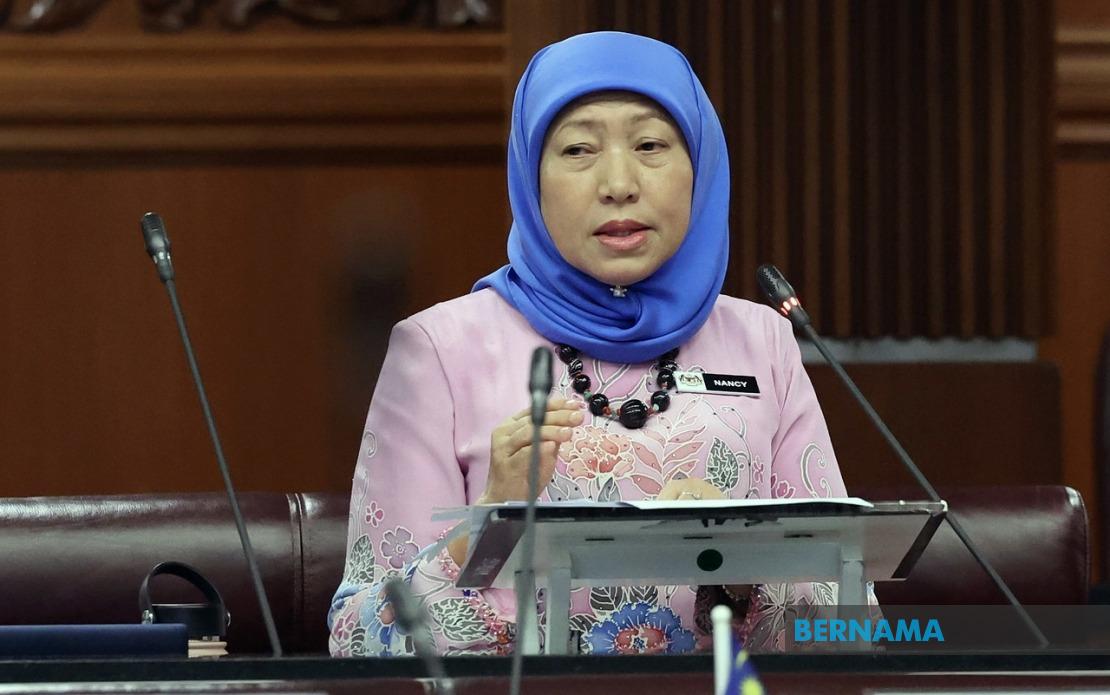
The Malaysian government has moved forward with establishing formal regulatory frameworks for the social work profession through parliamentary tabling of the Social Work Profession Bill 2026 on July 13. Women, Family and Community Development Minister Datuk Seri Nancy Shukri presented the legislation to the Dewan Rakyat, with plans to proceed directly to second reading during the current parliamentary sitting. This accelerated timeline reflects the government's determination to bring professional accountability and standardisation to a sector that has historically operated with varying levels of formalisation across different states and organisations.
The bill represents a significant institutional development for Malaysia's social work sector, which has expanded considerably over recent decades as demand for welfare services, counselling, and community support programmes has grown. Prior to this legislation, social work practitioners operated under general employment frameworks and professional guidelines without a unified national regulatory body or formal certification requirement. The absence of a centralised register meant that qualification standards and ethical conduct expectations were inconsistent, potentially compromising service quality and public confidence in the profession.
Central to the proposed reform is the establishment of the Malaysian Social Work Profession Council, which will assume responsibility for multiple critical functions. The council will evaluate and approve applications for practice certification, ensuring that only adequately trained and vetted individuals may represent themselves as qualified social workers. It will also develop and maintain professional competency standards specific to the Malaysian context, ensuring that practitioners possess the knowledge and skills relevant to local communities and social challenges. The council will serve as an ethical arbiter, regulating the conduct of social work practitioners and trainees to uphold professional integrity and protect vulnerable clients who rely on these services.
Structurally, the council will operate under the supervision of the Women, Family and Community Development Ministry, with the ministry's secretary-general serving as chair and the Social Welfare Department director-general as deputy chair. This arrangement ensures government oversight while drawing on senior bureaucratic expertise. The council's composition will extend beyond government officials to include practising social workers from across the country, alongside representatives from both public and private sector organisations with relevant experience. This mixed membership model aims to balance regulatory rigour with practical understanding of how social work services actually function on the ground.
A cornerstone of the regulatory framework is the proposed Register of Social Work Practitioners and Social Work Trainees. This public-facing registry will provide transparency and accountability, allowing employers, clients, and the public to verify credentials and check whether practitioners maintain good standing. The register will distinguish between different certification categories reflecting practitioners' status and qualifications. Citizens seeking to practise social work will require permanent practice certification, demonstrating they have met established standards. Non-citizens may apply for temporary certification, enabling foreign-trained professionals to work in Malaysia under defined conditions. Additionally, the bill provides for interim certification to support trainees and those gaining practical experience, allowing them to develop skills under supervision while the sector builds its talent pipeline.
The bill contains detailed provisions addressing professional discipline and accountability. It establishes formal processes for investigating complaints and conducting disciplinary proceedings against practitioners who breach professional standards or engage in misconduct. These procedures include mechanisms for appeals, recognising that practitioners must have access to fair processes if facing sanctions. The framework also addresses reinstatement pathways, allowing individuals previously removed from the register to seek restoration of their credentials if they have remedied the issues that led to their original removal.
Criminal and quasi-criminal provisions strengthen enforcement. The bill creates offences for practising social work without valid certification or falsely representing oneself as a qualified social worker. These provisions protect the public from unqualified practitioners while establishing consequences for those who attempt to circumvent the regulatory system. Such protections are particularly important given that social work frequently involves vulnerable populations—children in care, abuse survivors, individuals experiencing mental health crises, and economically disadvantaged families—who may lack the capacity to verify practitioner credentials independently.
The bill comprises 36 clauses structured across seven parts, suggesting a comprehensive approach to regulation covering registration requirements, professional standards, disciplinary mechanisms, governance, and enforcement. This detailed legislative architecture indicates careful consideration of how to operationalise professional regulation effectively. The seven-part structure likely addresses distinct aspects: definitions and scope of the profession, registration and certification procedures, professional conduct and ethics standards, the council's establishment and powers, disciplinary mechanisms, offences and penalties, and miscellaneous or transitional provisions.
For Malaysia's social welfare ecosystem, this legislation represents institutional maturation. As the country develops economically and society becomes more complex, social work services increasingly address issues ranging from child protection and domestic violence to mental health support and community development. Formalising professional regulation ensures that practitioners meet consistent standards, understand ethical obligations, and remain accountable to clients and the public. The bill also elevates social work's professional status, potentially attracting higher-calibre recruits and improving career prospects in a field that has sometimes struggled with recruitment and retention.
Regionally, Malaysia joins other developing and middle-income countries in establishing centralised professional regulation of social work. The move aligns with international standards where most developed nations maintain social work councils or licensing boards. For ASEAN neighbours considering similar reforms, Malaysia's legislative approach may serve as a reference model. The framework balances professional autonomy with public accountability, incorporates both government and practitioner perspectives in governance, and creates mechanisms to address both individual misconduct and systemic quality assurance.
Implementation will present practical challenges. The government must establish council operations, develop detailed competency standards, create efficient certification and registration systems, and conduct transitional reviews of existing practitioners. The bill likely includes provisions allowing current practitioners to achieve grandfathered status or transition to the new system through defined pathways, though the source does not detail these arrangements. Clear timelines and adequate resourcing will be essential to avoid regulatory bottlenecks that could inadvertently restrict service provision.
The bill also signals government commitment to social welfare as a developing policy area deserving formalised professional infrastructure. This institutional investment suggests that social work will receive greater policy attention and resource allocation. As the professional register develops and competency standards are published, the sector gains tools to identify gaps in training, specialisation, or geographic coverage. Data from the register can inform workforce planning, demonstrating where practitioners concentrate and where shortages exist.
Stakeholder consultation during implementation will be critical. Social work organisations, educational institutions, practitioners, and client advocacy groups should have meaningful input into competency standard development and council operations. Effective regulation balances protection of the public against over-bureaucratisation that could deter talented individuals from entering or remaining in the profession. The bill's passage marks a legislative milestone, but successful professional regulation ultimately depends on how thoroughly and fairly the framework is implemented.

