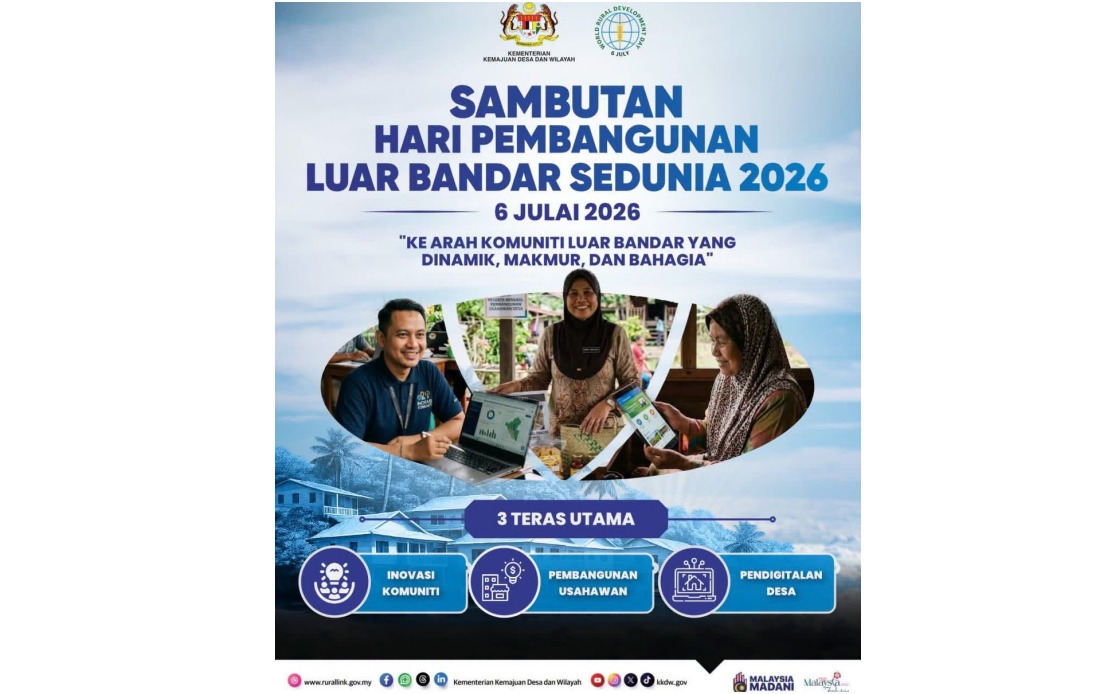
Malaysia will make history tomorrow as it celebrates the World Rural Development Day for the first time, marking the nation's participation in a globally recognized observance established by the United Nations just months ago. The inaugural Malaysian celebration will take place at Tun Abdul Razak Stadium in Jengka near Maran in Pahang, with Deputy Prime Minister and Minister of Rural and Regional Development Datuk Seri Dr Ahmad Zahid Hamidi presiding over the opening ceremony.
The timing of Malaysia's entry into this international commemoration reflects broader shifts in how developing nations prioritize rural affairs within their development agendas. The World Rural Development Day was formally designated by the United Nations General Assembly on September 6, 2024, with July 6 selected as the annual observance date. This date carries particular significance as it commemorates the establishment of the Centre on Integrated Development for Asia and the Pacific (CIRDAP), an organization instrumental in shaping rural policy across the Asian region. The global community held its first official celebration on July 6, 2025, and Malaysia has now positioned itself among the member countries implementing this official recognition within their domestic frameworks.
Under the overarching theme "Toward Vibrant, Prosperous and Happy Rural Communities," Malaysia's celebration acknowledges the crucial role that rural populations play in driving national development and supporting the country's progress toward the Sustainable Development Goals. The Ministry of Rural and Regional Development (KKDW) has structured the event around three interconnected pillars that address contemporary rural challenges: community innovation, rural digitization, and rural entrepreneur development. These thrusts represent a sophisticated understanding that rural advancement requires multifaceted approaches combining technological access, economic empowerment, and grassroots creativity.
The strategic focus on digital connectivity in rural areas addresses a persistent gap in Malaysia's development landscape. Rural communities often face infrastructural disadvantages that limit their access to modern economic opportunities and essential services. By emphasizing rural digitization as a core thrust, the government acknowledges that bridging the digital divide is essential for allowing rural Malaysians to participate fully in the digital economy and access knowledge networks that can drive innovation and entrepreneurship. This focus carries particular relevance for Southeast Asian nations where rural-urban economic disparities remain pronounced.
Community innovation, the second pillar of tomorrow's celebration, recognizes that rural populations possess distinct expertise and problem-solving approaches suited to their environments. Supporting grassroots innovation initiatives empowers communities to develop solutions tailored to local conditions while building local pride and self-reliance. The emphasis on rural entrepreneur development complements this by creating pathways for individuals to translate innovative ideas into sustainable business ventures, thereby expanding economic opportunities beyond traditional agricultural pursuits and reducing the economic vulnerability that has historically characterized rural areas.
Tomorrow's event will feature several significant announcements and award ceremonies designed to showcase successful rural development models and celebrate achievement within communities. The Rural Aspiration Award MADANI will recognize individuals and initiatives exemplifying the government's MADANI framework, while the Felda Plan Excellence Award will highlight achievements within the Federal Land Development Authority's ecosystem. The launch of the My Rural Insight Journal and the announcement of Felcra Bhd's interim distributable profit distribution represent efforts to maintain transparency and engagement with rural stakeholders regarding returns from rural development corporations.
The government's continued commitment to rural development through KKDW signals that rural affairs remain central to Malaysia's national agenda rather than peripheral concerns. This positioning contrasts with some development models that prioritize urban and industrial sectors at the expense of rural communities. By dedicating ministerial resources and high-level political attention to rural development, the government demonstrates recognition that sustainable national progress requires integrated development benefiting all regions and populations.
The celebration at Tun Abdul Razak Stadium in Jengka specifically grounds this national commemoration within one of Malaysia's significant rural development zones, lending symbolic weight to the proceedings. Jengka's prominence in FELDA's history makes it an appropriate venue for highlighting the interconnection between historical rural development achievements and contemporary rural advancement strategies. The choice of location underscores how Malaysia's rural development narrative extends across decades of institutional evolution and policy refinement.
For Malaysian policymakers and development practitioners, this inaugural celebration represents an opportunity to align domestic rural development priorities with international frameworks and comparative best practices from other nations participating in the World Rural Development Day observance. The UN's designation of this annual date provides a consistent platform for governments to report progress, share innovations, and commit to accelerated rural advancement. Malaysia's participation positions the nation within global conversations about rural development trajectories and solutions to challenges that extend across borders and development contexts.
The public invitation to participate in tomorrow's activities reflects an intention to ground this celebration in community engagement rather than confining it to governmental and organizational circles. The KKDW exhibition booths and participation from multiple agencies involved in rural development will provide interactive platforms through which rural Malaysians and interested citizens can access information about programs, initiatives, and support mechanisms available to rural communities. This participatory approach reinforces that rural development succeeds through collaboration between government institutions, community organizations, entrepreneurs, and citizens themselves.
Looking forward, Malaysia's inaugural World Rural Development Day celebration establishes an annual focal point for recommitting to rural advancement objectives and evaluating progress against measurable indicators. The emphasis on innovation, digitization, and entrepreneurship positions the nation's rural development strategy within contemporary development paradigms emphasizing knowledge economies, technological integration, and private sector dynamism. As rural communities in Malaysia and throughout Southeast Asia navigate demographic shifts, climate pressures, and economic transitions, sustained attention to rural development remains essential for national resilience and inclusive prosperity.

