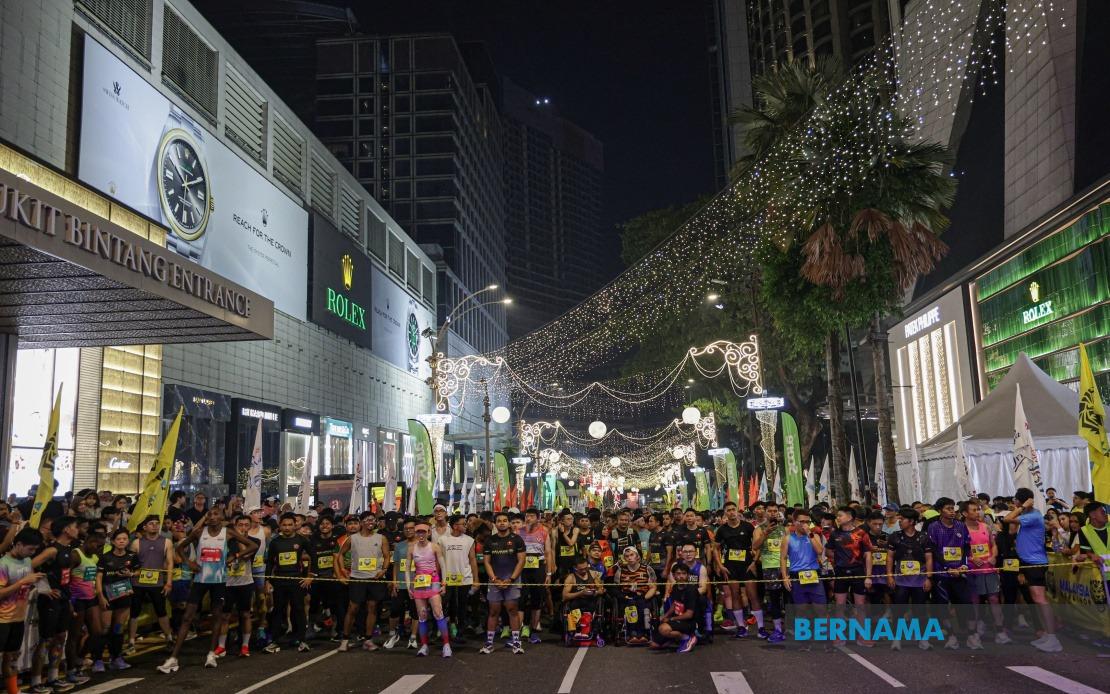
The Malaysia Marathon 2026 launched into the early hours of 30 August after midnight with the Full Marathon category, uniting 2,000 competitive and recreational athletes in a tribute to Malaysia's 69th National Day celebrations. Minister of Tourism, Arts and Culture Datuk Seri Tiong King Sing officiated the ceremonial flag-off near Pavilion Kuala Lumpur, setting the tone for what organisers have positioned as a flagship sporting event integrating patriotic sentiment with athletic excellence.
The event's structure reflected careful planning to accommodate diverse fitness levels and international participation. The 42-kilometre Full Marathon commenced at 12:30 am on 30 August, immediately followed by the 21-kilometre Half Marathon starting at 2:00 am with 8,000 entrants. The 10-kilometre category began at 3:30 am with 5,000 runners, while the 5-kilometre Fun Run—designed for families and casual participants—commenced at 7:30 am with 10,000 competitors. This staggered approach allowed the race organisers to manage course capacity whilst maintaining the event's celebratory atmosphere throughout the morning.
A particularly distinctive feature of Malaysia Marathon 2026 was the relocation of the finishing line to the Kuala Lumpur City Centre precinct rather than the traditional Dataran Merdeka venue. This symbolic choice positioned the nation's premier shopping and business district as the convergence point for athletic achievement, blending commercial vitality with national pride. The KLCC location also offered logistical advantages for crowd management and media coverage whilst providing international visitors with exposure to one of Malaysia's most recognisable landmarks.
The event's innovation extended beyond conventional marathon logistics. A humanoid robot manufactured by HONOR was entered into the 10-kilometre category, competing alongside international participants from nations including Japan and Nigeria. This technological integration reflected Malaysia's positioning as a forward-thinking nation embracing Industry 4.0 principles, whilst generating substantial media interest and distinguishing the 2026 iteration from previous regional marathon events.
Physical demands on participants were substantial, particularly for Full Marathon contestants. The designated race route incorporated a challenging 900-metre elevation gain as runners traversed sections of the Ampang-Kuala Lumpur Elevated Highway, presenting significant cardiovascular and muscular demands typical of major metropolitan marathons. This demanding profile attracted serious competitive athletes whilst the shorter distances accommodated fitness enthusiasts seeking a memorable National Day experience.
Kuala Lumpur's traffic management required comprehensive coordination. Police implemented phased road closures and diversions beginning on the evening of 29 August and extending through the afternoon of 30 August. Primary affected routes included Jalan Bukit Bintang, Jalan Ampang, Jalan Sultan Ismail, and Jalan Raja Chulan, alongside the Ampang-Kuala Lumpur Elevated Highway and SUKE expressway. These thoroughfares are among the city's busiest arterial routes, indicating the substantial organisational capacity required to host an event of this magnitude within Malaysia's capital.
The marathon's credibility was underpinned by official recognition from World Athletics, the sport's international governing body. This accreditation ensured that performances by elite competitors would meet globally recognised standards and potentially contribute to international athletic rankings. The endorsement also provided assurance to international participants regarding course quality, safety protocols, and the legitimacy of timing and results recording.
The aggregate participation figure of 25,000 runners represented a significant achievement for Malaysia's sporting calendar. The distribution across four categories—from elite marathoners to recreational fun-runners—reflected intentional programming to maximise community engagement. International competitors from multiple nations participated, transforming the event into a platform for cultural exchange and regional sporting dialogue during a period of heightened national celebration.
The timing of Malaysia Marathon 2026 during National Day festivities carried symbolic weight beyond athletics. The early morning start times meant runners would cross finish lines as Malaysia's 69th independence anniversary proceeded, linking personal achievement with collective national pride. This integration of sport, patriotism, and international participation represented a contemporary approach to observing national occasions, moving beyond traditional static ceremonies toward dynamic, participatory celebrations that engaged diverse demographic groups.
For Southeast Asian sporting observers, Malaysia Marathon 2026 demonstrated the region's growing capacity to host large-scale athletic events meeting international standards. The event's complexity—encompassing multiple distance categories, international participation, technology integration, and urban logistics—positioned Malaysia alongside established marathon hosts within and beyond the region. The success of this inaugural edition may establish a template for annual iterations, potentially attracting increasing numbers of regional and international runners whilst enhancing Malaysia's reputation as a destination for major sporting events.

