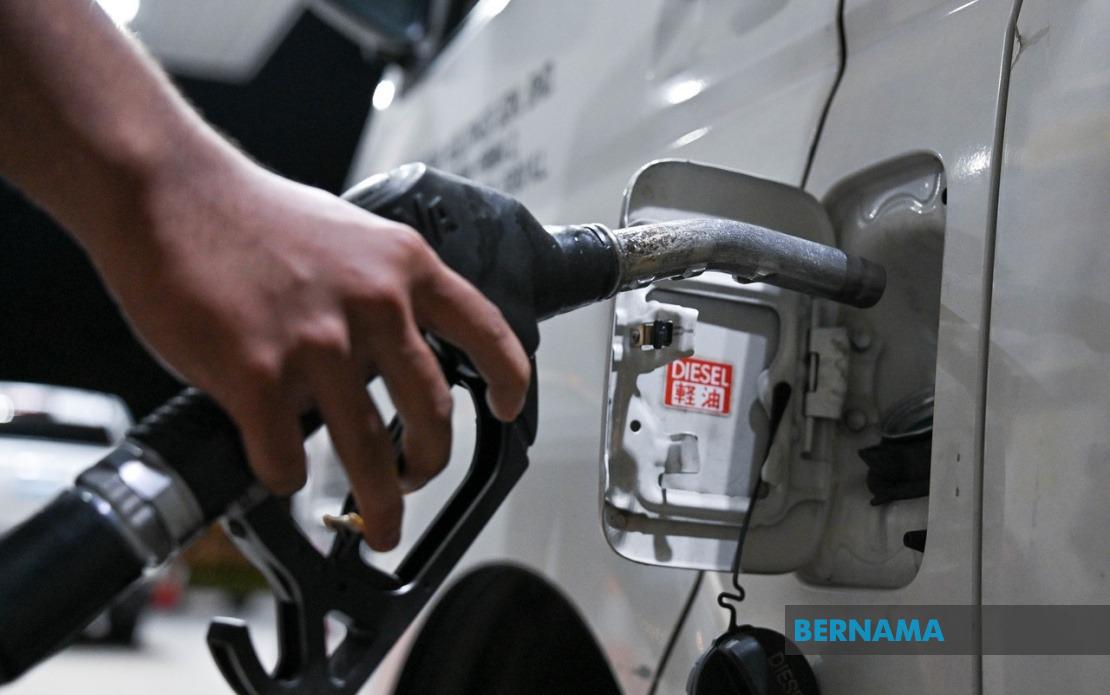
The Ministry of Domestic Trade and Cost of Living (KPDN) has withdrawn restrictions on diesel sales to commercial vehicles across Sabah, Sarawak, and the Federal Territory of Labuan, dismantling purchase quotas that have constrained transport operators in the region since March 2026. The directive, which imposed tiered limits of 50, 100, and 150 liters depending on vehicle classification, will cease to be enforceable from July 1, marking a significant policy reversal that aims to streamline fuel distribution mechanisms in the eastern Malaysian territories.
This regulatory shift follows Prime Minister Datuk Seri Anwar Ibrahim's announcement on June 21 establishing a uniform subsidised diesel price of RM2.10 per litre across the entire BUDI Diesel Programme. The standardisation represents the government's attempt to create equitable fuel access nationwide while addressing regional disparities that have historically complicated supply chains in Sabah and Sarawak. By harmonising prices, authorities hope to eliminate arbitrage incentives that previously motivated cross-border fuel trafficking and unauthorised resale.
Datuk Azman Adam, KPDN's Director-General of Enforcement, emphasised that the cancellation aligns with implementation of a modernised verification system launching simultaneously. The new mechanism leverages MyKad identification to authenticate eligible beneficiaries at petrol station points of sale, replacing manual quota management and paperwork-dependent validation. This technological shift represents a broader governmental push toward digital governance in subsidy administration, potentially reducing administrative friction whilst strengthening targeting precision.
The historical context illuminates why this change matters for Malaysian stakeholders. Sabah and Sarawak, geographically isolated from Peninsular Malaysia and dependent on sea or air freight for fuel supplies, have faced chronic distribution inefficiencies. The previous quota system, ostensibly designed to prevent diversion of subsidised fuel to unintended consumers, inadvertently created bottlenecks that disadvantaged legitimate commercial transport operators, particularly small trucking enterprises and rural logistics networks. Removal of quantity caps should theoretically restore operational flexibility for these businesses.
However, the policy transition carries implementation risks that warrant careful monitoring. The MyKad-based system depends on robust point-of-sale infrastructure and real-time database connectivity across dispersed petrol stations in remote regions. Network failures or system glitches could replicate—or amplify—the distribution disruptions that prior controls attempted to prevent. Additionally, the integrity of the new mechanism hinges on sophisticated fraud detection and cross-verification protocols to prevent misuse by ineligible consumers or coordinated subsidy exploitation schemes.
For Malaysian consumers and transport operators, particularly those engaged in interstate commerce linking Peninsular Malaysia with Sabah and Sarawak, the removal of quantitative restrictions promises reduced transaction costs and more predictable fuel access. Long-haul operators previously forced to make multiple filling stops to circumvent daily quotas can now consolidate purchases, improving logistics efficiency. Small and medium-sized transport enterprises, which often operate on tight margins, may experience modest cost reductions through simplified procurement procedures.
The broader economic implications extend to price competitiveness in East Malaysian markets. Fuel constitutes a substantial input cost for agricultural exports, manufactured goods, and perishable commodities shipped from Sabah and Sarawak to regional markets. Eliminating procedural friction in diesel acquisition may marginally enhance competitiveness for downstream producers, though commodity prices and exchange rate fluctuations remain dominant factors. Similarly, tourism and hospitality sectors dependent on transport services could benefit from improved operational flexibility, though the impact magnitude remains contingent on diesel price stability.
KPDN's statement explicitly urges all retail fuel licence holders in the affected territories to comply with the new verification framework. This directive underscores the ministry's recognition that successful transition depends not merely on regulatory revocation but on active stakeholder cooperation. Petrol station operators must invest in staff training, system updates, and compliance infrastructure to execute MyKad authentication reliably. Non-compliance or system failures could quickly undermine policy objectives and generate public frustration.
Regionally, this policy adjustment reflects Malaysia's broader subsidy reform trajectory. Rather than simply scaling back fuel support—a politically contentious option—the government attempts to redirect subsidies more precisely toward eligible consumers whilst reducing administrative burden. This approach mirrors international best practice in subsidy governance, though implementation challenges in developing country contexts often exceed policymakers' expectations. Success requires sustained institutional capacity and political commitment beyond initial announcement.
The cancellation also signals confidence in the BUDI Diesel Programme's architecture and the government's belief that uniform pricing eliminates the rationale for quantity controls. Previously, differential regional pricing could theoretically incentivise arbitrage and smuggling; standardisation at RM2.10 nationwide theoretically removes this distortion. However, price sustainability depends on petroleum market dynamics and fiscal allocation decisions beyond KPDN's direct purview, introducing uncertainty into long-term policy viability.
Stakeholders in Malaysian transport, logistics, and downstream sectors should monitor implementation progress closely. While the policy intent appears sound, transition periods frequently expose operational gaps. Reporting mechanisms for system failures, dispute resolution procedures for transaction errors, and contingency protocols for authentication system outages remain inadequately detailed in available official communications. Clarity on these implementation mechanics would assist businesses in transition planning and risk management.
Looking forward, this regulatory relaxation in East Malaysia may presage further subsidy mechanism reforms nationwide. If the MyKad verification system operates reliably in Sabah, Sarawak, and Labuan, policymakers might expand the approach to Peninsular Malaysia, systematising fuel subsidy distribution across all territories. Conversely, implementation difficulties could prompt policy recalibration or reversion to quantitative controls, underscoring the stakes attached to effective execution during this initial phase.

