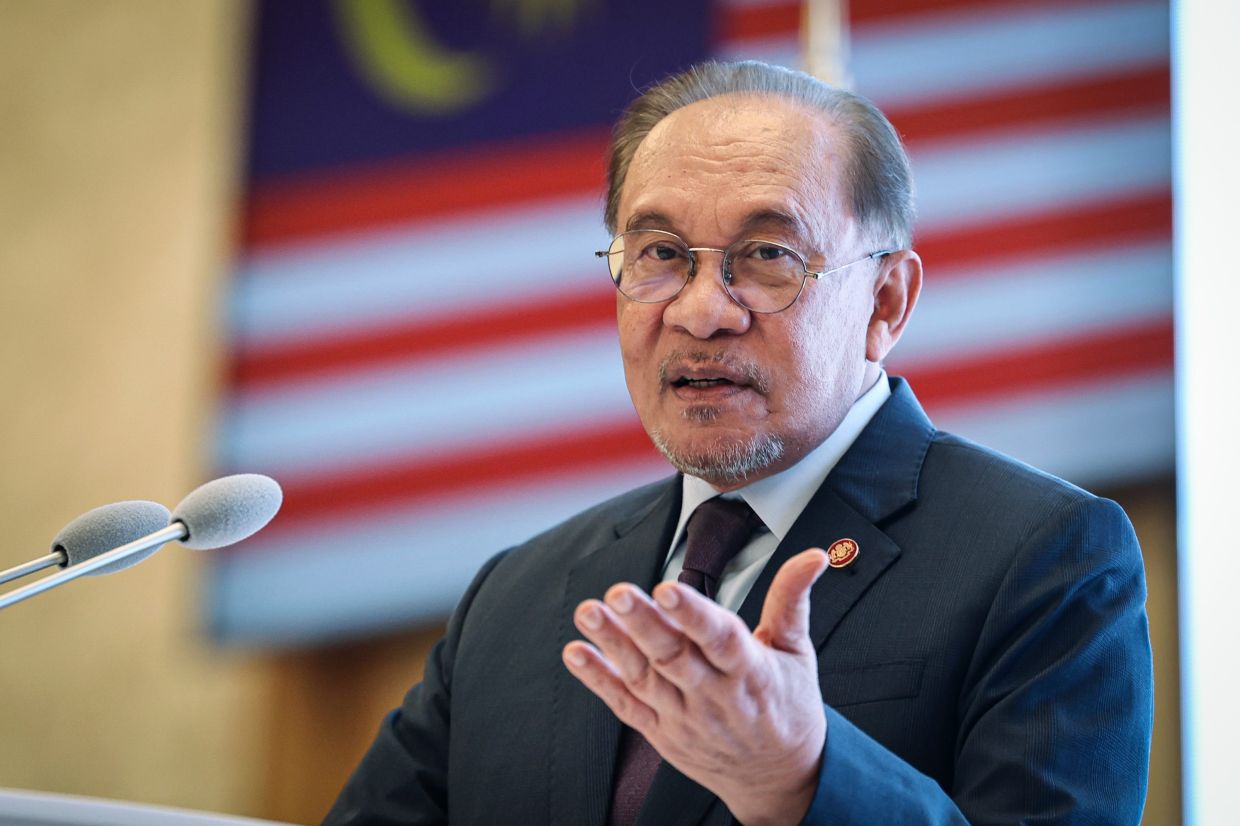
Malaysia's strategic position astride critical global trade routes and supply chains has become the defining feature of its approach to economic diplomacy, Prime Minister Datuk Seri Anwar Ibrahim emphasized at a major regional forum this week. Speaking at the 39th Asia-Pacific Roundtable, the Prime Minister and Finance Minister articulated how the nation's role as a major trading hub translates into broader geopolitical influence and the ability to shape regional prosperity.
This framing reflects a deliberate pivot in how Kuala Lumpur conceptualizes its place in the world. Rather than viewing Malaysia primarily through a security or military lens, the government is doubling down on its economic credentials to advance national interests and regional stability. The emphasis on trade as a lever for diplomacy reveals how deeply Malaysia has internalized the reality that economic interdependence in the 21st century often supersedes traditional power politics.
Anwar underscored that successive Malaysian governments have invested considerable diplomatic capital in strengthening ties with established trading and investment partners. These relationships, built over decades, have created networks of economic mutual interest that provide stability even when political relations experience friction. This foundation allows Malaysia to operate with confidence across various international forums and negotiate from a position of reasonable strength.
The government's role in dismantling trade barriers and improving market access has been particularly significant. Malaysia has positioned itself at the forefront of regional and multilateral initiatives aimed at creating more fluid commerce. Through mechanisms like the ASEAN Free Trade Area, the Regional Comprehensive Economic Partnership (RCEP), and the Comprehensive and Progressive Agreement for Trans-Pacific Partnership (CPTPP), Malaysia has helped shape the institutional framework within which regional trade occurs. These agreements collectively represent hundreds of billions of dollars in annual commerce and millions of jobs across the region.
Crucially, Anwar reiterated that Malaysia's strategic future remains inseparable from ASEAN, despite acknowledged tensions within the bloc over issues ranging from Myanmar to South China Sea disputes. He argued that ASEAN centrality must remain non-negotiable as the organizing principle of Malaysian foreign policy, serving simultaneously as the vehicle through which the country pursues its own interests and as the mechanism for safeguarding broader regional peace and prosperity. This stance acknowledges ASEAN's limitations while asserting that no viable alternative framework exists for ten Southeast Asian nations to coordinate effectively.
Beyond traditional markets, Malaysia is deliberately expanding its economic footprint into emerging frontiers. The government is cultivating deeper commercial relationships with West Asia, Central Asia, Latin America, and Africa—regions offering less saturated opportunities and fewer established competitors. This geographic diversification reduces dependence on any single trading partner or region, a particularly prudent strategy given contemporary geopolitical volatility and shifting supply chain configurations.
The expansion into these newer markets reflects a sophisticated understanding of how economic diplomacy operates. Rather than pursuing raw resource extraction or passive investment flows, Malaysia is leveraging competitive advantages in specific sectors. The halal industry, where Malaysia has built global brand recognition and certification expertise, represents one avenue. The digital economy offers another, with Malaysian tech companies and fintech innovations gaining regional traction. Agriculture and green technology round out a portfolio designed to appeal to diverse partner nations while addressing contemporary global imperatives around climate and food security.
Energy cooperation stands out as particularly strategic. The recent visit to Turkmenistan and the agreements signed by Petronas to explore and develop two major gas fields signal Malaysia's determination to secure long-term energy supplies and diversify hydrocarbon sources beyond traditional suppliers. Such arrangements involve not merely commercial transactions but encompass human capital development and technical knowledge transfer, creating deeper institutional ties that extend beyond simple buyer-seller relationships. The long-term hydrocarbon development framework between Malaysia and Turkmenistan exemplifies this holistic approach.
The Prime Minister's emphasis on resilience and forward-thinking reflects anxiety about global economic fragmentation and the rise of competing trade blocs. As geopolitical tensions between major powers intensify, smaller trading nations face pressure to choose sides. Malaysia's strategy instead involves maintaining broad-based relationships across multiple poles, accepting that some redundancy in partnerships provides insurance against exclusion or coercion. This hedging approach has historically served the country well but requires constant diplomatic maintenance.
Diversification, in Anwar's framing, transcends conventional economic theory about portfolio balance. He positioned it as a national imperative in an environment characterized by rising uncertainty, resource competition, and climate-related disruptions. By spreading economic relationships across geographies and sectors, Malaysia reduces vulnerability to sector-specific shocks or the economic collapse of any single partner nation. This reasoning has particular resonance for a country historically vulnerable to commodity price fluctuations and external demand shifts.
The articulation of these principles at the Asia-Pacific Roundtable, organized by the Institute of Strategic and International Studies (ISIS) Malaysia, occurred during a period of significant global recalibration. Trade tensions between major powers, deglobalization pressures, and the rise of friend-shoring arrangements are reshaping international commerce. Malaysia's ability to navigate these currents while maintaining its role as a trusted intermediary and efficient trading hub will largely determine whether it can sustain the prosperity and influence it has accumulated.

